


After absorbing the trade fractures of 2025—America’s highest tariffs since the 1940s, China’s expanding export controls on critical minerals, the fragmentation of supply chains that had structured global commerce for three decades—the global economy now confronts a new and potentially more disruptive shock: the joint Israeli-U.S. war on Iran, the near-total blockade of the Strait of Hormuz, and the resulting disruption of approximately one-fifth of global oil supplies. The consequences are far reaching. In its “World Economic Outlook April 2026” report, the IMF assumes that in a scenario where the conflict is limited in duration and scope, global growth slows to 3.1 percent in 2026, down from 3.4 percent in 2025, and well below the pre-pandemic historical average of 3.7 percent. Global headline inflation rises to 4.4 percent. In its severe scenario—which the IMF describes, as “a close call for a global recession”—growth reaches 2.0 percent.
For Africa, this moment is paradoxical in precisely the way I have argued across venues from Davos to my recent lecture at McGill University: the same shocks that threaten growth also create strategic openings. Africa entered 2026 with the strongest economic momentum it had recorded in nearly a decade—growth of 4.5 percent in 2025, the fastest pace since the middle of the 2010s, driven not by a commodity windfall but by structural reforms that countries such as Ivory Coast and Nigeria had fought hard to implement: exchange rate realignments, subsidy reductions, strengthened monetary policy frameworks, and debt management. The IMF revised the region’s 2026 growth forecast down to 4.3 percent, and median inflation—which had fallen to 3.4 percent in 2025 through four years of painstaking disinflation—is now projected to reverse course and rise to 5 percent by year-end.
But the more consequential story is not the headline growth number. It is the convergence of three forces that, taken together, would influence Africa’s development trajectory for the next two decades. The first is geopolitical connectivity: a fundamental reconfiguration of global alliances driven by the Israeli-U.S. war on Iran, the structural decline of American multilateral engagement, and the intensifying competition between Washington, Beijing, and Brussels for Africa’s mineral endowments, digital infrastructure, and trade partnerships. The second is economic: the emergence of a new connectivity and sustainability agenda—critical mineral security, green transition finance, digital infrastructure investment—that is simultaneously Africa’s greatest strategic opportunity and, if mismanaged, a new mechanism for dependency.
The third is climate: a crisis whose unravelling Africa is helping to slow, but cannot afford to adapt to without additional external resources. Africa is already losing between 2 and 5 percent of GDP annually to absorb its consequences. The way Africa navigates the intersection of these three forces—on whose terms, under what rules, and through what institutional architecture—will determine whether the fracturing of the old global order delivers genuine development or merely repackages old dependencies in the language of partnership.
A World in Realignment
The Israeli-U.S. war on Iran has accelerated a political realignment that was already underway before the first U.S. tariff announcement of April 2025. The Middle East and North Africa region has seen its 2026 growth forecast cut by 2.8 percentage points to just 1.1 percent—the steepest downgrade of any region in the IMF’s April 2026 World Economic Outlook. Iran’s economy is projected to contract by 6.1 percent. Saudi Arabia’s growth has been revised down by 1.4 percentage points despite higher oil revenues, as disrupted production routes, insurance costs, and investment uncertainty offset the price windfall. Egypt, which depends on Suez Canal revenues that were already down 60 percent after the Red Sea crisis of 2024, faces a double shock of disrupted shipping and higher energy import costs, with growth slowing to 4.2 percent—a cumulative revision of 1.1 percentage points below pre-war projections. GCC investments into Africa on the rise prior to the war may accelerate or slow, as countries look for new partners and security.
The Iran war’s transmission to Africa operates through five channels, each measurable and each already in motion. Higher energy and fertilizer prices flow directly into import bills, fiscal deficits, and consumer price inflation—disproportionately hitting the poorest households. Shipping costs and insurance premiums, already elevated by the preceding Red Sea disruptions, have risen further. Financial conditions have tightened globally increasing borrowing costs for African sovereigns already managing debt service burdens that consume more than 30 percent of government revenues in several countries.
Tourism and remittances from Gulf partners, significant revenue sources for East and North African economies, are being disrupted. And foreign aid, already in structural decline, has been cut further as countries focus on security. The withdrawal of American development assistance, the short-term and retroactive renewal of the African Growth and Opportunity Act are not budget cycle adjustments. They are signals of a fundamental reorientation that African governments can no longer plan around. Africa is paying for its connectivity to the global markets; it must seek to make this connectivity sustainable.
Meanwhile, the broader global realignment is creating new partnerships that did not exist three years ago, and Africa must understand them and manage them. Canada has reached a landmark preliminary trade agreement with China and a bilateral action plan with Mexico focused on critical minerals and port infrastructure. Canada and India have agreed to conclude a free trade deal by end of 2026. India and the European Union are finalizing a major trade agreement. The ASEAN economies are reinventing themselves as manufacturing alternatives to China, with Vietnam posting compound annual export growth of 8.2 percent between 2019 and 2023 and attracting $38 billion in FDI in 2024 alone. The world is not deglobalizing. It is re-globalizing and connecting along new wires, through new partnerships, toward new centers of gravity. The question for Africa is whether it is drawing the new map or being drawn onto it by others.
The New Arena Where Connectivity Becomes Geopolitics
The world is also competing differently. At present, competition policy has become synonymous with industrial policy and geo-security. The United States, the European Union, and China have collectively injected over $2.4 trillion since 2020 through instruments like the Inflation Reduction Act and CHIPS and Science Act ($800 billion to $1.97 trillion through 2034), the EU Green Deal Industrial Plan (€320 billion), and Chinese strategic sector subsidies reaching $375 billion in 2023 alone. These instruments are not primarily designed to optimize markets. They are designed to control the infrastructural nodes of the twenty-first-century economy: semiconductor fabrication, battery manufacturing, renewable energy supply chains, and the data architecture of the digital economy. Supply chains, green transitions, and digital infrastructure have ceased to be developmental categories. They are geopolitical ones.
The WEF’s Global Risks Report 2026 notes that geoeconomic confrontation, defined as the use of tariffs, sanctions, export controls, investment restrictions, and supply chain manipulation as weapons of influence rather than tools of cooperation has risen 8 positions in severity ranking in a single year, the largest single-year climb in the survey’s history, to become the risk most likely to trigger a material global crisis. Only 6 percent of respondents expect the reinvigoration of a rules-based international order and most expect more bilateral trade deals to replace multilateral frameworks. The world is not returning to the post-1945 settlement. It is building something new, and the architecture of that something is being determined in negotiations over supply chains, in the routing of fiber cables, in the design of carbon border taxes, and in the terms attached to mineral partnership agreements.
The supply chain fragmentation that has followed from this competition is itself now a structural condition. The WEF estimates that redundancy, regional production duplication, and inventory restructuring add 15 to 25 percent to supply chain costs globally—a tax on trade paid most heavily by economies at the end of fragmented chains, which are typically lower-income, commodity-dependent, and African. And yet, paradoxically, this fragmentation also creates openings.
Emerging market economies are policy-takers in this global competition, but through the intensity of geoeconomic rivalry they can become economic price-setters. Indonesia’s nickel export ban drove $25 billion in downstream investment. Over 18 countries have restructured mining laws to mandate local value addition from critical mineral exports. The question is not whether an opening exists but if African governments can seize it with the institutional discipline and regional solidarity that the East Asian states have.
Minerals, the Green Transition, and Digital Infrastructure
The case for a sustainable African pivot in this reconfigured world begins with its endowments. Africa holds approximately 30 percent of the world’s critical mineral reserves: cobalt in the Democratic Republic of the Congo, supplying over 70 percent of global production; lithium in Zimbabwe and the DRC; manganese in South Africa; platinum group metals across southern Africa; graphite in Tanzania and Mozambique; copper across the Copperbelt spanning Zambia and the DRC. Of the 60 minerals that the United States Geological Survey classifies as critical to the American economy and national security, the United States is entirely dependent on foreign suppliers for 12 and more than half-dependent on imports for another 29.
China controls approximately 60 percent of global cobalt refining capacity and dominates rare earth processing. A single F-35 fighter jet requires more than 900 pounds of rare earth elements; a Virginia-class submarine needs 9,200 pounds. Whoever controls these supply chains holds a structural veto over an adversaries’ industrial and defense capacity. The Minerals Security Partnership, the G7 Critical Minerals Action Plan mobilizing $6.4 billion across 26 projects in 9 allied countries, and the direct investments in the Lobito Corridor are expressions of that strategic reality already materializing in concrete infrastructure.
The clean energy transition compounds this endowment advantage. More than 560 gigawatts of new renewable capacity was added globally in 2023 alone. Solar and onshore wind now generate electricity at $0.033 to 0.044 per kilowatt hour—cheaper than fossil fuel alternatives in most regions. Global energy investment is projected to reach $3 trillion, with two-thirds directed toward clean energy. Every battery, solar panel, and electric vehicle on the planet requires inputs that are, in significant measure, African. The digital economy offers a parallel opening: digitally delivered services already account for 14.5 percent of global exports, growing at twice the pace of goods trade, with global digital transformation spending projected to reach $4 trillion by 2027. Africa has 17 percent of the world’s population, the youngest median age of any continent at 19 years, and the fastest-growing middle class in the world. These are the demographics of a digital connected market, not a digital periphery. Evidence suggests that countries that invest in the digital economy systematically outperform those that do not.
The Lessons of East Asia
Africa is not the first region to navigate the challenge of converting resource and demographic endowment into sustained industrial development under conditions of geopolitical pressure. The East Asian experience—specifically South Korea, Vietnam, Indonesia, and Cambodia—offers the most directly relevant evidence base. Economists Réka Juhász, Nathan Lane, and Dani Rodrik’s landmark 2024 “New Economics of Industrial Policy” article finds that the evidence is considerably more positive than the conventional wisdom suggested: industrial policy works when it provides genuine public goods, corrects externalities, and imposes verifiable performance conditionalities—and fails when it becomes a mechanism for rent extraction.
Vietnam demonstrates what is achievable in a single generation: following WTO accession in 2007, exports grew from $320 billion in 2019 to $440 billion in 2023, a compound annual growth rate of 8.2 percent, the fastest among major ASEAN exporters, with FDI reaching $38 billion in 2024 and manufacturing contributing roughly a quarter of GDP.
Indonesia’s nickel processing mandate—conditioning market access on domestic processing—attracted battery manufacturing investment projected to scale from 10 gigawatt-hours to 140 gigawatt-hours by 2030. Both economies still use coal still as a cheap source of energy to power this transition. A hugely consequential handicap faced by African economies in addition to neighborhood effects.
But Cambodia offers the counter warning. Cambodia built export growth on low labor costs without building industrial complexity or technological capability. As its neighbors move up the value chain into electronics and EVs, Cambodia risks being stranded without an upgrade path. Rodrik’s work on premature deindustrialization is the essential theoretical frame: countries are running out of industrialization opportunities sooner and at lower income levels than early industrializers, with sub-Saharan Africa among the most severely affected. If not well managed the new minerals security partnerships risk producing the same failed industrialization results for some late comer countries in Africa as it has in Cambodia.
How the Sustainability Agenda Could Undermine African Growth
Countries have to grapple with new security alliances and new protective subsidies. The most under-examined risk in the current discussion about Africa’s strategic moment is the possibility that the new connectivity and sustainability agenda contains within it multiple mechanisms through which it can simultaneously extract value from Africa and constrain the continent’s ability to build the industrial base, fiscal capacity, and institutional autonomy that long-run development requires. These risks are measurable, and in several cases already materializing.
The most consequential is the European Union’s Carbon Border Adjustment Mechanism (CBAM) which entered its definitive implementation phase in January 2026 and covers imports of steel, aluminum, cement, fertilizers, hydrogen, and electricity. The CBAM imposes a levy on products whose carbon content exceeds the level implicitly priced under the EU’s Emissions Trading System. Its stated purpose—preventing carbon leakage—is defensible in principle. Its practical effect on Africa is the introduction of a compounding cost on the continent’s most important industrial exports to Europe, designed without African participation, generating revenues for the EU budget rather than for African decarbonization, and providing no exemption for least developed countries.
A 2023 joint LSE-African Climate Foundation study models the CBAM at €87 per ton of CO₂ and finds that Africa faces the largest proportionate impact of any major region with a continental GDP reduction of up to 0.91 percent, equivalent to $25 billion at 2021 income levels. Aluminum exports to the EU are projected to fall by up to 13.9 percent; iron and steel by 8.2 percent; fertilizer by 3.9 percent. The EU will generate approximately €9.1 billion annually in CBAM revenues by 2030, none of which is directed toward African decarbonization. Countries like Egypt stand to pay a heavy price.
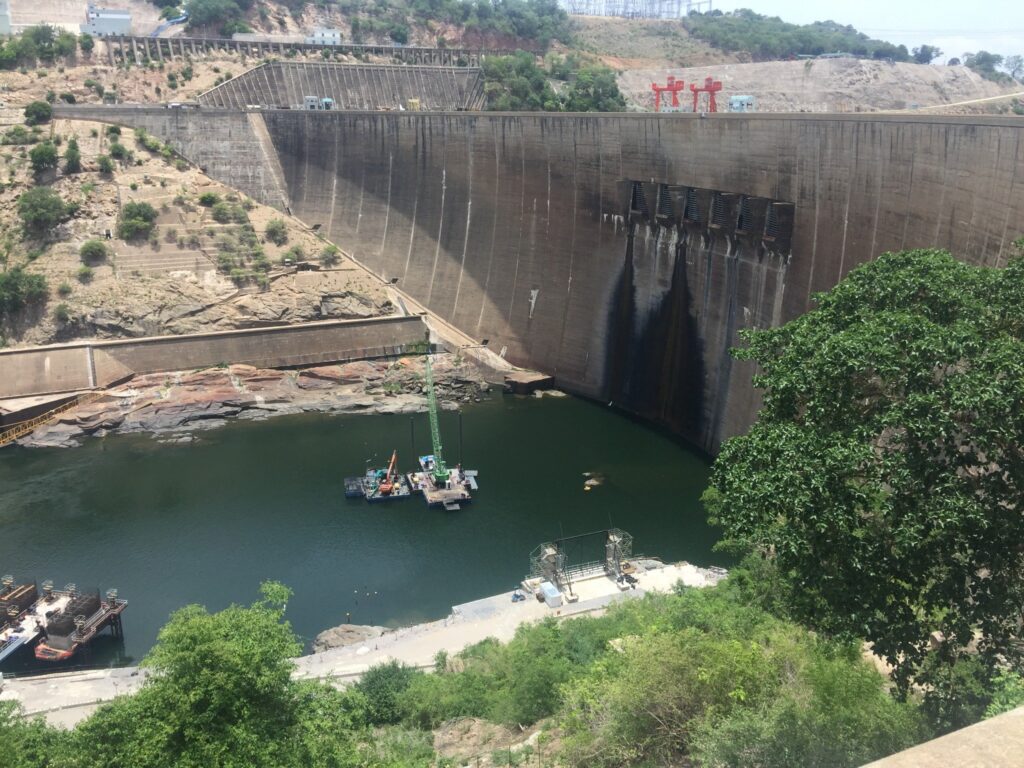
The CBAM taxes not only today’s emissions but the very industrialization pathway through which Africa could escape the commodity trap. A Mozambican aluminum smelter powered by hydroelectricity is already among the greenest in the world. A Zambian copper refinery powered by the Kariba dam produces metal cleaner than most European alternatives. And as EU ETS free allowances are phased out between 2026 and 2034, the compliance burden compounds each year.
The critical minerals partnerships carry a related risk. The Minerals Security Partnership, the G7 Critical Minerals Action Plan, and the bilateral framework agreements between the United States and African mineral-producing countries are being presented as development partnerships. In their current form, many are supply security agreements dressed in development language. A supply security agreement is structured to ensure that minerals flow out at the volumes and prices that importing countries require, with processing remaining in partner countries. A development partnership is structured to maximize local value addition, employment, technology transfer, and fiscal revenues in the producing country. African governments facing fiscal pressure from the convergence of aid cuts, energy price shocks, and debt service burdens are at precisely the greatest risk of trading long-term industrial development potential for short-term fiscal relief.
The climate finance system compounds these pressures. Africa is losing between 2 and 5 percent of GDP annually to climate-driven impacts and diverting up to 9 percent of government budgets to respond to climate extremes. The proliferation of environmental, social, and governance standards in global supply chains—deforestation regulations, human rights due diligence requirements, Scope 3 emissions reporting, and conflict mineral certification—constitutes an additional non-tariff barrier to industrialization that systematically advantages incumbents and disadvantages new entrants.
Standards designed for the compliance capacities of large multinational corporations in mature regulatory environments are being applied to firms in African economies with limited institutional infrastructure and thin compliance bureaucracies.
The explosion of the digital economy should support Africa’s connectivity ambitions. However here too, geopolitical competition for Africa’s digital infrastructure risks replicating the extractivist dynamic of the mineral’s economy in the data economy. Africa accounts for less than 1 percent of global data center capacity despite representing 17 percent of the world’s population. The fragmentation of the global internet into U.S.-aligned and China-aligned technical ecosystems would oblige African governments to choose between technological ecosystems rather than building their own or use the most competitive depending on need.
The Fiscal Trap
The key challenge for Africa is how to raise the resources to sustain the new global competitive repositioning unleashed by the geoeconomic and security tensions. This new connectivity and sustainability agenda requires capital at scale. But the world economy is under stress. Global debt stands at $251 trillion—235 percent of global GDP—with 45 percent of OECD sovereign debt maturing between 2025 and 2027. As governments spend more on debt servicing and defense, “less support will be available for driving economic growth” and the development investment emerging markets require.
For Africa, this fiscal tightening operates through three compounding channels. The structural decline of foreign aid removes the fiscal cushion that has allowed many African governments to maintain basic services while pursuing development investments. Tighter global financial conditions raise borrowing costs for African sovereigns. And multilateral development banks are reorienting their portfolios toward green conditionality, directing the resources that do flow to Africa toward climate-aligned projects while reducing the overall development finance envelope.
When green conditionality is added on top of an aid shock of this magnitude, the result is not a climate-aligned development program. It is a fiscal squeeze clothed in environmental language. As economist Raghuram Rajan’s analysis of subsidy competition warns, the $2.4 trillion industrial policy pivot by advanced economies has raised the cost of capital for emerging market economies overall and may be creating additional vulnerabilities in exchange rate and bond markets precisely when those markets are needed to finance development.
Policy-Takers Becoming Price-Setters and the Path Forward
The answer to these risks is not the rejection of the connectivity and sustainability agenda. Africa holds the endowments, the demographics, and increasingly the institutional frameworks to be a genuine beneficiary of the global transitions underway. The answer is building on Africa’s active, collective, and strategically coherent rules that govern its trade, its digital infrastructure, its mineral partnerships, and its green transition. Africa must seize the opportunity to impose its own standards and protect itself from falling into a renewed dependency trap. To succeed, it must form coalitions within, build supply chains within, and enact collective competition policies that protect its economies.
Three priorities follow; on the CBAM, African governments should use the 2026 implementation period to build a coordinated continental position demanding that CBAM revenues be directed to African decarbonization, that least developed country exemptions be reinstated, and that monitoring, reporting, and verification capacity be co-developed rather than merely required. Morocco is already investing in decarbonizing its fertilizer industry to capture CBAM advantages; Mozambique’s hydropower-powered aluminum is already among the greenest in the world. The technical case is available; the political coalition to advance it is not yet built.
On mineral partnerships, every framework agreement with a major power should be conditioned on downstream processing requirements, local content minimums, technology transfer obligations, and fiscal revenue guarantees across several jurisdictions on the continent. African governments must negotiate these frameworks collectively, through the AfCFTA minerals architecture, rather than individually and in isolation. The leverage diminishes with each bilateral agreement signed before a continental framework is in place. On digital infrastructure, Africa needs a continental data governance architecture under the AfCFTA that sets the terms of market access, data portability, and platform regulation. Africa cannot allow the digital economy to replicate the pattern of the mineral economy—where the most valuable processing steps happen elsewhere.
The institutional vehicle for all three priorities exists with the African Continental Free Trade Area. Inter-African trade reached $220 billion for the first time in 2024, and the AfCFTA’s combined GDP of approximately $3.4 trillion—encompassing 1.3 billion people—positions it as a negotiating counterweight that individual Member States could never achieve alone. The AfCFTA offers Africa the same possibility, but only if implementation is treated as a first-order political priority rather than a diplomatic achievement.
The Agreement on Climate Change, Trade, and Sustainability, Brazil’s COP30 trade-climate forum, and the AfCFTA’s Green Industrialization Initiative are nodes of an emerging architecture that does not require unanimous agreement but builds the precedents that eventually attract broader adherence. The emerging pattern of pragmatic cooperation should be used by Africa to draw its map of connectivity and sustainability.
There is an African proverb that says the fall of a great tree makes room for the sun to reach the forest floor. The old architecture of global trade—the WTO consensus, the assumption of efficient globalization, the subordination of security and sustainability to cost minimization—is cracking under the weight of the Israeli-U.S. war on Iran, the minerals security race, the AI technology competition, and the climate emergency. From that cracking, a new architecture is being built. The question is not whether Africa will be part of the new global architecture—the continent’s endowments make that inevitable. The question is whether Africa will be a rule-maker or a rule-taker; whether the new corridors, cables, and supply chains being laid across the continent will deliver structural transformation or merely modernize the infrastructure of extraction.
The connectivity and sustainability agenda is Africa’s opportunity and Africa’s risk in the same breath. It can seize it or accept it on others’ terms and find, a decade from now, that the new wires have simply rewired the old dependencies. The question is can Africa command the collective resolve to influence this new rewiring.


