
People living in earthquake-prone regions talk of the Big One: a devastating earthquake they fear might happen in their lifetime and that is statistically bound to happen at some point.
But after 70 years of postwar prosperity, including a peaceful reunification and only limited local conflicts, we have lost sight not only of this statistical reality but of our own history. Europe was historically riddled with wars and was often a launching pad for migrants to the New World. Even its climate played out over centuries in cold spells—the little ice ages that did more to shape our demography and our agriculture than we commonly recognize.
Today, the image of the Titanic is frequently invoked, but it is the wrong metaphor. The Titanic was an icon of modernity, sailing at full speed. Europe has been moving at very slow speeds for decades and key elements of modernity are now bypassing it. Is this an unfair characterization, reflecting the drift toward Euro-pessimism and ignoring the sparkling gems hidden in a dismal landscape? The simple answer is yes. Individual agency and experience in good governance have allowed for strong local achievements. A remarkable common construct called the European Union provides a law-based glue for societies that fought each other and still diverge in many ways. Today, this is far from enough.
This writer has long advocated common European action over increasingly irrelevant national sovereignties. We remain convinced that the solutions lie in the future, not in the past. So-called Eurocrats have had a steep learning curve, from the “Brussels model” to the present situation. They are often placed on the front line of rough international negotiations or faced with the absence of them. They have therefore become more realistic than the average European citizen-consumer. Like the dwellers in Plato’s cave, citizens mostly experience the outside world through their wallets—think oil prices—and recoil when confronted with images from a violent world—think of Russia’s slaughter on the Ukrainian fields. It is also a trait of communities in decline and besieged societies that they enshrine an imagined and re-enchanted past. Under the Qing dynasty, the rallying cry of many secret societies was “restore the Ming” (that is, the previous dynasty). Our own citizens dream of national sovereignty—“take back control”—in reaction to the unknown, unsafe world at our doorstep. But this is, of course, an illusion.
European construction has long been inward-looking, even as the Union enlarged after 1989. National politicians carried upward (some would say shoved upstairs) fresh goals and desires, often progressive ones. The optimism ranged all the way from multiple value requirements to the illusion that Europe once again foretold the state of the world, from the UN and societal reform in Afghanistan to the (in)famous “Brussels effect.” The achievements inside Europe were real and epochal, including the integration and uplifting of 100 million people from the former Soviet sphere. They were always more fragile and illusory where they concerned the world beyond the European Union. Despite the EU being the world’s largest public aid donor, many European projects in that sphere have stagnated or tanked—think of the forgotten predecessors of the EU’s Global Gateway program and the current difficulties of the latter.
Today, the overall situation has reversed. The outside world comes crashing in on us. And the contrast is now at its sharpest between those who must build bulwarks or reverse the tide and a citizenry riven with anxiety but largely looking for magical solutions that preserve the status quo. “Un instant, monsieur le bourreau” [One moment more, Mr. Executioner]: the stuff of democracy and election debates today is about delaying unavoidable outcomes, from defense to the redistribution of the welfare state. This is not the first time in history. “Idiots,” the French Prime Minister Édouard Daladier muttered when he was applauded on returning from Munich in September 1938.
Yet in a democracy, elected politicians must heed popular opinion: if they cannot lead, they will follow. Because EU leaders and key civil servants are not directly elected (many European citizens think they are simply not elected at all), they have less need to respond immediately to constituencies. But much of their necessary role has reversed along with the situation. Instead of trying to fulfill the aspirations of our domestic political constituencies, EU leaders and key civil servants should now feel duty-bound to reflect the harsh reality of the world beyond our borders—and the often painful adjustments that must be made.
That kind of 180-degree turn is difficult enough for a bureaucracy that had slowly built its own ethos and language. But the difficulty is compounded by an unavoidable clash with electoral democracy, and with constituencies that have not yet fully grasped the vital necessity of this turnaround. With a limited common budget, a reluctance among many to create common debt (and, unavoidably, common taxation), and an ambiguous devolution of sovereignty, the European Union as it exists looks more like scaffolding than an edifice built in stone. We may dream that it will become more of an exoskeleton—a force multiplier for European nation-states.
But this is not like grafting a tool onto an arm or a leg. The word “federation” is still taboo in many European circles. Yet that is what the issue is about. There are still ascendant political forces at both ends of the spectrum that shout “power to the people” to drown out the calls for realistic adjustment and to persuade the very people they claim to represent that the status quo can be either maintained or restored. The call for more democracy against overly intrusive or lecturing elites had its good points when the EU seemed focused on constructing an ideal society, with norms and regulations against every quirk of individual behavior. That call is now being channeled toward the demagogic fulfillment of domestic promises that simply cannot hold.
The triangle we are currently in with China and the United States is a perfect illustration of the contradiction between short term consumer interest and longer term public necessities. Weight is not throw weight, market weight does not create leverage by itself. The usual mantra about the EU, that crises move it forward, may be apt here. Between 2010 and 2011, the euro crisis, Shock 1.0, was probably the biggest factor for change since 1989: shifts in ECB policy, the start of common debt and a larger budget, and a new compromise between “ants and cicadas” (big savers versus big spenders) that has at least partly succeeded.
Over the last decade, the euro crisis Shock 1.0 has been digested. Today, it is China Shock 2.0 and America Shock 1.0 that are both having an impact on Europe. Again, the proximate causes are external. This is about China exporting its way out of a collapse in domestic growth; it is also about America’s epochal progress in all things digital, which challenges Europe’s own pace of innovation. In both cases, dialogue seems to fail. This is certainly not new with China, but the depth to which transatlantic relations have fallen is unprecedented—so much so that the United States is regarded as an adversary by much of European public opinion.
In what follows, we shall focus on China Shock 2.0. But we should not forget that facing it also requires resolving much of America Shock 1.0, starting with better relations across the Atlantic.
China Shock 2.0 and Europe’s Response
This past summer made this double bind very clear. Since early July, Europe and China have talked intermittently, while each has added to the instruments it could use when the chips are down. The question is no longer whether Brussels recognizes China Shock 2.0. It is whether the Union can convert that recognition into decisions quickly enough and whether its Member States can share the costs if and when Beijing retaliates. Market size creates potential bargaining power, but only common action makes that power usable. Meanwhile, the EU also faces renewed trade pressure from the United States, with apparently no cooperation of any kind on relations with third parties. Fascinatingly, China moves in parallel with its two largest trade partners, clearly hoping to exploit this lack of cooperation. It is a classic case of the prisoner’s dilemma.
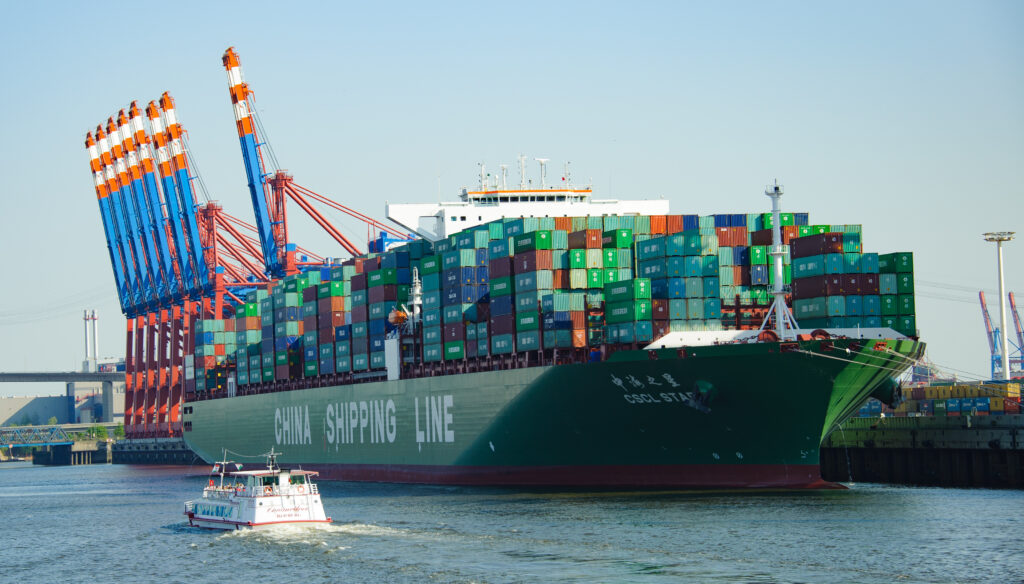
The trade figures explain the urgency. Eurostat’s August release put EU goods imports from China at €154 billion in the second quarter of 2026 and the bilateral deficit at €103 billion—the largest quarterly deficit since the third quarter of 2022. In the first half of the year, imports of Chinese electrical equipment, machinery, and vehicle products increased, while European exports of machinery and vehicle products declined. These are goods statistics, not a balance sheet of the entire relationship. But they show pressure extending into the very industries that Europe’s industrial heartland long regarded as its strongest positions.
China’s official statistics probably understate its dependence on exports. They attribute only 0.8 percentage points of first-half GDP growth of 4.7 percent—about 17 percent of the total—to net exports of goods and services. Yet many analysts estimate actual domestic growth to be much lower: between 0 and 2 percent, depending on the source. In key sectors where overproduction is rife, exports are the only way out for the bevy of domestic firms vying for sales. The consequences abroad can be devastating.
The word “subsidies” does not explain everything. Chinese manufacturers also benefit from accumulated skills, supplier networks, scale, and rapid product development. Europe cannot legislate these advantages away. Yet low Chinese goods costs in the short term must be weighed against long-term dependence. The consumer-citizen sees the short-term benefit rather than the long-term downside. Policymakers must identify not only subsidized advantage, but strategic vulnerability.
Europe has taken some steps to address these vulnerabilities. In July 2026, a new steel regime took effect, limiting duty-free imports to 18.3 million tons a year and imposing a 50 percent duty above the quotas. Also in July, a temporary €3 customs duty began applying to low-value e-commerce imports, calculated by product line rather than once per parcel. Reportedly, this has slowed the rock-bottom-price sales of China’s e-commerce firms.
Importantly, the Commission has continued to take measures while talks with China are ongoing. This decision reflects an unofficially expressed concern that China often uses such talks to delay substantive action. These measures now extend to some goods far removed from the strategic sectors always mentioned in the news. Political language has also hardened. In her State of the Union address, European Commission President Ursula von der Leyen described the second China shock as already under way and promised to use the EU’s available tools to counter it. Case-by-case enforcement remains indispensable. All of this comes with its own limitations. While the talks drag on, competitive pressure on Europe’s own exports spreads elsewhere. The Commission has been right to express, informally, a sober judgment of the outcome to be expected from this process.
China has also opened similar, and possibly more active, channels with the United States: given the hostility toward Europe on display in Washington, Beijing can easily play a triangle between the Maroš Šefčovič–Wang Wentao dialogue and the Scott Bessent–He Lifeng track. China has just opened a sequence that reminds one of China’s tactics at the time of former U.S. President Joe Biden’s election in 2020, when it made an offer to the EU on a new investment treaty. It has now announced a limited “understanding” with Commissioner Maroš Šefčovič on hybrid car exports, while bargaining with the Trump administration on future duties. There are parallels with 2020: strong if undetailed concessions from the EU as well, a nudge to the U.S. to move in the same direction. Time will tell if the “understanding” is followed through, but one thing is clear: the EU should not stop its momentum to create more effective deterrents.
On hard political talk, Commission President von der Leyen herself has acknowledged that “words are good. But deeds are better.” Indeed, even if the Commission has over the years pivoted to action, there is still a long road ahead. The additional duties on some EVs came faster than the investment-screening process did a few years ago, but still not fast enough to stem the tide from China’s quickly adjusting firms. The Anti-Coercion Instrument could be a powerful tool against blackmail, but it has not yet been used even once. There is now talk of a Franco-German proposal that would complement it with rules similar to the U.S. Section 301 and Section 232: speedy, strong, and—in Europe’s case—clearly breaking away from the rule of proportionality that, along with multilateralism, has been holding back the Commission’s hand. Unlike the nuclear deterrent with which it is sometimes loosely compared, a trade deterrent must be used to be credible. China has not refrained from making exemplary demonstrations.
Two additional fields of trade defense are critical. One is the Industrial Accelerator Act (IAA), unfortunately caught in an internal negotiation among the European Parliament, the Council, and ultimately the Member States that promises to drag on. In the meantime, investment decisions are being made, and Member States or companies can compete with one another for those investments. Although no country is named, key provisions of the IAA are designed to convert China’s tsunami of exports into viable direct investment and production inside Europe. Avoiding so-called screwdriver factories, keeping control of employment choices, and extending agreements to suppliers are essential. This is the route China itself followed from 1979; precisely for that reason, it knows all the tricks in the book, and the risks of unplanned technology transfer.
The IAA is a pilot, or demonstrator, piece of legislation that would allow for more industrial policy and a foreign-investment regime on terms acceptable to Europe—something China, of course, has itself practiced since the late 1970s. As it stands, the draft legislation includes flexibilities for Member States and at least one major olive branch to China, a non-signatory of the EU’s International Procurement Agreement: its companies will nonetheless be able to bid for public tenders in Europe if their price comes in 25 percent below the competition’s. For infrastructure and many other public goods, that is easily achievable for Chinese firms with lower costs. In any case, the IAA currently covers only 2 percent of the European market.
Other areas are of critical importance, especially those concerning economic security, though they are too numerous to describe here. While rejecting decoupling from China, for example, the EU now has provisions to ensure the diversification of sources for critical materials. This is one area where cooperation with the United States seems to endure, with an April 2026 agreement on sourcing, followed by the EU signing up to Washington’s December 2025 ‘Pax Silica.’ But the erratic path of U.S. technology denials to China makes automatic alignment impossible in any case—though some in the U.S. administration do not hesitate to demand it. Other measures, for example on the conduct and sourcing of Chinese firms, are now fiercely countered by China, which has forbidden those firms to answer inquiries, treating them as improper “extraterritorial jurisdiction.” A key European concern is now that China will meet additional defensive trade measures not only by raising its own tariffs but also by denying access to key products and ingredients.
Painful adjustments cannot be delayed. Certainly, China’s energy and land costs cannot be matched and its large savings and low household consumption are now complemented by massive monetary creation, currently 50 percent year on year—more than its East Asian neighbors, who also let their currencies slide. But what did we do in the decade when European interest rates were cheap, at 1 percent or even negative in some cases? With national interests battling one another, we weakened and delayed the deepening of a European capital market. And even if the EU is doing better than usually reported on implementing the Draghi report, there is only so much that can be done with an EU budget of 1 percent of Europe’s GDP. There are certainly some gap fillers—such as common insurance schemes to encourage lenders—but they cannot replace a major reorientation of capital.
As believers in the virtues of a market economy and competition, we Europeans should not call for a reorientation to follow Chinese lines—that is, a massive shift of resources toward centralized and largely public or quasi-public financing. Much of the shift from public expenditures to capital markets will have to come from a reduction in the former’s share of GDP if growth remains low, and from their stabilization should growth accelerate. We leave aside here the Draghi report’s other recommendations, starting with the streamlining of rules and the speeding up of decision-making, which are now obvious to the general public.
Almost every analysis now converges on China as a problem. Yet there is both the issue of short-term consumer interest and a tangle of unclear processes—Member States, the Commission, the European Parliament—and an even worse spaghetti bowl of public administrations and agencies across the EU. The United States has much clearer rules for access to its market and investment base. More broadly, Europe cannot separate trade from geopolitics if China, for example, supplies weapons or key dual-use inputs to Russia.
With and Without the United States
In all this, rather than giving way to its own fears of Chinese reprisals or of the United States moving on its own, Europe should consider that China itself has much skin in the game, given its dependence on exports. Publicly, China’s government had lectured the EU on the incompatibility of voluntary export quotas on hybrid cars with WTO rules. But its actual approach had two prongs: Chinese firms have been authorized to negotiate co-investment deals with European counterparts, and they are doing so. It is a foot in the door for them, but also a welcome form of import substitution. By reaching an “understanding” on hybrid vehicles—and so far on no other category of Chinese exports—the Chinese government is hinting at increased flexibility. Interestingly, the U.S. president is also now gesturing on the auto front, as the door to this U.S. market has so far remained closed for Chinese firms. A lesson for Europe: unless you show a big stick, you will not get carrots. A warning for the United States: you might be played by China through peer pressure, in a fashion that Europe has long experienced.
Ideally, rebalancing the global economy—the stated objective of this year’s G7—should help. That requires winning the support of East Asian countries other than China: Japan and Korea, which, along with Taiwan, run large current-account surpluses matched by cheaper currencies. To woo them, we would need to shift our new defensive trade and investment tools from country-agnostic policies to measures explicitly targeting China. Whether by doctrine or for fear of antagonizing China head-on, the EU is not ready for this. The United States is, now more than ever, pursuing its own course in monetary and capital-market policy. It is unlikely that we could team up effectively in the short term. Collective bargaining for a realignment of currencies—what some call a new Plaza Accord—is unlikely.
For the time being, then, it is the combination of America Shock 1.0—the combination of its own tsunami of well-funded and epochal innovation with unfavorable attitudes in the U.S. administration—that forces Europe, its policymakers, and hopefully its public to stand on its own. With China, the cost to consumers of sacrificing some of the “everyday low price” approach will have to be debated publicly against the risks to Europe’s economic foundations and security. With the United States, apart from hoping for better times, Europe cannot fail to weigh what a self-denial of much of the digital revolution, in the name of sovereignty, would imply for our future productivity and global competitiveness.