

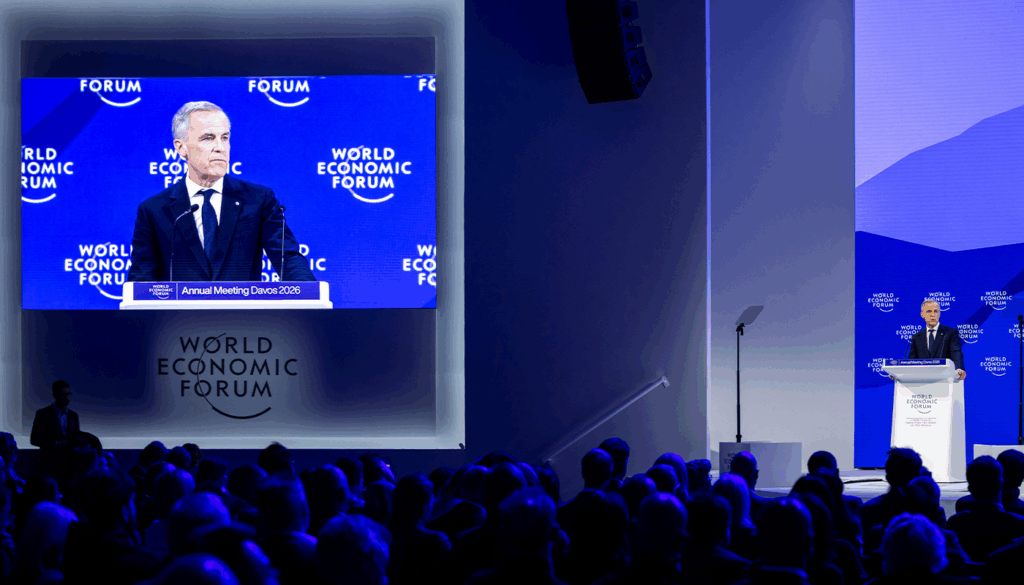

The year 2026 marks the quiet coincidence of two anniversaries that once structured the modern world: the 250th year since the founding of the United States and the 250th anniversary of Adam Smith’s “The Wealth of Nations.” Together, these events sustained a singular, enduring belief—that order could emerge without constant command. Power, it was assumed, would discipline itself; openness would do the rest. Over two and a half centuries, Smith’s invisible hand hardened into an invisible assumption. Integration was expected to produce stability, interdependence was meant to tame rivalry, and rules were treated as a substitute for dominance. American power gave that assumption global reach by underwriting the conditions in which it could plausibly operate.
That fusion is now fracturing. Multipolarity has reintroduced rivalry as a structuring force while simultaneously eroding the expectation that openness can organize the system on its own. It is perhaps fitting that this moment also coincides with a third centennial: the birth of Miles Davis, a jazz revolutionary who understood that survival relies not on repeating a formula, but on knowing when to abandon it without losing coherence.
The global order is no longer governed by a shared consensus of reality. Power no longer concentrates in one place, and authority struggles to command assent. In this vacuum, certainty performs where analysis once mattered; what passes for clarity is often confidence without grounding, or conviction without comprehension. While some diagnose this as a crisis of information, it is more accurately understood as a crisis of orientation.
In a world marked by such profound disorientation, attempts to declare definitive winners and losers among states can be misleading. Periods of epistemic uncertainty are precisely those in which surface judgments obscure deeper transformations. We inhabit a moment of transition where outcomes are not yet legible and trajectories remain unstable. Furthermore, power itself is being reorganized faster than the concepts used to describe it.
Antonio Gramsci famously defined the interregnum as a twilight era in which the old order is dying and the new one struggles to be born. In such periods, authority persists, but legitimacy erodes; power remains operative, but belief no longer follows. Consequently, domination relies increasingly on force, habit, or performance rather than shared conviction. The result, Gramsci warned, is the emergence of “morbid symptoms”—signs of systemic strain that appear before a new equilibrium can form.
Today, those symptoms are unmistakable. Epistemologically, truth fragments and certainty becomes theatrical. Psychologically, anxiety replaces expectation and cynicism crowds out trust. Politically, institutions endure but inspire less allegiance, while economically, integration generates vulnerability as often as prosperity. The sociologist Zygmunt Bauman later captured a similar condition in his description of a “liquid world”—one in which structures dissolve faster than replacements can solidify. The contemporary international system exhibits both characteristics: the familiar architecture of global politics is eroding, while its successor remains undefined. The destination remains opaque, but the trajectory is unmistakable: the world is moving away from a single organizing center toward a condition of multiple, overlapping, and contesting authorities.
At the level of states, the “losers” of the interregnum are often easier to identify than the winners. Europe offers the most distinct case. Its diminishing relevance is not a function of economic scale or normative ambition, but of a persistent, paralyzing gap between rhetoric and strategic autonomy. For decades, the continent has spoken the language of global responsibility while operating at the margins of hard power. Today, that dissonance is becoming unsustainable. Europe’s internal divisions and reliance on external security guarantees have constrained its ability to shape outcomes, reducing it to a reactive actor in a theater it once directed.
This structural imbalance was recently laid bare when the NATO Secretary General Mark Rutte, with unusual bluntness, stated before the European Parliament that Europe simply cannot defend itself without the United States. The remark provoked anger across European capitals not because it was false, but because it publicly codified a dependence that the continent has long rhetorically denied. This vulnerability was further underscored when Richard Grenell, a prominent voice of the Trump camp, openly challenged the validity of the European project itself—arguing that Brussels stifles economic dynamism and advising candidate countries to reconsider EU integration as their strategic horizon.
Together, these interventions signal a profound shift. Europe is no longer addressed merely as a junior partner, but as a system whose relevance and viability are openly questioned, even by its historical allies. The challenge now confronting Brussels is existential: it must demonstrate, through internal reorganization rather than high-minded rhetoric, that it can convert its economic scale into genuine strategic capacity.
The 2026 World Economic Forum at Davos offered a revealing illustration of how power operates in this new environment. While many European officials interpreted Donald Trump’s moderated tone as a victory for dialogue and the resilience of the rules-based order, historian Niall Ferguson reached a starkly different conclusion: Trump did not retreat; he dominated the stage.
Europe’s error was misreading the nature of power in the interregnum—treating spectacle as a threat to be managed, rather than a currency to be spent. As Ferguson notes, much of the populist posture functions as strategic bluff. In multipolarity, certainty is largely performative, not predictive. In a fragmented system where consensus is impossible, agenda control matters more than procedural reassurance. Davos became less a forum for negotiation than a contest for narrative authority—a contest Europe lost by mistaking silence for agreement.
This episode revealed a deeper transformation in the exercise of authority. The era of grand geopolitical doctrines is giving way to the logic of instinct, leverage, and deal-making. Alliances once enshrined as enduring security commitments are increasingly treated as negotiable arrangements, contingent on immediate returns. The language of shared values is being displaced by the calculus of transactions. Consequently, the old rules-based order is not vanishing in a single collapse, but eroding through the steady replacement of universal frameworks with ad hoc bargains—overlapping coalitions assembled tentatively around defense, trade, energy, and climate. Order no longer rests on agreed principles; it rests on the deal.
Against the theatrical certainty of Davos, it was the Canadian Prime Minister, Mark Carney, who articulated the new reality with unusual candor. The “rules-based order,” he acknowledged, was never fully real. It functioned selectively, asymmetrically, and was unevenly enforced; yet, it endured because American hegemony possessed the surplus capacity to absorb its contradictions. That bargain has now collapsed.
What we are living through is not a managed transition, but a rupture. Integration no longer guarantees mutual benefit; it increasingly produces exposure, dependence, and strategic vulnerability. The illusion that interdependence is automatically benign can no longer be sustained when power has fragmented and enforcement has weakened. In this sense, Carney’s intervention does not lament the passing of the old order; it diagnoses its expiration. Multipolarity has clarified what had long been obscured: that the system was conditional all along. The task ahead is learning how to govern in the absence of that fiction.
If the old order was sustained by conditional rules, its collapse forces a harder reckoning. Once the illusion of coherence falls away, the question of winners and losers reasserts itself in an altered, more brutal form. In a fragmented system, power does not translate automatically into success, nor does resistance reliably produce autonomy. The costs of disorder surface unevenly.
What follows is not a clean redistribution of advantage, but an accumulation of losses—human, institutional, and conceptual—that no amount of narrative control can conceal. Wars offer the starkest accounting. Russia and Ukraine are both losing, measured above all in human lives, regardless of shifting front lines or tactical gains. Israelis and Palestinians are losing, measured in irreversible human cost. Across parts of Africa, from the Sahel to the Horn, conflicts that rarely dominate headlines continue to claim lives—including religious minorities targeted amid state collapse and militant violence.
In these cases, victory narratives collapse under the weight of casualty figures. By the most basic metric, everyone involved is losing. One could extend the ledger further: Is the United States winning by maintaining global reach, or losing by bearing disproportionate costs? Is China winning by expanding influence, or losing by provoking counter-balancing coalitions? Such questions generate endless data comparisons but little strategic clarity.
Instead of tracking which nations are winning, this article examines the survival, erosion, and transformation of ideas during the multipolar transition.
Power operates through concepts as much as through states. Democracy, liberty, sovereignty, multilateralism, truth, expertise, even the social sciences themselves—these are the frameworks through which political actors navigate reality. They are human inventions, not constants, and they endure only as long as societies continue to invest belief and authority in them. When these frameworks weaken or distort, policy fails regardless of material strength.
We now inhabit a world of multiple parallel truths, each internally coherent, none universally accepted. What appears as conviction to one audience registers as propaganda to another. Pluralism has given way to something more corrosive: a conflict centering on perception itself. In such a world, certainty often replaces understanding, confidence substitutes for knowledge, and prediction becomes performance rather than analysis.
In this environment, “political correctness,” long treated as a moral advance, has revealed itself as a distinct conceptual casualty. Designed to expand inclusion, political correctness frequently substituted moral signaling for robust political argument, narrowing the space for dissent while widening public resentment. In a multipolar environment marked by plural values, the enforcement of uniform norms without shared authority proved unsustainable. My purpose is not to celebrate decline or predict collapse, but to understand which ideas retain explanatory power in a system defined by uncertainty—and which no longer do. Because in an age when the future is opaque, the most consequential losses are not always territorial or economic. They are intellectual. And they shape everything that follows.
Multipolarity is Not Innocent
Multipolarity is frequently romanticized as a moral corrective to unipolar excess—a promise of more voices, greater balance, and enhanced justice. History, however, suggests a harsher reality: multipolarity becomes destabilizing when the diffusion of power outpaces the institutions designed to regulate it. The contemporary world already demonstrates this danger. Multiple great powers now coexist without an agreed mechanism for managing their competition. The UN Security Council is paralyzed, global trade rules are fragmenting, and arms control regimes are eroding. Crisis management has become ad hoc and reactive.
This exposes a critical distinction that is too often ignored: the gap between structural multipolarity and operational multipolarity. Structurally, the world has already transitioned; power is diffuse. Operationally, however, the system remains deeply unprepared for that reality. Multipolarity demands institutions capable of channeling competition; absent that framework, it accelerates instability rather than containing it. The risk is that we are creating a system that redistributes power faster than it can generate the rules necessary to manage it.
Narratives proclaiming the “death of multilateralism” are misleading. What is collapsing is not multilateral cooperation per se, but the specific architecture of multilateralism built around American primacy. Post-1991 institutions assumed a world in which the United States would underwrite norms, absorb costs, and enforce outcomes. That assumption is no longer valid, and Washington itself has helped dismantle it.
The Trump administration made this explicit. Withdrawals from over sixty international entities—including UNESCO, the WHO, and the UN Human Rights Council—along with funding cuts to core agencies, were not merely policy disagreements. They were a declaration that institutions would be tolerated only when they aligned perfectly with national preferences. Sovereignty was effectively redefined as the right of exit. The damage extended far beyond budgets; these moves signaled to rivals and partners alike that institutions were optional, norms negotiable, and leadership transactional. Even as later administrations reversed specific decisions, the precedent of “optionality” remained.
Meanwhile, rival powers did not abandon multilateralism; they reconfigured it. China expanded parallel institutions, the BRICS bloc grew, and regional forums proliferated. Instead of a single multilateral system, the world now navigates overlapping, competing, and partially incompatible architectures. Multilateralism has not died; it has fractured into parallel forms—each claiming legitimacy, none commanding universality.
The strain is no longer abstract. The UN Secretary-General has warned of imminent financial collapse as major contributors delay or withhold funding, forcing operational retrenchment—an unmistakable sign that even the core institutions of the postwar order now depend on political bargaining rather than shared obligation.
Ultimately, multipolarity itself may prove to be either a winner or a loser, depending on whether it can be embedded within a functioning multilateral framework. Power can be redistributed without catastrophe only if there are institutions capable of absorbing rivalry and containing escalation. For all its dysfunctions, the United Nations remains the only global architecture with even minimal universality, and there is no credible substitute waiting in the wings.
Attempts to bypass this reality have already surfaced. Proposals such as the leader-driven “Board for Peace,” unveiled in Davos, reflect a dangerous belief that legitimacy can be improvised through ad hoc authority rather than institutional mandate. Such initiatives promise decisiveness but risk replacing rules with leverage and process with personality. Dismantling multilateralism is far easier than governing without it. If the new distribution of power cannot be framed within shared institutions, however imperfect, the transition will expose the ultimate limit of the international system: it is possible to have a multipolar world, but it is not possible to have a stable one without rules.
Sovereignty: From Loser to Conditional Winner
Sovereignty has returned to political discourse as a rallying cry. Governments invoke it to justify withdrawals, vetoes, border controls, and resistance to external norms. In the multipolar imagination, sovereignty is often treated as a corrective to overreach and a bulwark against dependence. Yet, in practice, it has emerged as one of the most misused and frequently diminished concepts of the age.
The central paradox of our era is not the disappearance of sovereignty, but its de-sovereignization. This is a distinctly post-Westphalian condition: states retain legal independence but lose leverage over the systems that determine outcomes—finance, trade, supply chains, and digital infrastructure. Sovereignty endures not because it controls these flows, but because it anchors responsibility. In a world of dispersed power and fragmented authority, it remains the only principle that binds decision to consequence. Markets cannot assume responsibility; institutions diffuse it; and networks obscure it. Only sovereign authority can still be held accountable for choice, failure, and restraint. Thus, in moments of disorder, sovereignty does not disappear; it resurfaces as the only political unit capable of bearing obligation.
Venezuela illustrates sovereignty as a “loser.” The country never ceased to exist as a legal entity, yet during the Trump administration, its autonomy was effectively hollowed out. Washington recognized an alternative claimant to executive authority, frozen state assets, and imposed sweeping sanctions, framing regime change as policy. Venezuela’s sovereignty survived in law but collapsed in practice. Isolated from financial systems and multilateral mechanisms, it retained non-interference without influence. Sovereignty became a shield, but a shield without leverage.
The United States itself experienced a parallel dynamic from the opposite position. The “America First” doctrine framed withdrawal from multilateral commitments as a sovereign reassertion. In reality, exits from international institutions reduced Washington’s ability to shape norms and agendas. Even symbolic gestures, such as the floated idea of acquiring Greenland, signaled a return to a nineteenth-century, power-centric conception of sovereignty that weakened institutional authority rather than strengthening it.
These cases reveal a core truth of multipolarity: sovereignty exercised as insulation often diminishes power. It turns the state into a fortress—secure, perhaps, but increasingly irrelevant to the networks that govern the world.
However, sovereignty does not disappear entirely. It re-emerges as a conditional winner when practiced as flexibility rather than rigidity. India’s multi-alignment strategy exemplifies this shift. By engaging the United States, China, and Russia simultaneously, New Delhi preserves maneuverability rather than choosing dependence. Similar patterns appear among middle powers across the Global South, where alignment is diversified to maximize leverage.
In this form, sovereignty advances through selective engagement. Dependence is accepted as a structural reality to be managed, and influence is cultivated through negotiation over time. In the age of multipolarity, sovereignty loses when treated as a wall. It wins only when treated as a positioning strategy—a platform for navigating the currents of power rather than trying to stem them.
The Myth of Inevitable Liberalism
Few ideas have suffered a more comprehensive collapse in the twenty-first century than the belief in linear progress toward liberal democracy. Once celebrated as the logical endpoint of human development, liberalism now appears as merely one option among many—and frequently not the most attractive to societies exhausted by instability or economic stagnation.
This shift does not constitute an ideological victory for autocracy; illiberal systems face their own profound crises, from legitimacy deficits to chronic economic vulnerability. Nor does it validate alternative models wholesale. What has collapsed is the teleological certitude: the assumption that history moves in a single, cumulative direction.
In this respect, the global financial crisis of 2007-2008 marked the decisive rupture. Emerging from the very core of the political and economic West, it exposed structural frailties in the liberal model and shattered its claim to technocratic infallibility. For much of the Global South, liberalism ceased to appear as a universal template of competence and began to look like a local preference of the North Atlantic.
It is no accident that thinkers such as Oswald Spengler, Arnold Toynbee, and Pitirim Sorokin are finding a renewed audience in 2026. These theorists rejected linear progress in favor of cyclical or civilizational dynamics, emphasizing rise, exhaustion, rupture, and transformation. Once dismissed as pessimistic or antiquated, their arguments resonate anew in a world defined by divergence rather than convergence.
Multipolarity renders visible what linear models struggle to explain: political systems do not evolve along a shared path. They respond to culture, memory, economic structure, and specific historical circumstances. Non-liberal systems can, and do, deliver high performance in specific domains. Societies prioritize values—order, growth, identity, dignity—without converging on a common hierarchy.
Geopolitical competition further constrains democratic promotion by offering alternative centers of attraction. In such an environment, the survival of liberalism depends on a fundamental reframing: it must justify itself as a distinct political choice rather than presume itself to be the inescapable destiny of mankind.
The Ascendance of Narrative Power
The idea that political truths are universal—valid everywhere, for everyone, at all times—is one of the great casualties of the multipolar transition. This is not because universal truths have lost their moral appeal, but because they have lost their geopolitical backing. For decades, the unipolar moment gave Western norms disproportionate reach. Human rights, the rule of law, democracy promotion, and free markets were not merely values; they were components of a global narrative underwritten by unmatched power. As that power diffuses, the universality of those narratives’ dissolves.
Multipolarity empowers competing truth regimes. In this new environment, facts become partisan, information is weaponized, and legitimacy is inextricably contested. The very idea of a shared truth, or even the possibility of one, is losing ground to competing epistemologies. Whether one calls it postmodern relativism or geopolitical pluralism, the result is the same: truth has become jurisdictional.
Facts are now bounded by political communities. A claim that is “true” in Washington is rejected in Beijing; a narrative embraced in Brussels is dismissed in Moscow; an interpretation accepted in Delhi is contested in Riyadh. This fragmentation is fundamentally a crisis of authority. Without a global hegemon to enforce a common epistemic framework, truth loses its universality and becomes a matter of raw narrative competition. In the multipolar world, truth remains, but the monopoly on it is gone.
What follows the erosion of universal truth is not chaos, but a different operating logic. The multipolar age is defined less by shared standards than by the coexistence of incompatible ones. Political, economic, and social systems no longer aspire to convergence; they assert legitimacy on their own terms, shaped by domestic histories, cultural priorities, and strategic imperatives.
China frames governance through the lens of continuity and civilizational endurance. India blends democratic procedure with cultural particularism. The Gulf states pursue efficiency through centralized technocratic authority. Even within the West, coherence fractures as societies disagree on the fundamental meanings of progress, justice, and responsibility. Multipolarity provides the structural space for this diversity to persist. What disappears is the teleological expectation that one model must eventually prevail.
In the absence of a common horizon, influence shifts from rule-setting to sense-making. Power accrues to those capable of defining context, framing events, and stabilizing meaning for their specific audiences. Narratives increasingly function as authority where institutions no longer command reach or trust. This explains why narrative power has become central to statecraft. China emphasizes development and stability; Russia mobilizes grievance and resistance; Western states continue to frame authority through rules and rights; the Global South foregrounds historical asymmetry and unfinished justice. These narratives do more than communicate policy—they structure alliances, legitimize choices, and shape the battlefield of perception long before formal negotiations begin.
The Death of Skepticism
In the present moment, confidence is rewarded and doubt is punished. Across media, politics, and policy debates, there is a pervasive obsession with definitive assertions—what will happen, who is to blame, and what must be done—even when evidence is incomplete and conditions remain opaque. This produces a culture of false certainty: the appearance of knowledge without its substance.
In the age of multipolarity, where multiple power canters generate conflicting signals and ambiguous trajectories, skepticism—the discipline of acknowledging uncertainty and resisting premature conclusions—has become a conceptual loser. It is systematically edged out by the demand for speed, the algorithmic amplification of confident claims, and the strategic utility of certainty in competitive narratives.
However, the complexity of a multipolar world requires precisely the opposite: discernment and epistemic humility. Without these, policy becomes brittle, institutions lose credibility, and publics drift toward cynicism when confident forecasts inevitably fail to materialize. The loss of skepticism is not merely an intellectual lapse; it is a structural weakness in a world that increasingly depends on navigating uncertainty rather than denying it.
In such conditions, doubt is not a defect; it is the starting point of realism. Acknowledging uncertainty anchors judgment in the only posture suited to a fragmented and competitive world. We must begin by admitting that in a time of transition, the most dangerous actor is often the one who claims to know exactly where we are going.


