


In contemporary geopolitics, “multipolarity” has become a soothing bromide—a comforting shorthand used by analysts and statesmen alike to describe the post-American era. The decline of the unipolar moment has led a growing chorus of voices to hail the emerging order as a necessary “rebalancing” of global power: more equitable, more diverse, and more reflective of a post-Western reality. However, this optimistic description masks far more than it reveals. Multipolarity does not restore equilibrium to the international system; it merely atomizes it. Crucially, it distributes power without distributing responsibility.
What we are witnessing is not the emergence of a stable concert of powers, but a fragmented environment where authority is diffuse, norms are inextricably contested, and enforcement is fatally selective. Sovereignty is effectively delaminating: authority is migrating simultaneously upwards to regional hegemonies, outwards to multinational corporations and technology platforms, and downwards to militias and non-state actors. In this crucible of intense geopolitical competition, the very institutions and norms designed to moderate violence and protect civilians are being hollowed out.
This article advances a central thesis: The transition to multipolarity creates distinct classes of winners and losers—but the losers are human beings rather than strategic entities. The actors best equipped to thrive in this disorder are those capable of weaponizing fragmentation, negotiating transactional deals between rival blocs, and operating unconstrained by binding norms. Those left behind are not simply “weak states,” but specific populations—women, refugees, minorities, and civilians in conflict zones—whose physical survival relies on the universal enforcement of norms that are becoming increasingly optional.
Afghanistan serves as the grim bellwether for this dynamic. For nearly two decades, it was the focal point of international intervention, justified first by the War on Terror and later by the imperatives of human rights and nation-building. Today, it has been reduced to a marginal footnote in a world consumed by great-power rivalry. Its slide into the abyss of political exclusion, economic collapse, and humanitarian disaster is not an anomaly of history. It is a precursor of the future.
From Unipolarity to the Fragmentation of Power
The post-Cold War order was anchored by a tripartite foundation: the military primacy of the United States, an economic globalization directed by Western-led institutions, and a normative framework that enshrined human rights and civilian protection as universally applicable principles—however irregularly they were applied in practice. Today, this foundation has fractured.
On the economic front, the center of gravity has shifted irrevocably. The relative weight of the United States and its allies has suffered a structural erosion. According to World Bank data, advanced economies accounted for more than 60 percent of global GDP in 1990; today, that share hovers at roughly 40 percent. While the ascent of China has been the primary driver of this realignment, it is far from a singular phenomenon. Economic dynamism has migrated to a broader constellation of actors, including India, Southeast Asia, the Gulf states, and emerging centers of growth across Africa.
Militarily, while the United States retains conventional supremacy, its dominance is increasingly brittle. As noted in the 2024 edition of The Military Balance, the annual assessment of global military capabilities published by the International Institute for Strategic Studies, American power is now contested effectively through asymmetric vectors—cyber operations, proxy warfare, and weaponized information campaigns—that bypass traditional strengths.
Most critically, the normative consensus has disintegrated. We no longer inhabit a world converging toward liberal democracy, but rather a marketplace of competing governance models—liberal, authoritarian, and hybrid—that coexist without a common hierarchy or shared moral vocabulary.
The outcome of this dissolution is not balance, but deep asymmetry. The dispersal of power is uneven, creating a chaotic vacuum where the benefits of multipolarity are hoarded by elites, while the costs of disorder are concentrated with devastating precision on specific regions and vulnerable populations.
The Beneficiaries of Disorder
The primary beneficiaries of this fragmented order are the states capable of mastering the art of strategic ambiguity—moving fluidly between rival blocs without committing definitively to any single patron. This cohort, which includes India, Turkey, Saudi Arabia, the United Arab Emirates, Brazil, and Indonesia, exemplifies the strategy of aggressive hedging. By diversifying their trade and security architectures, these nations extract concessions from rival great powers while simultaneously insulating their internal governance from foreign scrutiny.
Empirical evidence vindicates this approach. According to the IMF’s October 2023 World Economic Outlook, since 2018, these middle powers have registered growth rates significantly outstripping both the sclerotic advanced Western economies and the fragile states of the periphery. Beyond economics, their diplomatic leverage has surged. As great powers compete to secure supply chains, sway international organizations, and project regional influence, these “swing states” find themselves in the enviable position of being courted by all sides.
However, this geopolitical arbitrage exacts a steep price in the currency of norms. As great power competition intensifies, the external pressure to maintain democratic standards, protect civil society, and uphold the rights of women is systematically subordinated to strategic expediency. Conditionality related to human rights—always an imperfect instrument—has lost much of its coercive power. In a seller’s market for alliances, autocrats can simply shop elsewhere, rendering the West’s moral leverage effectively obsolete.
While middle powers exploit this fragmentation for autonomy, China is the only actor possessing the capacity to systematically restructure it. Beijing’s grand strategy is not one of revisionist destruction, but of architectural renovation: it does not seek to incinerate the liberal international order, but to slowly and progressively rewire it through the quiet accretion of infrastructure, technology, and alternative institutions.
Through the Belt and Road Initiative, China has embedded itself into the physical anatomy of the Global South, financing ports, railroads, energy grids, and digital networks in more than 150 nations. This investment creates a deep strategic lock-in, generating dependencies that extend far beyond the balance sheet into the realms of governance and foreign policy alignment.
Crucially, the most profound lever of influence lies in the domain of standards. China is actively defining the rules of the road for the next generation of technology. Its champions export surveillance ecosystems, facial recognition suites, and data platforms that operationalize a state-centered model of control. In the vacuum left by the absence of binding global norms on digital governance, these systems are spreading rapidly—finding eager customers particularly in authoritarian and fragile contexts where regime survival is paramount.
The geopolitical consequences are measurable. As noted in a 2023 study by the Brookings Institution, there is a strong correlation between the adoption of Chinese digital infrastructure and political compliance: recipient nations tend to abstain or vote against Western-sponsored human rights initiatives at the United Nations. Multipolarity has provided the perfect cover for this shift, sanitizing the spread of digital authoritarianism under the polite banner of “normative pluralism.”
State actors are not the only entities capitalizing on this normative vacuum. The fragmentation of the global order has also unleashed a new era of sovereignty for non-state actors, most notably multinational corporations. As the cohesive regulatory frameworks of the previous era disintegrate, these entities have discovered lucrative opportunities to engage in aggressive regulatory arbitrage—exploiting the widening chasms between labor standards, data protection regimes, and environmental mandates in different jurisdictions. Far from fostering a race to the top, the emergence of competing geopolitical blocs has incentivized the creation of parallel, bifurcated markets where universal standards are treated as inefficiencies to be eliminated.
Nowhere is this dynamic more acute—or more dangerous—than in the realms of Artificial Intelligence and digital surveillance. While PWC finds that the global AI market is projected to surge to $1.8 trillion by 2030, there remains no legally binding international framework to govern its application in civilian or humanitarian contexts. The technology moves faster than the law, and in a multipolar world, the law may never catch up.
In the vacuum of regulation, conflict zones have become digital laboratories. Here, advanced technology is increasingly deployed not just to facilitate aid, but to gatekeep access to essential services, employment, and mobility. Vulnerable populations are subjected to mandatory biometric registration, opaque data sharing agreements, and algorithmic decision-making—often stripped of informed consent or independent oversight.
Multipolarity has accelerated this dystopian trend by dismantling the ethical guardrails that once accompanied the diffusion of technology. In a world where major powers are competing to dominate the AI frontier, the protection of data privacy in a refugee camp is dismissed as a collateral inconvenience.
The Human Collateral
While the new order offers unprecedented freedom for the powerful to navigate regulatory gaps, it offers no such protection for the weak. If the logic of multipolarity rewards adaptability, it ruthlessly penalizes fragility. In this unforgiving landscape, nations enduring conflict or political transition are no longer viewed through the lens of collective responsibility or humanitarian solidarity. Instead, they are reduced to arenas for strategic competition—vacuums to be filled by rival powers seeking leverage.
This shift has devastating practical consequences for peace. Conflict resolution is increasingly paralyzed by toxic proxy dynamics, fractured sanctions regimes that cancel each other out, and rival mediation efforts that prioritize influence over stability. The human toll of this geopolitical dissonance is stark: according to UN OCHA, more than 80 percent of global humanitarian needs are now concentrated in countries destabilized by proxy warfare.
The abandonment of burden-sharing is not merely a policy failure; it signals a fundamental restructuring of international ethics. It demonstrates a defining principle of the new era: multipolarity systematically separates moral obligation from geopolitical interest, leaving the vulnerable to fend for themselves in the crossfire of great-power ambition.
Afghanistan stands as the definitive, striking example of the human consequences of multipolarity. After nearly two decades of international intervention predicated on the high rhetoric of human rights and civilian protection, the country has fallen out of sight, relegated to the blind spot of the global conscience.
Since the Taliban’s return to power in 2021, the statistics of collapse are stark. The country has witnessed the systematic erasure of women from the public sphere—a gender apartheid codified by state policy. According to 2023 World Bank data, economic output has contracted by more than 30 percent, precipitating one of the world’s largest humanitarian disasters, with over half the population now dependent on external assistance for survival.
The international reaction to this catastrophe has been a study in incoherence. The response is a chaotic patchwork of sanctions, humanitarian exemptions, tentative diplomatic engagement, and divergent regional interests that generate conflicting pressures. Crucially, no single entity possesses either the capacity or the political will to impose meaningful limits on the regime.
This paralysis is a structural artifact of multipolarity. Regional powers, protecting their own flanks, prioritize border stability and counter-terrorism cooperation over human rights concerns. Global powers, meanwhile, are distracted by high-stakes competition in the Indo-Pacific or Eastern Europe. Consequently, while humanitarian aid continues to flow as a palliative measure, it arrives without a political architecture capable of addressing the structural exclusion at the heart of the crisis.
Afghanistan is not an isolated anomaly. It serves as a grim warning: in a multipolar world, entire nations can be allowed to fail, their populations abandoned to the caprice of local tyrants while the great powers look the other way.
The collapse of the Afghan state is not merely a geopolitical failure; it is a preview of a broader normative unraveling, particularly regarding the most vulnerable. The global regression of women’s rights stands as the canary in the coal mine of this shift. As the intensity of geopolitical competition accelerates, the promotion of gender equality is being systematically demoted. No longer viewed as a universal imperative, it is increasingly treated as a “cultural option”—a discretionary political preference often discarded to smooth diplomatic relations with useful autocracies.
In conflict zones, women are invariably the first indicators of societal collapse. They are invariably the first to be stripped of access to education, employment, and the public sphere. This is not merely a tragedy of rights, but a catastrophic failure of security strategy. Research consistently demonstrates that societies which systematically exclude women are structurally more prone to economic instability and the recurrence of violent conflict.
Yet, the mechanics of multipolarity have actively undermined the institutions designed to operationalize these findings. As authoritarian models of governance gain legitimacy in the new global marketplace, the external pressure to enforce gender norms is evaporating. In a world where alliances are transactional and sovereignty is paramount, the rights of women are fast becoming the first currency used to pay for the silence of strategic partners.
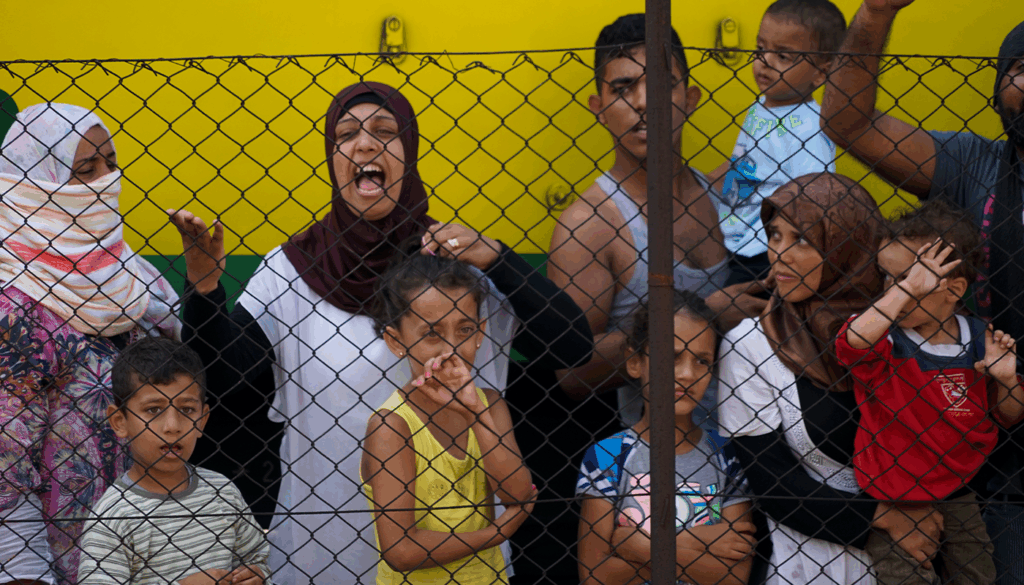
The crisis of global displacement has breached every historical precedent. Today, approximately 120 million human beings have been forced to flee their homes—a staggering figure that equates to the 12th largest nation on earth. But, as the scale of need explodes, the infrastructure of solution has paralyzed. Resettlement quotas and asylum acceptance rates across the Global North remain stubbornly stagnant, creating a bottleneck of human misery that stretches across continents.
In the ruthlessly transactional calculus of a multipolar world, refugees are no longer viewed primarily as victims in need of sanctuary. Instead, they have been transformed into kinetic weapons of statecraft. This weaponization manifests through a distinct set of tactics where the burden of care is aggressively externalized onto neighboring states, turning borderlands into indefinite holding pens. Simultaneously, refugee populations are commodified as bargaining chips in high-stakes negotiations—leverage to be traded for financial aid, political concessions, or silence on human rights abuses. This process culminates in the securitization of the asylum seeker, systematically reimagining the individual in public discourse not as a rights-holder, but as a security vector—a threat to be contained rather than a life to be saved.
This trend is indicative of the deeper, defining phenomenon of our time: the “great decoupling” of moral obligation from geopolitical interest. In the new order, humanitarianism is no longer a pillar of foreign policy; it is merely another card in the deck.
The Horizon of 2030
This commodification of human life is made possible by the hollowing out of the structures designed to protect it. International institutions, originally conceived as architectures of consensus, have been repurposed in this era as instruments of obstruction. The veto, once a mechanism of last resort, has become the first principle of diplomacy.
The paralysis is most visible at the apex of the system. The United Nations Security Council, crippled by the toxic rivalry between its permanent members, has effectively atrophied into irrelevance regarding major conflicts. But the rot extends downward: human rights mechanisms are increasingly selectively enforced, deployed only when they serve the geopolitical narratives of the powerful. Similarly, humanitarian access has been stripped of its neutrality and weaponized—granted or withheld as a lever of political coercion.
While these institutions retain a degree of relevance, their function has fundamentally shifted. They no longer serve as guarantors of international law, but merely as transactional forums for negotiation—hollow shells where deals are cut rather than norms upheld. The danger lies in our collective resignation to this new reality. When the dysfunction of institutions is accepted as standard practice, and paralysis is normalized, impunity ceases to be an aberration. It becomes the permanent law of the land.
Projecting the present vectors of multipolarity forward to 2030, three distinct strategic outcomes emerge—not as distant possibilities, but as rapidly solidifying realities. We face the imminent prospect of technological balkanization, where the era of a single, global internet is replaced by a “Digital Iron Curtain.” In this scenario, interoperability between competing ecosystems—Western, Chinese, and Sovereign—will degrade, creating siloed information spheres where the price of connectivity is liberty. Digital autarky will invariably lead to the expansion of the surveillance state, as regimes wall off their populations to maintain narrative control.
Beyond the digital realm, we are witnessing the containment, rather than the resolution, of failure. A core group of nations—with Afghanistan as the prototype—risks being consigned to the status of permanent crisis zones. These territories will be treated not as states to be rebuilt, but as pathologies to be quarantined. They will exist as an “archipelago of despair,” kept on life support by aid but politically abandoned by a world that views their instability as merely a manageable nuisance.
Perhaps most dangerously, we face a profound separation of norms. The universal application of human rights is being replaced by a transactional tiered system, or the commodification of dignity. In this new moral economy, rights will be invoked sporadically when politically convenient, enforced infrequently when costs are low, and traded frequently as bargaining chips in the grand bazaar of great-power diplomacy. Yet, it is imperative to recognize that these outcomes are not inevitable laws of physics, nor are they certainties written in the stars. They are policy choices being made, day by day, in the capitals of the world. The tragedy of multipolarity is not that it forces us to accept this chaos, but that we are choosing to call it order.
The Verdict of History
It must be stated clearly: multipolarity is not inherently unjust. A more distributed balance of power could, in theory, better reflect the diversity of the global population than the hegemony of a single state. However, multipolarity stripped of enforceable norms is a recipe for extreme instability. As we have seen, the beneficiaries of this emerging order are the actors capable of navigating—and exploiting—the fragmentation of authority. The victims are those whose rights, safety, and very existence have become negotiable.
Consequently, the ultimate test of the new world order will not be determined by which great power emerges victorious in the competition for hegemony, but by which populations are protected from its fallout. In this crucial respect, the verdict of history is far from decided. The architecture of the future is still being built, and the choice between a world of rules and a world of raw power remains ours to make.


