Photo: MEAphotogallery, CC BY-NC-ND 4.0
Stefan Jovanović is Vice President of the Center for International Relations and Sustainable Development (CIRSD). He previously served as a Member of Parliament of the Republic of Serbia and as a Country Representative to the Parliamentary Assembly of the Council of Europe.
The recurring calls from leaders across the Global South for reform of the international order are too often interpreted in Western capitals as little more than demands for greater financial support or expanded development assistance. Such a reading misses the essence of what is being asked. While access to affordable finance, debt sustainability and climate funding remain pressing concerns, these issues are manifestations of a broader challenge. Increasingly, emerging economies are seeking a different kind of relationship with the world’s advanced industrial democracies, one founded not on donor recipient dynamics but on genuine partnership in shaping the institutions, rules and norms that underpin the global economy.
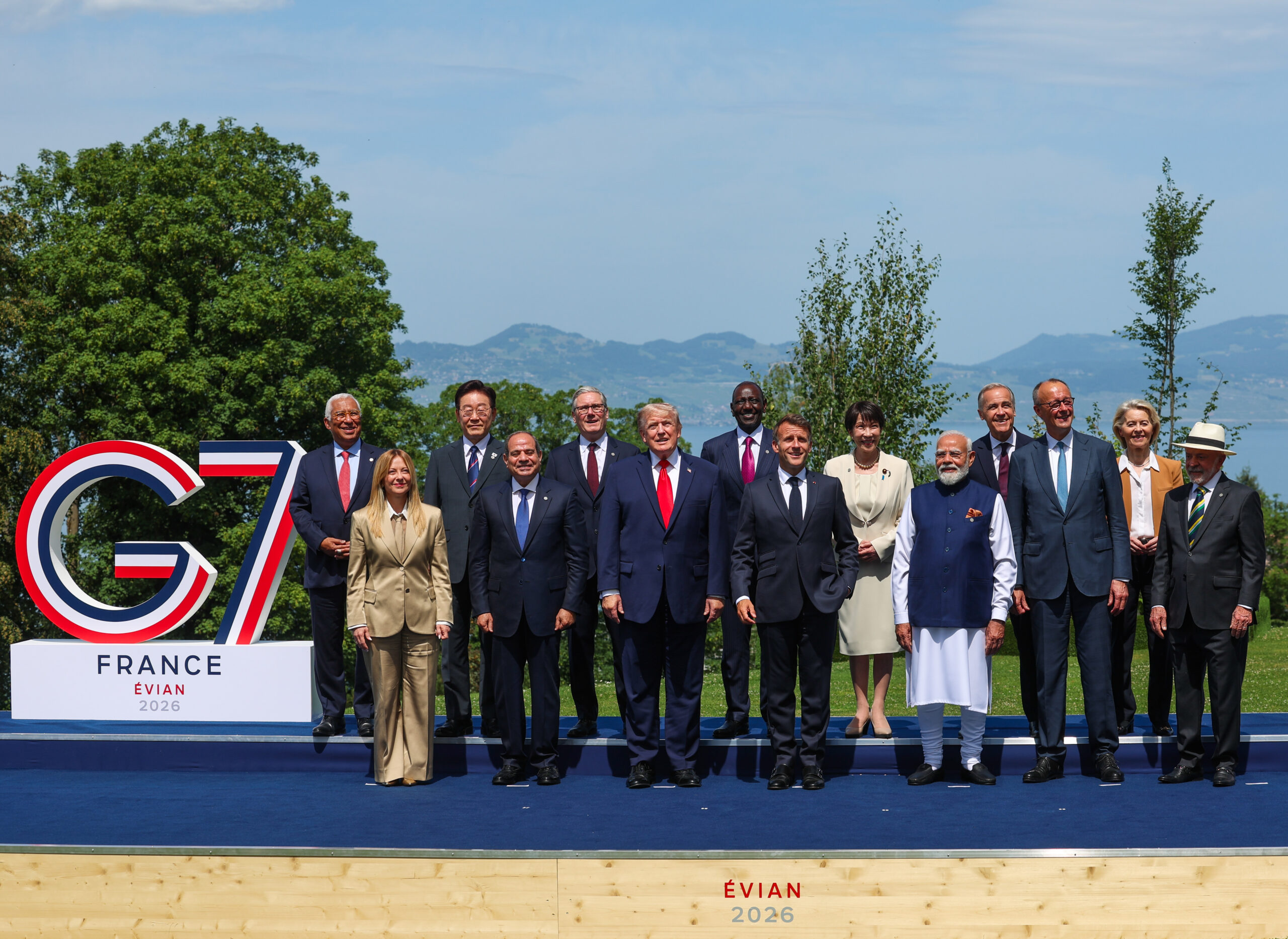
This message was unmistakable at this year’s G7 Summit. Kenyan President William Ruto argued that Africa’s engagement with the G7 should evolve beyond traditional development cooperation towards a new compact rooted in shared interests, mutual accountability and economic opportunity. India’s Prime Minister Narendra Modi has consistently advocated for international institutions that better reflect the realities of the twenty first century, while Brazil’s President Luiz Inacio Lula da Silva has repeatedly called for reforms that would make global governance more representative and responsive to the priorities of developing countries. Although these leaders represent diverse political traditions and national interests, they increasingly converge around a common proposition: the international system must evolve if it is to retain both its legitimacy and its effectiveness.
This should not be interpreted as a rejection of the existing international order. Rather, it reflects the growing disconnect between institutions designed in the aftermath of World War II and a global economy whose centre of gravity has shifted considerably over recent decades. The defining question is no longer whether the G7 should engage more deeply with Africa and other emerging economies, but whether it is prepared to treat them as partners in shaping the international order rather than participants in one designed without them.
The case for such a shift rests on economic reality. Emerging economies account for an ever larger share of global growth, trade and investment. Africa is expected to experience the world’s fastest population growth over the coming decades, while its renewable energy potential, critical mineral reserves and expanding consumer markets make it indispensable to the global economy. India has become one of the principal engines of global growth, while countries across Latin America, Southeast Asia and the Gulf are assuming greater influence in finance, manufacturing and technology.
Yet this transformation has not been matched by equivalent reforms in global governance. Representation within international financial institutions continues to reflect the distribution of economic power of an earlier era. Debt restructuring remains slow and fragmented, climate finance continues to fall short of commitments, and developing countries often face significantly higher borrowing costs than advanced economies despite being expected to finance ambitious economic and energy transitions.
It is within this context that President Ruto’s call for a new compact should be understood. The objective is not to replace existing institutions but to modernise them. For Africa, this means moving beyond a relationship defined primarily through development assistance. Governments across the continent are increasingly seeking investment rather than aid, technology partnerships rather than technical assistance, and meaningful participation in decision making rather than consultation after decisions have already been taken.
The same aspirations are evident across much of the wider developing world. Whether discussing digital infrastructure, industrial development, energy security or critical minerals, emerging economies are looking for partnerships that expand productive capacity, improve access to capital and create more resilient supply chains. They are asking for a stronger voice in determining the rules that govern international finance and commerce, not special treatment within them.
A more durable compact would therefore require reforms that extend beyond development finance alone. Greater representation for Africa and other emerging economies within the Bretton Woods institutions would strengthen the legitimacy of decisions that affect the global economy. More effective mechanisms for sovereign debt restructuring would provide countries with greater certainty during periods of financial distress, while reforms to multilateral development banks could unlock significantly more private capital for infrastructure, energy and industrial development. Equally important would be a renewed commitment to expanding trade and investment on terms that enable developing countries to move further up global value chains rather than remaining primarily exporters of raw materials.
These reforms are not simply in the interests of emerging economies. They would also advance the strategic objectives of the G7 itself. As geopolitical competition intensifies and supply chains become increasingly vulnerable to disruption, deeper economic partnerships with Africa and the wider developing world offer opportunities to strengthen resilience, diversify sources of critical minerals and accelerate the global energy transition. A relationship based on partnership rather than paternalism would better equip both advanced and emerging economies to respond collectively to challenges that no single group of countries can resolve alone.
None of these reforms should be viewed as concessions. They represent prudent investments in a more stable and prosperous international order. The G7’s own long term economic and strategic interests increasingly depend upon constructive partnerships with countries that will shape future patterns of growth, innovation and resource security. Challenges such as climate change, food security, migration and energy security cannot be addressed through institutions that fail to command the confidence of much of the world they are intended to serve.
This is why President Ruto’s intervention deserves attention beyond the immediate context of the G7 Summit. His call for a new compact echoes a broader conversation taking place across emerging economies. Leaders including Modi, Lula and others are not calling for the abandonment of multilateralism. They are arguing for its renewal through institutions that are more representative, more responsive and better suited to the realities of the twenty first century.
For the G7, the challenge is not whether change is necessary but whether it is prepared to lead it. A new compact with Africa and the wider Global South would not represent a departure from the principles of international cooperation that have underpinned decades of global prosperity. Properly conceived, it would ensure that those principles remain relevant in a world whose political and economic landscape has been fundamentally transformed.