


Today the international system, and globalization as its defining feature, lies in ruins—and is unlikely to recover from a series of recurrent shocks. Before speaking of sustainability and resilience, we must first ask whether the foundations exist on which either can be built. The old edifice has not been cleanly demolished: the Yalta-Potsdam order is gone, but its major institutions remain standing, non-functional yet unmoved. Hegemonic stability lasted barely a decade and was never fully recognized as such—seen instead as a pluralistic unipolarity—yet its habits and assumptions persist. What Hobbes called the war of all against all—ungoverned competition between states without shared rules or mutual obligation—has returned as a defining feature of the present moment. Before any new architecture can be constructed, this rubble must be honestly acknowledged.
With the world in disarray and the pace of change accelerating, the final destination increasingly blurred, which country, group of countries, or international body could emerge as the architect capable of mending the world—of restarting a system that is predictable, grounded in a basic set of rules recognized by all its members, and founded on unbreakable core principles? Such a system would need to provide much-needed resilience, sustainable development, and the capacity to address common challenges. Nor would this be a desirable role: it does not necessarily bring benefits to the architect, but vests enormous responsibility in whoever assumes it.
The United States—or more broadly, the U.S. and its core allies—is not well placed to offer the project of a new global edifice. The West still commands overwhelming cumulative potential, but that potential is no longer exclusive, and none of its components are beyond the reach of other players. European efforts to build military capacity, paradoxically, weaken rather than strengthen the alliance. More fundamentally, the rest of the world does not trust this group of actors. History has repeatedly demonstrated the consequences of misplaced trust.
Washington no longer appears ready or willing to shoulder such responsibility. Trump’s repeated declarations signal a desire to exploit the surrounding space for American advantage—America above the world rather than part of it—without offering the reciprocal benefits that have historically underpinned any established international regime. Europe alone, meanwhile, is capable of causing further suffering to its own people and those around it, but not of leading responsibly.
Nor can the West—collectively or individually—propose new forms of cooperative arrangement in which the principles of the UN Charter serve not as a distant ideal but as a practical guide. The Bretton Woods institutions are rigid and unable to adapt to current challenges. International regimes require one or several countries willing to bear significant costs and apply fair burden-sharing—a disposition that is conspicuously absent. Informal groupings like the G7, once useful for bridging the fault lines of formal organizations and maintaining the unity of the West’s three centers of power, have become irrelevant when they serve only the narrow purpose of preserving the status quo for their members. That is why Trump’s suggestion that Russia might be invited back to the G7 was met with no interest from Moscow.
This leaves the rest of the world. The ‘Global Majority’—variously described as the Global South or emerging economies—has a historic opportunity to reshape the global system in accordance with humanistic principles, moving from the role of speechless objects to active architects. While no single country from this group is ready or willing to assume individual leadership, collective leadership is a credible alternative. This brings us, logically, to BRICS—which, even as it navigates a difficult and turbulent moment, has by far the better credentials and authority to offer a new model of international relations.
Risen for Evolution
BRICS was born at a time of tectonic shifts in international relations, though the pace of those changes remained unclear. Although the direction seemed clear enough. The pace depended largely on whether the ‘geriatric’ powers of the West—already past the peak of their uncontested dominance—would accept a gradual and peaceful adaptation, or cling to the existing status quo. The G20 emerged with Western support, under the pretext of giving equal voice to the developing world, but it soon became apparent that it was designed as a platform to limit global reform to cosmetic changes while preserving effective power among the established wealthy. Non-Western G20 members largely accepted this arrangement, finding that they could negotiate somewhat fairer rules within this limited framework. None of them sought to challenge the existing order or press for deeper structural change.
No revolution was plotted within BRICS either. What united the founding members of BRICS was an understanding that the existing system needed adjustment to become more equitable and to acknowledge the interests of the emerging world—not that it should be broken. BRICS was conceived with a clearly evolutionary approach. In its early stages, little attention was devoted to building new institutions. Alternatives were proposed only when it became clear that established institutions were unwilling to adapt to new realities. Even when the New Development Bank (NDB) was created, it was never presented as a replacement for Western-centric models such as the World Bank—it was conceived as a complementary instrument to fill gaps that older, more rigid structures could not address. Evolution rather than revolution was the unanimous disposition of all BRICS members.
It is worth recalling that when BRICS began its practical journey in the mid-2000s, each of the BRIC countries—South Africa had not yet joined—maintained good relations with the Western world. It has become commonplace today to characterize BRICS as anti-Western, pointing to Russia’s and China’s strained relations with the United States and Europe, and Iran’s accession following the group’s expansion. But BRICS was never constituted against the West, and has not turned against it even as global confrontation has intensified. The principle of non-confrontation is deeply embedded in the group’s identity. Its loose structure provides for strong ties, precisely because the grouping is held together by a stable positive agenda rather than a common adversary.
Consider 2006, often cited as the birth year of BRICS. Russia was still a member of the G8, and that year held the chair—presiding over one of the most substantive summits of the twenty-first century, with a genuinely positive agenda addressing energy security, global health governance, and education. G7 countries were actively seeking to bring China into the group, returning to this idea repeatedly around the time of Japanese leadership. A dialogue between the G8 and major developing countries was also being established—later known as the Heiligendamm-Aquila Dialogue Process—raising real hopes that the West was prepared to engage seriously with the rest of the world. The G20 at that point was still a gathering of finance ministers and central bankers, and the G8 plus Outreach 5 was seen as the most credible mechanism for bringing North and South together.
When BRIC ministers met on the sidelines of the UN General Assembly in 2006, it was a meeting of countries that saw the value of coordinating on issues of common interest—not a gathering of those seeking to undermine the existing order. Each of the participants accepted the established institutional architecture and understood that they could benefit from it, provided it continued to operate according to its proclaimed rules of the common good. It soon became clear, however, that the talk of an end of history offering equal opportunities for all was wishful thinking, and that none of the established powers was genuinely willing to share privilege or engage in an equitable dialogue about a more just model of global cohabitation.
The elevation of the G20 to leaders’ level quickly proved unable to transcend narrow self-interest—a fact made plain by the failure to honor commitments made at the height of the U.S.-provoked financial crisis of 2008 to 2009, most obviously on the withdrawal of protectionist measures. The last meaningful concessions came around that same period: the 2010 IMF quota review, the first and so far the last such revision to recognize the growing weight of emerging economies—while the American veto remained effective even at the reduced voting threshold.
Institutions that ceased to serve exclusively the interests of the Global North were met with obstruction from their own creators. The WTO was rendered non-functional by the U.S. refusal to appoint judges to its appellate body. The culmination came earlier this year, when the United States withdrew from 66 international organizations and bodies it no longer deemed useful, 31 of them from the UN family. Any international mechanism involving the West that implied genuine power-sharing was either sabotaged or abandoned.
Credentials for an Architect
This leaves BRICS. But what grounds are there for believing that a grouping of ‘Global Majority’ countries—so diverse and often in disagreement—could be a viable alternative?
The arithmetic alone is striking. BRICS GDP at purchasing power parity exceeds $63 trillion—38.2 percent of the global total, or 39.4 percent including partner countries—against 29.5 percent for the G7. It is true that China accounts for a disproportionate share of this figure, and that recent growth has been driven largely by India. But these observations reinforce rather than undermine the case for collective leadership: no single member seeks to lead alone, and the world is not ready to accept individual leadership from any one actor. Joint leadership is not only feasible—it is the form the world currently needs.
Several parameters have remained constant throughout BRICS’s existence: each member’s share of the global economy has continued to grow; intra-BRICS cooperation has shown consistently positive dynamics, even if from a low base; and the group’s structure has remained horizontal, ensuring that no member dominates—a marked contrast to the hierarchical organization of the G7.
The demographic picture reinforces this. BRICS countries account for approximately 49 percent of the global population, or over 55 percent including partner countries. It is no longer credible that 55 percent of the world’s diverse peoples should subordinate themselves to the preferences of 10 percent of former colonial powers whose era of uncontested dominance has passed. That same diversity is itself an asset—enabling more balanced and inclusive decision-making and drawing on a broader range of experience.
BRICS countries collectively embody a richness of traditions, histories, cultures, and mentalities. Yet until very recently they have shied away from translating this into global leadership. Each member has tended to frame its ambitions in terms of its own development rather than its responsibility to the world. This must change. BRICS is not a fashionable academic concept, nor merely a beacon of hope for countries long exploited by Western powers, nor a challenge to the West. It is a whole new philosophy of global cooperation—one without hypocrisy, grounded in a genuine quest for equality and justice. In today’s world, it is no longer sufficient to articulate what BRICS stands for. It is time to act.
As the Russian foreign policy analyst Fyodor Lukyanov has argued, BRICS now stands at a historical turning point, compelled to find a way through extreme turbulence. Countries like China, with its economic and industrial weight, and Russia, with its military posture, do present capacities broadly comparable to those of the United States—a fact that is perceived as a threat. But the rise of the Global South in terms of individual countries gaining stronger positions on the world stage is not, in itself, what unsettles the existing balance. What does is the capacity of the ‘Global Majority’ to act collectively, to pursue common interests with a single voice—something that could ultimately challenge the United States’ ability to coerce and blackmail other countries.
BRICS has the potential, the goodwill, and the authority. But it still has homework to do before it can credibly assume the role of architect. It requires deeper mutual trust within the group, a clear-eyed and long-term understanding of each member’s national interest, and the discipline to resist the temptation to gain short-term advantage at a partner’s expense. It must also answer a harder question: how far is BRICS prepared to act as a group—to go beyond declarations on major issues and find solutions grounded in its own stated principles?
The New Development Bank is routinely cited as BRICS’s most tangible success—the only major development bank without Western sponsors and without political conditionalities attached to its lending, filling genuine gaps in infrastructure financing. But it is now clear that the NDB is no longer sufficient on its own. It has shown itself to be significantly constrained by those rules—most visibly in its suspension of Russian project financing following Western sanctions pressure in 2022, a decision that exposed the limits of its proclaimed independence. The question of whether the NDB can achieve genuine autonomy—and whether BRICS as a whole is prepared to support that transition—is one the group can no longer defer.
This does not mean BRICS must abandon pragmatic cooperation with the West. The history of dependence and interdependence is long, and BRICS alone cannot yet offer its members and partner countries the full range of technological and financial benefits that Western institutions still provide. National development remains the primary objective of each member. But BRICS must assert itself more clearly as a group and stop retreating from deeper cooperation out of caution. Partial solutions and hedging between competing powers will not produce the resolve needed to build the institutional skeleton of a more equitable global order—one that buries double standards and ends coercive diplomacy. This is about strategic autonomy: the capacity of sovereign states to determine their own course, and the collective ability to build a world in which that autonomy is not subject to bullying.
Weathering the Storm
Alongside the deeper philosophical and systemic questions—which will require difficult decisions and deeper integration—BRICS can take a more measured path for the moment, stepping back from extreme politicization while offering fresh momentum to international cooperation on resilience and sustainable development. India’s priorities as BRICS chair this year provide exactly such an opportunity: a chance to focus on areas of genuine common ground at a time when the most difficult political decisions are still being processed.
Financial cooperation and industrial development for resilience, alongside economic cooperation and innovation for sustainability, have been integral to the BRICS agenda for some time. The NDB remains the group’s most credible institutional achievement—but the constraints imposed by its continued alignment with the existing international financial system are increasingly apparent. Discussions must go beyond scaling up funding or expanding the use of national currencies. It is no longer sufficient to take pride in the NDB’s absence of conditionalities. A more complex set of steps is needed to secure the Bank’s genuine independence, including—but not limited to—disentangling it from the frameworks imposed by Western-led credit rating agencies.
Further alignment is urgently needed to make the Contingent Reserve Arrangement operational in practice. The CRA can provide short-term liquidity support to countries in need, but its effectiveness is constrained by its 70 percent peg to IMF conditions—meaning that any country drawing more than 30 percent of its available allocation must simultaneously enter an IMF program, reintroducing the very conditionality that BRICS was designed to offer an alternative to. As global tensions mount and Western-led institutions show less and less willingness to cooperate, this dependency represents a serious handicap that needs to be addressed as part of a broader response to the ongoing global crisis.
Payment system cooperation is another issue that must feature prominently on the Indian agenda—whether through interoperable digital financial platforms, the long-running discussion on expanding the use of local currencies, or the role of digital currencies including central bank digital currencies and crypto assets. Observers also identify sovereign debt sustainability as one of the most pressing concerns for BRICS and partner countries, requiring the development of a collective framework to support debt sustainability and long-term growth.
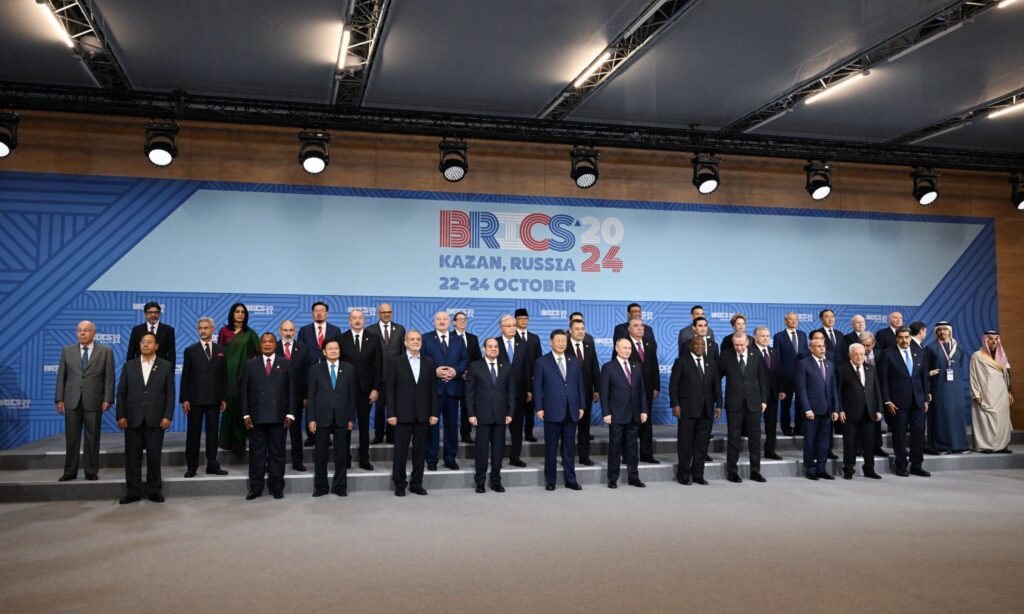
One of the key achievements of the Kazan Summit in 2024 was the adoption of the Economic Growth and Investment Platform, which provided a comprehensive approach not only to establishing independent means of financial communication but to joint efforts on industrial development, economic resilience, stable supply chains, and a human-centered approach to reform. This initiative built logically on a decade of work reflected in the BRICS Economic Partnership Strategies of 2020 and 2025. Taken together, these frameworks provide BRICS with the tools to address the negative trends defining the current global economy—and to advance bolder proposals for reforming the stalled international trading system.
Another area where BRICS leadership is both needed and timely is the rethinking of the Sustainable Development Goals beyond 2030. The post-2030 framework must be rebalanced to reflect the core interests of the ‘Global Majority’—addressing problems that are often overlooked in Western-dominated discussions: food security and agricultural sustainability, health and human development, climate and energy security, environmental protection, and cooperation on science, technology, innovation, and education.
One additional idea deserves particular attention. A gap exists in the current BRICS institutional architecture: there is no mechanism capable of responding rapidly to humanitarian emergencies in member or partner countries. The NDB serves a different purpose and operates on different principles. What is needed is a dedicated BRICS Humanitarian Fund—an instrument designed not for development lending but for swift, needs-based response to crises that cause mass civilian suffering. Its creation would address a structural weakness that has become more visible as conventional international institutions have faltered, and would demonstrate that BRICS can act concretely in defense of human welfare without requiring the group to take political sides.
Such a fund would need to be able to allocate resources promptly for projects essential to the survival of civilian populations in BRICS member and partner countries, with the potential for expansion to all ‘Global Majority’ states. Clear algorithms and mechanisms would be needed for providing emergency medical, food, energy, and other assistance in the event of armed conflict, natural or man-made disaster, or any emergency capable of causing mass death and suffering. The same fund could also support socially significant projects through Track II mechanisms—including the BRICS Civil Council, the Youth Council, and other structures involved in humanitarian initiatives. Such an instrument would significantly enhance BRICS’s credibility precisely when established institutions are failing, without requiring the group to take political sides.
In sum, BRICS—like all international institutions of global and regional scale—is living through a period that puts in question not only the future of the institutions themselves but the very system within which states can construct stable, peaceful, and predictable relations. But it is equally true that crisis creates opportunity. Despite heightened turbulence and rising risk, BRICS remains the most credible, trusted, and authoritative international mechanism currently positioned to inject new momentum into global cooperation.
The ability to weather the storm of multiple conflicts and challenges while concentrating on the more humanistic and less politicized issues of sustainable development, economic resilience, and social wellbeing would allow the group to retain its relevance and resist the dividing lines that American unilateralism is seeking to impose. At the same time, BRICS cannot afford to remain within the comfort zone of uncontroversial issues. It cannot avoid claiming collective global leadership in framing and sustaining a new model of international relations—and accepting responsibility for the functionality and resilience of the governance model that must replace the one now crumbling around us.


