Photo: Gage Skidmore, CC BY-SA 4.0
Jongsoo Lee is Senior Managing Director at Brock Securities and Local Affiliate at Harvard University’s Davis Center for Russian and Eurasian Studies. He is also Contributing Editor at The Diplomat. He can be followed on X (Twitter) at @jameslee004.
Do the changes in international relations and U.S. foreign policy under President Donald Trump spell the end of the rules-based international order? The answer requires a world historical perspective. Such a perspective is also necessary for formulating an effective policy response to the challenges confronting the global community.
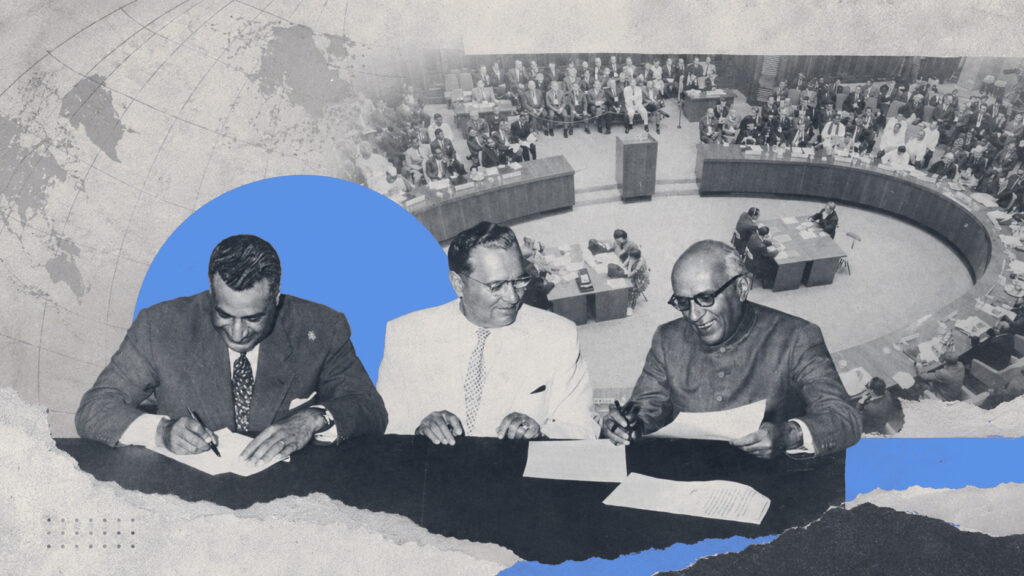
The rules-based international order (RBIO) constructed after World War II can be understood as an attempt to erect an international system that would remedy the defects of the previous system, such as destructive nationalism, imperialism, and Great Power chauvinism. Grounded in international law and multilateral institutions, including the United Nations, RBIO seeks to achieve peace through diplomacy and collective security rather than unilateral military action. Coinciding with postwar globalization, it facilitated a global movement for democracy, human rights, free trade, and a borderless world economy.
The United States was a principal architect of this rules-based order, and every postwar U.S. President until Trump defended it, albeit to varying degrees.
But now, with Trump, the United States has a President who openly rejects it.
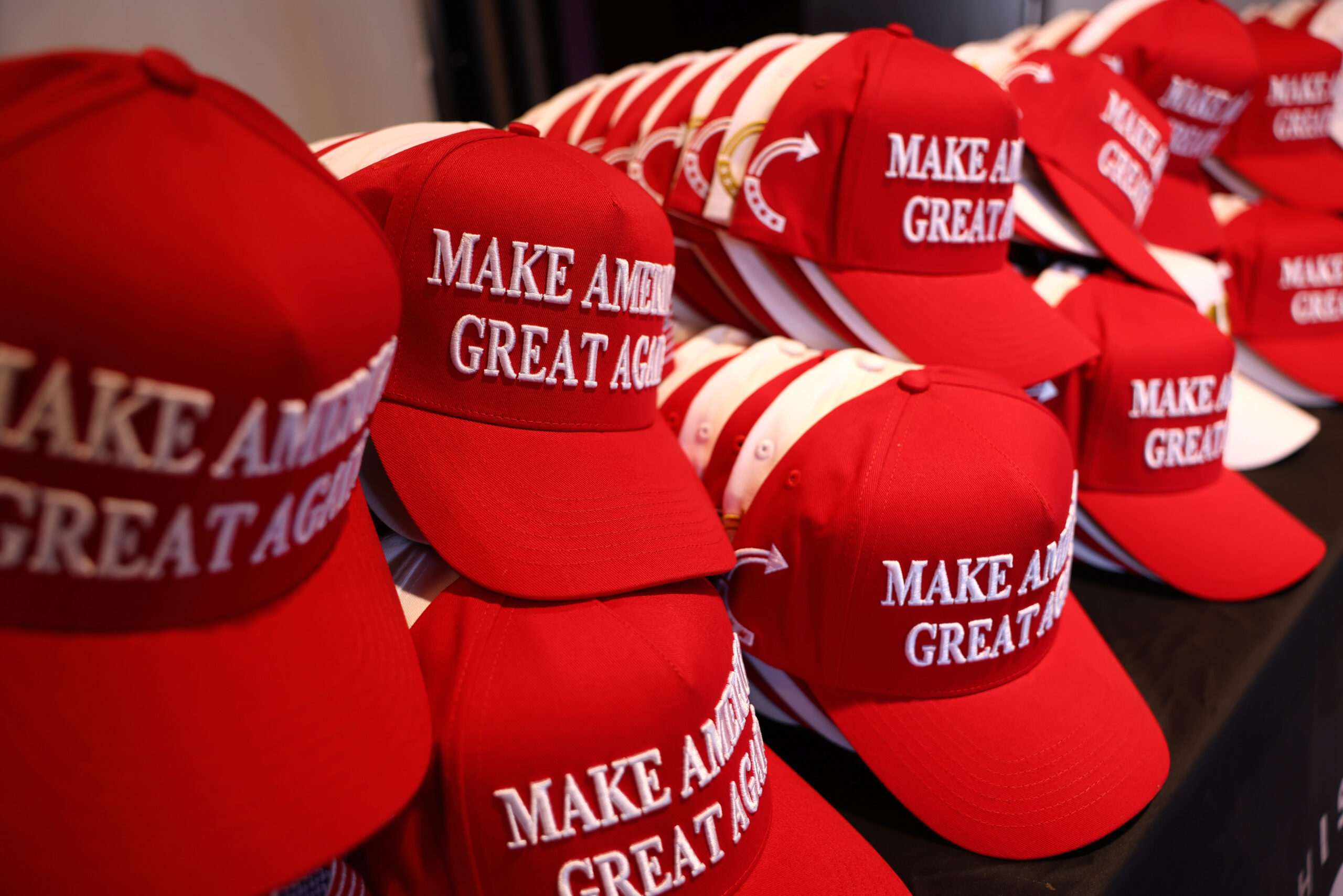
Trump claims his presidency is about “America First” and “Make America Great Again.” The National Security Strategy of the United States, published by the White House in November 2025, is one piece of evidence that the Trump administration is guided by this nationalistic agenda. The document mentions the phrase “rules-based international order” only once and does so in a mocking, pejorative way. It is clear the administration has concluded that the rules-based international order is a “bad deal” the U.S. needs to exit.
What has led Trump to make this break with the precedent set by all previous postwar Presidents? And does he, in fact, represent a break from all past U.S. Presidents?
If we examine U.S. and world history before 1945, it becomes clear that Trump is not an aberration from the norm. For much of its history before then, the United States pursued nationalistic policies of putting America first and making America great. From its origins as 13 British colonies in North America, the U.S. became a global power by pursuing economic nationalism and imperialistic expansion. Alexander Hamilton’s economic nationalism—featuring tools such as protective tariffs and industrial policy—went hand in hand with expansionist ideologies such as the Monroe Doctrine and Manifest Destiny to enable the emergence of the U.S. as an industrial powerhouse and a global Great Power by the early twentieth century.
This single-minded pursuit of national wealth and power was so successful that, upon the end of World War II, the U.S. economy accounted for roughly 50 percent of the global GDP. While much of the rest of the industrialized world lay in ruins from the ravages of war, the U.S. economy—spared destruction—became the engine of the global economy.
It was in this context that the United States supported the creation of the rules-based international order. Such an order, featuring international law and multilateral institutions like the United Nations, the IMF, and the World Bank, was deemed necessary to prevent another catastrophic world war and to address the challenges then facing humanity, such as destructive nationalism, poverty, genocide, and weapons of mass destruction.
While the internationalist vision of U.S. President Franklin D. Roosevelt (FDR) played an important role in the American decision to champion this order, the United States took this decision mainly because doing so was deemed to be in its own national interest. Such an order, it was thought, would make the world more stable, peaceful, and prosperous—and thereby safer for democracy and capitalism, to paraphrase a famous Wilsonian declaration.
The United States took on the burden of defending this order because it was then the only Western power wealthy and strong enough to do so. As the Great Powers of Europe lay exhausted, discredited, and ruined by two World Wars (1914 to 1918 and 1939 to 1945), the prestige of the United States soared sky high. Many in Europe looked up to the U.S. as their ally and protector.
And in the ensuing Cold War, the U.S. assumed the role of defending the capitalist world order against the threat of communism. It implemented aid programs such as the Marshall Plan and opened its markets to imports from allies in Europe and Asia in order to combat poverty abroad and buttress capitalist economies against the appeal of communism. Furthermore, it built a global network of alliances and military bases and stationed troops overseas to protect its security and the security of its allies. For decades since the 1950s, the U.S. has spent a larger share of its GDP on defense than any of its Western allies.
All these efforts by the U.S. have paid off handsomely. Indeed, the U.S. leadership of the capitalist world was so successful that the capitalist economies of postwar Europe and Asia roared back to life. Moreover, the rules-based order benefited those developing economies that took advantage of the open world trading system to access the markets, technology, and capital of developed economies such as the United States.
However, the U.S. eventually became a victim of its own success, in a sense, as much of the rest of the world rebuilt its war-ravaged economies or underwent economic development under the rules-based order. While the success of the capitalist world order under U.S. leadership helped defeat forces of communism in the Cold War, the same success meant that the U.S. no longer enjoyed the overwhelmingly dominant position in the global economy that it had held in 1945 upon the end of World War II. The U.S. share of the global GDP has shrunk to the extent that it now stands at less than 15 percent (in PPP terms), and the U.S. has suffered decline in some manufacturing industries. China, in particular, benefited heavily from the open trading system and now stands as a near-equal of the U.S. in terms of the size of its economy.
Trump’s nationalistic agenda can be understood as a reaction against this relative decline of the U.S. vis-à-vis the rest of the world. While the U.S. still leads in some key industries and remains the world’s strongest military power, it is now contested by the rise of China and a host of other challenges. Trump’s agenda can be interpreted as an attempt to arrest this relative decline by returning the U.S. to the nationalistic policies it had pursued prior to FDR. His calculation seems to be that such return would make America great again because such policies were what had made America great before 1945.
As already noted, the United States was highly nationalistic and protectionist for much of its pre-1945 history. It is worth emphasizing that U.S. Presidents such as William McKinley and Theodore Roosevelt were overtly nationalistic and imperialistic. Indeed, in his use of tariffs and threats of territorial expansion, Trump appears to have borrowed elements from the playbook of McKinley and T. Roosevelt. In doing so, he reverts back to this long-standing historical norm that predates FDR.
Trump’s political calculus seems to be that nationalism appeals to voters who have lost out under globalization and the rules-based order, such as the workers in manufacturing industries hurt by foreign imports and offshoring of production overseas. Trump taps into this nationalistic backlash against globalization.
The all-important question now is this: is the United States making a clean break from the post-1945 rules-based order and returning to its historical norm of nationalistic policies?
While it is still too early for a definitive answer, what can be said is that the answer will depend on the future course of events.
If U.S. Presidents after Trump pursue Trump-like nationalistic policies and damage relationships with other countries as he has, the rules-based order may suffer irreparable damage by U.S. nationalism and the failure of U.S. leadership. American nationalism will likely induce nationalism and the rise of populist governments in other countries. In this scenario, the world order will likely relapse into the destructive old pattern of nationalism, imperialism, and Great Power chauvinism. Such a world will likely be a more dangerous place, where even the specter of a World War III becomes an acute possibility.
To prevent such a grim outcome, those democratic states that still subscribe to the rules-based order and wish to salvage it—such as the European Union, the United Kingdom, Canada, Australia, New Zealand, Japan, South Korea, and Taiwan—will have to work together and do what they can to defend it. However, they will face the challenge of developing an effective strategy vis-à-vis a nationalistic United States and other nations including China and Russia. They will need to determine how to come to terms with these nations in order to preserve elements of the rules-based order. Moreover, they confront a military hurdle: unless they can significantly enhance and coordinate their military capabilities, they will lack the strength required to defend the rules-based order.
If, on the other hand, future U.S. Presidents turn away from strident nationalism and return to defending the rules-based order, the Trump era may come to be seen as an aberration from the post-1945 norm. Public memory is arguably short, and even the extensive damage inflicted on U.S. alliances and the rules-based order by Trump’s nationalism and his failures of leadership may eventually become forgotten as time heals.