
It is exactly 20 years since I wrote my first article about relations between China and Europe. I had given that paper the working title “Europe’s Coming Frankenstein Complex.” For the final version, the tone was softened slightly to “Europe’s Great Disillusion.” The message remained the same: Europe was helping to resurrect a giant it would be unable to control. Unbalanced relations would lead to Europe’s relative weakening, undermining what some officials called “constructive engagement.” The assumption behind that policy was that if Europe exposed China sufficiently to trade, liberal values, Erasmus student exchanges, wind turbines, bicycle lanes, and Tuscany, China would slowly but surely become more open, and more like Europe itself.
“There are already signs that the increasing exposure of all areas of Chinese life to the outside world is having a deep impact through social change and increased mutual understanding,” the European Commission observed in a 1995 policy paper titled A Long Term Policy for China-Europe Relations. “Human rights tend to be better understood and better protected in societies open to the free flow of trade, investment, people, and ideas. As China continues its policy of opening up to the world, the EU will work to strengthen and encourage this trend.” Far more senior academics, such as David Shambaugh and Zhou Hong, wrote of a coming marriage between China and Europe, and of China’s embrace of globalization. My Frankenstein idea sat rather uneasily with the prevailing mood. For some years, I was Brussels’ lonely China hawk.
Today, countless hawks circle Europe’s capitals, and some doves even seem to have turned into hawks. None of the premises of 20 years ago still stands. China has indeed become a giant, one that not only resists many of Europe’s original normative overtures but challenges them vocally. The balance of power has shifted dramatically to Europe’s detriment. Instead of exerting pressure on China as one confident protagonist confronting another, Europe finds itself increasingly weakened, drawn into an ever more violent neighborhood, and challenged on two sides by assertive superpowers. The world order is no longer centered on the Atlantic but increasingly on the Pacific, and Europe is becoming part of its restless, fragmented periphery.
Europe’s future looks dire. And for all the hawkish cries of politicians and intellectuals in its capitals—consider the recent letter from the German chancellor and the French president—Europe today looks more like a plucked chicken. How did it get here? In particular, why did it so badly misread and mismanage its relations with China? This essay first argues that Europe was never truly blind to the risks of constructive engagement. Rather, its politicians chose to ignore them, preferring, with hubris and recklessness, to follow companies that increasingly tied their futures to emerging markets rather than to Europe itself.
This leads to a second observation: while Europe pursued commercial gains, China pursued its interests far more successfully. European companies and consumers benefited from cheap Chinese production, but decades of unbalanced trade, fragmented trade policy, technology transfers, and immense sacrifices enabled China to overcome its relative weakness, climb the technological ladder, and reverse dependencies. All this, the essay concludes, reflects not only political failure and corporate short-sightedness but a deeper societal failure: a paralyzing element of decadence that Europe finds extraordinarily difficult to confront.
Common policy
Insofar as there was ever a common European policy, it was reflected in the lowest common denominator of European Council statements and Council-endorsed Commission communications. In the 1990s and 2000s, these documents consistently set out four core objectives. First, Europe wanted China to continue opening its economy, strengthen the rule of law, and accept WTO disciplines. Second, it sought political liberalization through greater respect for human rights, civil society, and, ultimately, democracy. Third, it expected China to become a “responsible” international actor, supporting multilateralism and nonproliferation and showing greater restraint toward authoritarian regimes. Finally, Europe wanted China to pursue more sustainable development, particularly in energy and environmental policy. These ambitions reflected a distinctly European theory of change. Trade, investment, aid, diplomatic recognition, and institutional dialogue were expected to create incentives for convergence. Europe would not contain China; it would socialize it. As former UK Prime Minister Tony Blair put it, China needed to “have the right rules in place.”
The more archives from these decades are declassified, however, the clearer it becomes that these optimistic goals did not match the more suspicious tone of various official assessments. The documents make clear that Europe was not blind to the risk of disappointment; rather, its principal decision-makers did not want to see it. As early as the 1990s, intelligence services found that China was aggressively pushing foreign companies into joint ventures, and that the goal of reform was to accumulate power. They warned that economic modernization would be followed by military modernization, that accommodation would be limited, and that competition would become more assertive. Even earlier, in 1982, UK Prime Minister Margaret Thatcher, prepared to lecture China on democracy and capitalism, was taken aback when Deng Xiaoping told her that he could easily take Hong Kong by force. She replied: “There is nothing I could do to stop you.”
Despite this display of Chinese power and resolve, Britain and other Western countries continued to regard China’s growth potential primarily as a business opportunity. “There is still the opportunity for us to secure valuable contracts,” the Foreign Secretary stated. Declassified documents reveal growing concerns throughout the 1990s, ranging from China’s refusal to stop supplying nuclear technology to certain countries to mounting pressure on Taiwan and limited economic reform. Particularly intriguing is a Foreign and Commonwealth Office review of China strategy from April 1999. According to the archival study, the policy report itself was retained by the Cabinet Office. Similar tensions between internal assessments and public policy appeared in several European member states.
How, then, could a region that, in its Laeken Declaration, prided itself on being “the continent of humane values, the Magna Carta, the Bill of Rights, the French Revolution and the fall of the Berlin Wall; the continent of liberty” turn a blind eye to China’s entrenched authoritarianism? It did not even take spies to discover China’s intentions. After the Tiananmen uprising, the Chinese leadership made it abundantly clear that it would not follow the Western path of liberty, and that globalization was a means to the end of maximizing national power. Any official could see that China imposed tough conditions on entry into its market, while Europe’s door stood wide open in the other direction. In hindsight, several leading decision-makers have acknowledged that they were naive. As Angela Merkel said in a 2021 interview: “Maybe initially we were rather too naive in our approach to some cooperation partnerships.” Former Secretary General of NATO Anders Fogh Rasmussen used similar wording: “We have all been too naïve, including myself.” Tony Blair put it this way: “We always assumed that with the evolution of its economy would come the evolution of its politics and that hasn’t happened.” And former European Commission President Jean-Claude Juncker observed: “We in Europe have been naïve with regard to Beijing for far too long.”
Opportunism
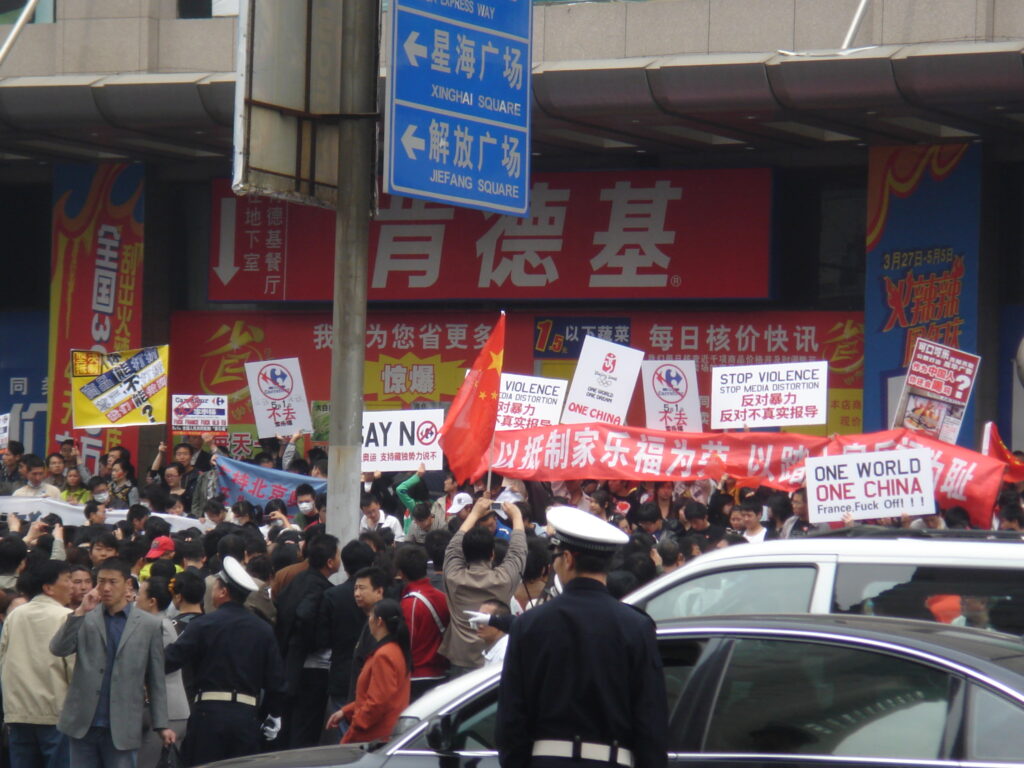
But naivety is far too easy an excuse. Ignorance of the normative divide is scarcely plausible, particularly among leaders who must also have been aware of heavy-handed Chinese policies such as the Strike Hard campaign in Xinjiang, tightening control in Tibet, and the persecution of dissidents. Nor could European leaders ignore China’s growing economic nationalism. Alstom’s railway contracts in 2004, for example, required extensive technology transfers so that locomotives could eventually be built in China. The dispute between Danone and Wahaha was framed as resistance to foreign economic control, and in 2008 Carrefour became the target of nationalist demonstrations and calls for a boycott following Sino-French tensions over Tibet and the Olympics. China did not merely say “no,” to borrow the language of a famous nationalist manifesto; it was prepared to fight back. Particularly conspicuous examples included China’s vilification of Hong Kong governor Chris Patten in the 1990s; the cancellation of a German ministerial visit following criticism over Tibet; the diplomatic freeze imposed on Angela Merkel after she met the Dalai Lama; and, most dramatically, China’s postponement of the entire EU-China summit in 2008 to punish the French president for planning to meet the Dalai Lama.
Rather than naivety, which might be forgiven, the principal explanation for decades of dysfunctional engagement has been European leaders’ fixation on short-term economic gains: first export opportunities, then investment prospects for European multinationals, and subsequently Chinese financial support during the eurozone crisis. While China pursued laborious, long-term industrial modernization, Europe’s political leaders had no comparable policy and were relentlessly played off against one another. They, in turn, followed reckless corporate leaders. “Our aim is to maintain our leading position in China,” Nokia’s CEO boasted in 2004. “This is thanks to the strong Nokia brand here, our leading technology and quality products.” Ericsson’s CEO remarked that Chinese equipment makers “will be big, and they will be strong,” but insisted that his company would lead thanks to its “best technology.”
“I am confident that Volkswagen, with its advanced technology and continuous innovation, will develop into a distinctive and sustainable success story in the Chinese market,” said Volkswagen’s chairman in 2008. I vividly recall a conversation around that time with an influential German member of the European Parliament: “We are playing Champions League with China; our automotive industry is leading in the Chinese market and so is our Mittelstand.” Countless times, I asked politicians and corporate leaders whether they had also read China’s industrial policy, which made it abundantly clear that their companies were ultimately meant to become redundant. Until about five years ago, the question usually fell on deaf ears.
What made matters worse was that this recklessness among national and corporate leaders undermined the work of the European Commission. The relationship was often described as a good-cop, bad-cop arrangement: the Member States pursued business, while the Commission was left to counterbalance their commercial ambitions. Tensions came to a head in 2013. The Member States had previously insisted that the Commission take more initiative itself to protect European industries through so-called ex officio procedures. When Trade Commissioner Karel De Gucht pursued anti-dumping action against Chinese solar panels and threatened ex officio investigations into the Chinese telecommunications equipment makers Huawei and ZTE, Beijing reacted sharply.
An ambassador-level official in Beijing described the commissioner to me as “a crying monkey that sees the river flow by.” Germany, among other Member States, pressed for restraint. By 2014, an ambitious attempt to rebalance parts of the economic partnership had been substantially diluted. For China, this was a major victory. In private conversations, Chinese officials said that Europe had been taught a lesson. One called Europe “uncommitted, unreliable, and unable.” All this took place during a period when comparatively moderate, and often pro-European, leaders were at the helm of Chinese politics. Former President of China Hu Jintao, and especially former Premier of China Wen Jiabao, took a serious personal interest in close relations and, for a time, showed genuine interest in Europe’s welfare state. The atmosphere changed markedly with the arrival of Xi Jinping.
The inconsistency between Brussels and the Member States was damaging enough, but China was also highly skilled at exploiting divisions within them. In 2013, for instance, I received a phone call from a zoo. My interlocutor was up in arms because another zoo, in the French-speaking part of Belgium, was about to receive two Chinese giant pandas. He complained that his zoo, in the Flemish part of the country, had a longer history and a better track record, and that the pandas should be welcomed there instead. The loan of the pandas to Belgium was confirmed by Chinese Premier Li Keqiang at a meeting with Belgian Prime Minister Elio Di Rupo in September 2013.
For Di Rupo, placing them at a zoo near his political home base was so important that his cabinet and the Belgian ambassador in China treated the matter as a “high priority.” Another example from my country involved the minister-president of Flanders and an opaque group of Chinese companies known as the Aigo Entrepreneurs Alliance. He wined and dined the delegation over several years, hoping to create a vast logistics zone that would generate between 1,200 and 5,000 jobs. After numerous meetings—even with the King—the Aigo entrepreneurs vanished without leaving any investment behind. Similar episodes unfolded in other Member States.
Paper tigers
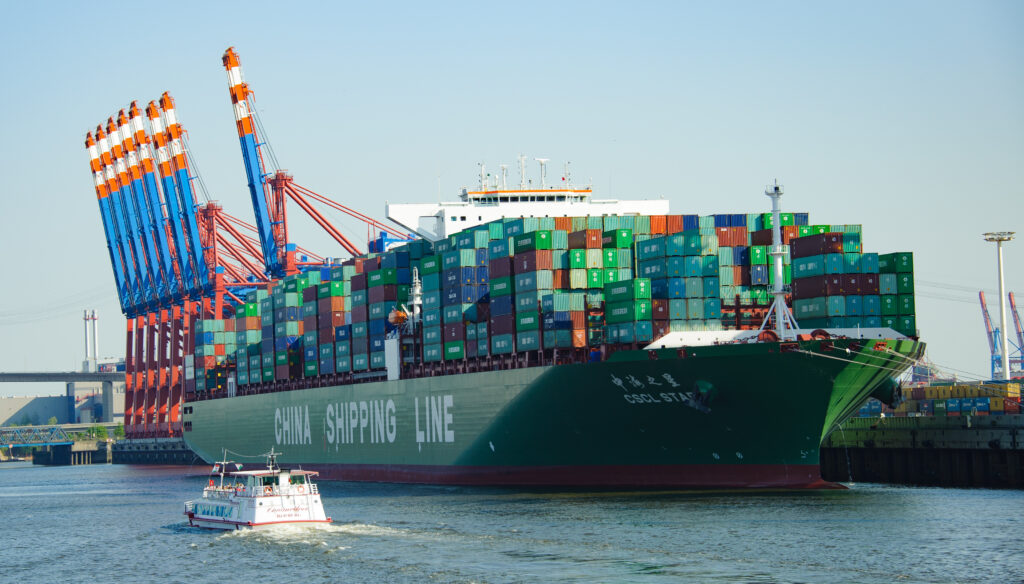
Meanwhile, Brussels developed additional trade defenses, but they failed to rebalance the partnership in any meaningful way. “Paper tigers,” a Chinese diplomat called them in a conversation in 2014. The EU modernized its anti-dumping and anti-subsidy rules, created a framework for screening foreign direct investment, tightened export controls, and introduced the International Procurement Instrument, the Foreign Subsidies Regulation, and the Anti-Coercion Instrument. Trade-defense measures were increasingly applied to Chinese steel, aluminum, chemicals, e-bikes, machinery, and electric vehicles. But the results were limited. Anti-dumping and anti-subsidy tariffs covered only a small fraction of the enormous volume of Chinese imports. Investigations remained slow and product-specific, while Chinese subsidies operated across entire industrial ecosystems through cheap finance, land, energy, procurement, and immense domestic scale. New restrictions frequently diverted Chinese exports toward other products, markets, or production locations rather than reducing the underlying overcapacity. Despite these instruments, EU goods imports from China rose by 89 percent between 2015 and 2025, against growth of 37 percent in EU exports to China, and the bilateral goods deficit reached almost €360 billion in 2025. The instruments could contain individual distortions, but they did not fundamentally rebalance the economic relationship.
As a result, the relationship has become increasingly asymmetric, to Europe’s detriment. Europe now depends on China not merely for cheap consumer goods, but for inputs without which important European industries cannot operate. China supplied approximately 22 percent of all extra-EU goods imports in 2025, worth €559.4 billion, while European exports to China amounted to only €199.6 billion. The concentration is greatest upstream. China supplies almost all of Europe’s heavy rare earths, and around 98 percent of European demand for rare-earth permanent magnets, which are essential for electric motors, wind turbines, robotics, and defense equipment. It also dominates supplies of magnesium, gallium, and tungsten. This vulnerability became tangible in 2025, when Chinese export restrictions on rare earths and magnets forced European manufacturers to seek individual export licenses.
Dependence is greater still in the technologies on which Europe expects its future industrial system to rest. China produces more than 80 percent of the world’s battery cells, around 85 percent of cathode active materials, and more than 90 percent of anode materials. Chinese producers already supplied over half of the European electric-vehicle battery market in 2025, almost twice their 2023 share. China has built more than 80 percent of global manufacturing capacity across the photovoltaic supply chain, with its share of polysilicon, ingots, and wafers approaching 95 percent. Pharmaceuticals expose a related vulnerability: many critical active pharmaceutical ingredients, and their chemical precursors, depend on production networks in China and India. At the same time, European multinationals invested in China have become so dependent on that economy that they offer the Chinese government an obvious point of leverage. As Volkswagen’s CEO put it in 2019: “The future of Volkswagen will be decided in China.” A year later, he added: “I find it frightening that we have fallen into such great dependence.”
Decadence and Decay
For a long time, officials argued that the dependence was mutual. Initially, they maintained that China relied on European technology and investment. In recent years, much of that dependence has effectively reversed. Yet many decision-makers continued to argue that China remained enormously dependent on Europe as an export market, and that, when necessary, Europe could use the weight of its internal market to bargain for more balanced economic relations. Indeed, the Chinese and European economic models increasingly resemble two sides of the same coin. China’s model is driven by investment, manufacturing, and exports, while more and more European economies rely on consumption, services, and growing imports. Several European economies run trade deficits with China and, in some cases, with the world as a whole, alongside significant government deficits, with public spending playing an important role in sustaining consumption.
It seems much harder for democratic, consumption-based economies to bargain than for authoritarian, investment-led ones. Citizens and companies in China are accustomed to shocks and sacrifices and, short of revolution, have far less influence over decision-making. Europe is different. The prospect of a trade war, higher consumer prices, and dwindling profits for companies increasingly reliant on Chinese imports makes democratic governments more likely to back down. The Trump administration offers a striking illustration. Rising prices and corporate pressure constrained its willingness to maintain or expand import barriers, allowing Beijing to emerge with the upper hand in important phases of the recent trade confrontation. Europe faces a similar dilemma.
This brings us to an important observation: the growing imbalance between Europe and China is not solely the result of naive or opportunistic politicians. There has indeed been a failure of leadership. But political opportunism toward China reflects a deeper reality: wealthy democratic societies tend to prioritize short-term convenience over long-term security, and to elect politicians willing to shape policy accordingly. Whenever politicians do take steps to rebalance trade at the expense of immediate comfort, they encounter as much resistance at home as pushback from abroad. Brinkmanship under such conditions becomes exceedingly difficult, placing an association of wealthy, if not spoiled, democracies on the back foot against a more unified authoritarian state.
At heart, therefore, the shift in power between China and Europe, and the growing tensions between them, reflect not only political and economic factors but a deeper clash: between short-term comfort and long-term sovereignty, between decadence and duty, between the strong collectivism and control that often characterize rising powers and the pronounced individualism and laxity that often mark declining democracies. This does not mean that China’s authoritarian model is superior. It belongs to a different stage of development, one in which China is still catching up. But it does mean that Europe, for all the non-papers and official declarations, will find it extremely difficult to rebalance the partnership and that decadent democracies tend to accelerate their own decline.