
Formalized during the Cold War and reintroduced in the Biden administration, the democracy-autocracy binary as a test of like-mindedness is now collapsing. Similar political systems no longer reliably produce similar answers to the world’s defining problems, nor do they necessarily agree on the process to resolve their disagreements. Different political systems, on the other hand, do not preclude common answers. In a world facing unprecedented challenges, the solutions—and collective actions—must be as revolutionary or nuanced as the problems themselves.
If like-mindedness is shaped by the defining challenge of an era—as it was by ideological confrontation during the Cold War—then today’s crises of global governance and development call for its redefinition. In a multipolar world grappling with artificial intelligence and climate change, conventional ideological alignment falls short of capturing today’s most pressing issues. From multilateralism and global governance to sustainable and inclusive growth, China and the EU are in fact like-minded partners that converge on seeking a more just and sustainable global order.
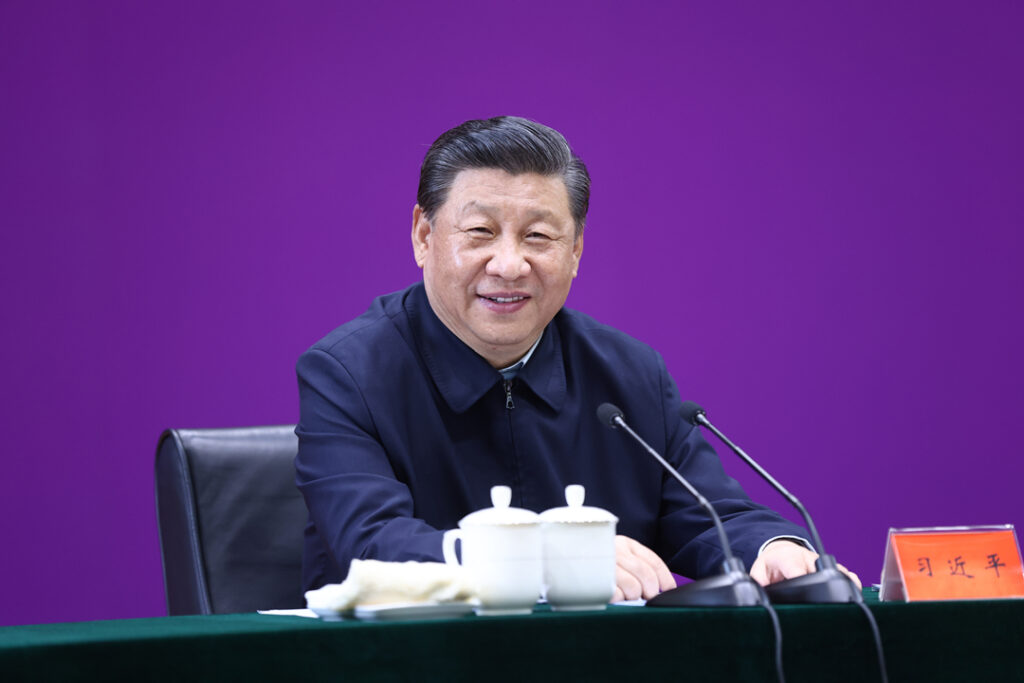
China and Europe differ in their domestic political systems, but they share a vision of what the international order must deliver. In recent years, both Chinese and EU leaders often acknowledge that between China and Europe, cooperation far outweighs competition, and issues on which there is consensus far outnumber those with differences. China’s President Xi Jinping recently pointed out that the challenges Europe is currently facing do not come from China, and there are no fundamental conflicts of interest or geopolitical tensions between China and Europe. That common outlook informs their approach to multilateral security and trade, governance of AI, the clean-energy transition, and inclusive growth. Their like-mindedness in these four key policy areas puts them at the center of the endeavor over how the next order will be governed and whom it will serve.
Multilateralism as a Way to Govern Disagreement.
Multilateralism works in a healthy manner when states disagree from time to time. China and Europe need not see eye to eye on every crisis to share a worldview of multipolarity. The more demanding test is whether they believe disputes should be resolved through rules that bind competing powers or through pressure exerted by the strongest power. President Donald Trump’s tariff threats against Europe, pressure over Greenland, and suggestion that Canada become the United States’ 51st state have fundamentally alienated the old-fashioned Cold War “Western bloc” and exposed the limits of political affinity as a safeguard against unilateral power.
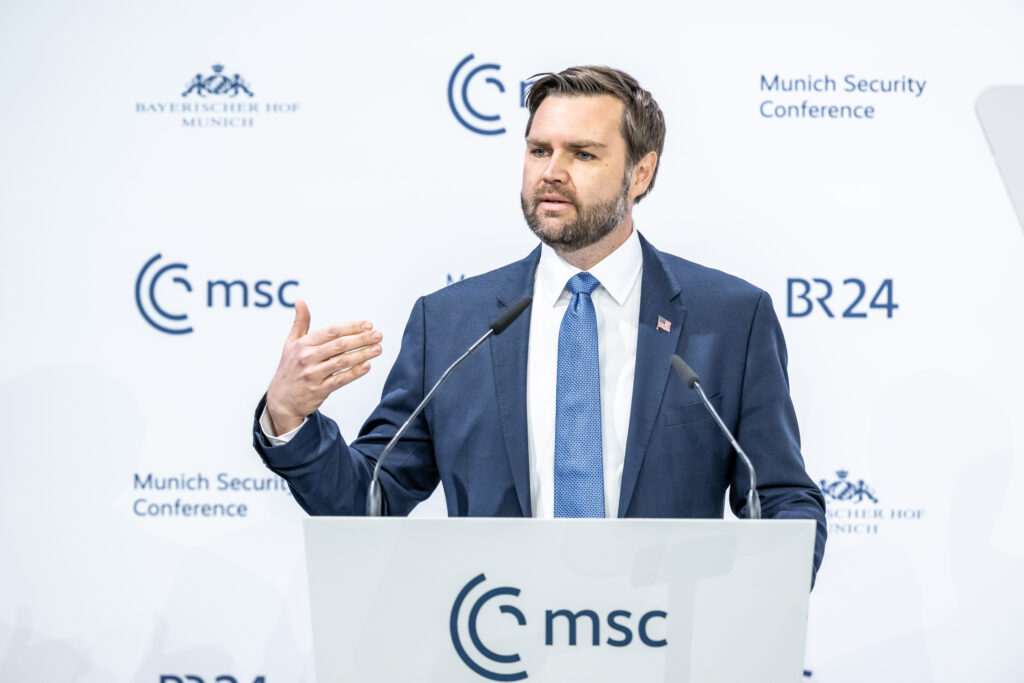
To say the least, the “deeply shared values” and the “like-mindedness” between the United States and the EU were shaken when U.S. Vice President JD Vance made a disturbing speech about “value differences” between the United States and the EU at the 2025 Munich Security Conference. As a seasoned Chinese diplomat Madame Fu Ying observed, as transatlantic relations lose momentum, Europe experiences “Westlessness.” Interestingly, at this year’s Munich Security Conference, German Chancellor Friedrich Merz stated pointedly that, in his view, his government and Trump’s administration are indeed different in values. German people are by and large not interested in fighting a “culture war” as advocated by Trump’s MAGA movement in the United States.
The U.S. war with Iran further shows why the alternative matters. Following the U.S.-Israeli strikes and Iran’s response, commercial traffic through the Strait of Hormuz fell from 138 vessels a day to almost none. A conflict among a few states thus threatened energy supplies, shipping, and food security far beyond the region. Beijing and Brussels both recognize that no settlement can last if it excludes the states capable of sustaining the conflict or ending it. Their common ground lies in the terms of crisis management: restraint, safe navigation, and a negotiated settlement broad enough to command the participation of rivals.
The 2015 Iran nuclear agreement, negotiated with the EU in a leading role and China at the table, placed competing powers inside a common framework of commitments, inspections, and sanctions relief. Washington’s later withdrawal and the political differences between Beijing and Brussels are no reason to abandon that approach; they make it more necessary. With a regional war now disrupting global commerce, the stakes of excluding adversaries from diplomacy are higher than they were when the agreement was reached.
The same principle applies in global public health initiatives to prevent pandemics. After the United States withdrew from international negotiations, WHO members adopted a Pandemic Agreement by consensus in 2025. The EU championed it, and China supported its adoption. That consensus did not make the difficult questions disappear. Governments are still negotiating how to share dangerous pathogens quickly while distributing the resulting vaccines and treatments fairly. Yet China and Europe have both chosen to work through a common institution on rules neither could make effective alone.
China and the EU both support the important role of the UN and credible international organizations. In contrast, in 2025, the United States announced its withdrawal from international mechanisms such as the World Health Organization (WHO), the Paris Climate Agreement, the UN Human Rights Council, and UNESCO. In January 2026, President Trump signed a presidential memorandum directing the United States to withdraw from 66 international organizations deemed “no longer in the interest of the United States,” including 31 UN-related entities and 35 non-UN international organizations. Meanwhile, China is eager to establish international organizations and aims to provide international public goods. Examples include the International Organization of Mediation (IOMed) in Hong Kong in October 2025, World Data Organization in Beijing in March 2026, and World AI Cooperation Organization (WAICO) in Shanghai in July 2026.
These cases all reveal a more substantial form of like-mindedness than agreement within a political bloc. Consensus is harder to build across different political systems and ideological traditions, which makes China–Europe convergence on global governance especially significant. Their commitment to managing shared problems through multilateral rules demonstrates that a common international outlook can bridge domestic political differences. This is a substantive basis for like-mindedness, with implications that extend to the governance of artificial intelligence, arguably the most urgent multilateral collaboration of our time.
AI as a Public Responsibility
The coalition that emerged from the 2025 Paris AI Summit cut across familiar ideological divides. As China and the EU signed the Statement on Inclusive and Sustainable Artificial Intelligence for People and the Planet, absent from the group were most noticeably the United States and the United Kingdom. The statement joined AI safety and transparency with wider access to the technology, support for developing countries, environmental sustainability, and international cooperation. Signing it did not resolve every difference between Beijing and Brussels; rather, it established that, for a technology likely to shape the next generation of economic and political power, they were prepared to seek and endorse the same international agenda.
China and the EU approach AI from different political traditions, but they ask the same governing question: how can innovation earn public trust if its risks cannot be assessed, and can those who deploy it be held accountable? The EU’s AI Act makes obligations proportionate to a system’s risks, while China’s 2026 AI ethics guidance calls for assessments tailored to specific uses and tools to audit them. Their like-mindedness lies in treating safety and trust as public responsibilities, giving them a basis for comparable tests and shared warnings when serious failures cross borders.
Without proper regulatory mechanisms in place, AI can undermine public trust by making false evidence credible faster than it can be challenged. A fabricated video can cross borders in minutes, while establishing the truth may take days. Both governments have therefore placed obligations on those who create and distribute synthetic content. Under the EU’s AI Act, providers must make AI-generated material detectable, and people must be informed when they encounter deepfakes. Chinese rules likewise require visible labels and embedded markers. Both regard the protection of public trust as a fundamental purpose of AI governance.
Their shared ambition extends beyond international statements to building global institutional capacity for AI governance. The Paris statement supported a global AI dialogue and an independent scientific panel under the UN so that all countries would have a voice in governing artificial intelligence. China and the EU both took part in the first UN Global Dialogue on AI Governance in July 2026. While these institutions cannot impose a single regulatory model, together they can give governments a shared body of evidence and a place to work through differences before incompatible rules and competing technology blocs harden.
The next step is practical. China and the EU could work toward interoperable labels for synthetic content and comparable methods for evaluating advanced models and reporting serious failures. Neither would have to adopt the other’s rules on speech or data. Both would have to accept that the risks of a globally deployed technology demand cooperation beyond their respective political systems. The Paris statement showed that they could endorse a common purpose.
Green Transition as a Driver of Development
China and Europe share a commitment that is reshaping their economies: future prosperity depends on making growth sustainable. Their commitment extends beyond emissions targets to the industries, infrastructure, and investment that will sustain economic development. The EU’s Clean Industrial Deal and China’s plans for greener industrial development rest on the same calculation of generating technological leadership, industrial renewal, and employment through the process of decarbonization. Their like-mindedness lies in this understanding of economic progress, which makes environmental sustainability a condition of lasting prosperity.
In 2015, the United Nations formally adopted the “2030 Agenda for Sustainable Development,” establishing 17 Sustainable Development Goals (SDGs) as a blueprint for global development from 2015 to 2030. Now, with only four years remaining until the agenda’s deadline, the world has entered a critical moment for accelerating progress toward achieving the Sustainable Development Goals. Last year in the UN Assembly meeting, Chinese Premier Li Qiang promised that China will launch two major initiatives: 1) to establish South-South mechanism in supporting Africa development along with like-minded countries especially EU; and 2) to set up a global sustainable development center in Shanghai.
That shared outlook gives climate cooperation a foundation capable of surviving political disagreement. At their July 2025 summit, China and the EU reaffirmed the Paris Agreement and committed to accelerating renewable energy deployment and widening access to affordable green technologies. The significance went beyond another endorsement of climate diplomacy. Their joint statement connected climate action to sustainable development and poverty eradication, recognizing that the transition must offer economic opportunities to the countries expected to undertake it. As a substantive basis for cooperation, both China and the EU support an international framework that combines common environmental goals with different national circumstances and capacities.
Affordability turns this common outlook into a practical economic interest. Climate commitments become harder to sustain when households cannot afford cleaner transportation and businesses cannot finance new equipment. Local production of green tech offers a way to lower the cost of decarbonization and benefit European industrial development in the long run. The CATL–Stellantis battery venture in Zaragoza illustrates that possibility. Construction began in November 2025 on a plant representing planned investment of up to €4.1 billion, with production targeted for late 2026. The project brings Chinese battery expertise into a European manufacturing base, linking the transition to electric vehicles with local investment and employment. Its wider significance concerns how the benefits of cooperation are distributed. European workers and suppliers need a stake in the industries replacing older ones. Joint ventures can give Chinese firms a durable commercial presence while helping European partners build the capabilities needed to compete.
A durable green partnership must make decarbonization pay locally. Industrial competition and disputes over subsidies will continue, but cooperation becomes more politically sustainable when its benefits reach factories, communities, and consumers. Joint investment tied to workforce training, supplier development, and research can deepen those benefits. The local deployment of Chinese clean technologies—from batteries supporting renewable electricity to equipment electrifying industrial production—could help Europe meet its climate goals while strengthening its economy.
Inclusive Development as a Shared Responsibility
The retreat of major aid donors raises the cost of treating development as a contest for influence. American development assistance fell by more than half in 2025, according to preliminary OECD figures. For China and the EU, allowing poverty and economic insecurity to deepen would undermine a shared interest in a stable, prosperous international environment that both of them depend on. Their commitment to inclusive growth therefore carries a practical implication: helping less developed countries build productive economies increasingly requires cooperation among the partners with a shared commitment to inclusive growth.
The effort for strategic primacy between Beijing and Washington raises the political cost of initiatives that might strengthen the other’s influence. China and Europe also compete, but that competition leaves greater scope for judging development projects by their practical results. The European Commission explicitly recognizes cooperation with China as critical to achieving the Sustainable Development Goals. Joint efforts to improve food security, rural employment, infrastructure development, or vocational skills in less developed countries and Global South can deliver benefits that neither side needs to claim exclusively. Their shared commitment to inclusive growth thus has room to become an operational partnership, with resources pooled around priorities set by developing countries. Existing cooperation between China and European partners shows how this can work.
This approach already has a practical history. In Laos, China and Germany jointly funded and steered a vocational training project with Lao partners to strengthen teaching in agriculture-related occupations. It drew on earlier Sino-German cooperation at a vocational school in Pingdu, adapting that experience to needs identified by Lao institutions. Training covered agricultural machinery, food processing, and other rural professions. The arrangement connected accumulated Chinese and German expertise with a third country’s development priorities. Training teachers also created a means for knowledge to reach successive groups of students. Such projects offer a concrete model for cooperation that builds local capabilities rather than ending with the delivery of equipment.
Ongoing wars in Ukraine and Iran have made food security an increasingly urgent field for China–Europe cooperation in inclusive development. Disruptions to grain trade and rising energy, fertilizer, and transport costs threaten to reverse development gains in less developed countries. The joint trans4num project offers one practical response. Funded by the EU, its trials in southwestern China maintained maize yields while reducing nitrogen inputs by 37.5 percent. Producing the same harvest with less fertilizer could help farmers protect their incomes when energy shocks drive up production costs. Adapting such methods to local conditions in developing countries could help farmers sustain production and incomes despite volatile input prices, connecting China–EU research to food security and inclusive growth.
These partnerships provide a foundation for broader China–EU cooperation. Expanding this work would require recipient countries to help set priorities, clear financing commitments, and joint evaluation of results. Competition for contracts and influence will persist, but China and Europe both depend on a stable and prosperous international environment for their own development. Their like-mindedness is deeply rooted in a worldview that sees wider access to development as essential to securing that stability and prosperity.
It is understandable that both China and the EU will unlikely overcome some of the longstanding misunderstanding and cultural bias toward each other overnight. We certainly do not live in a liberal era, and the notion that Western values are universal values has increasingly been challenged. Many Chinese elites have overstated the like-mindedness of Anglo-Saxon cultural heritage and underestimated the tensions between the United States and the NATO countries in ongoing geopolitical landscape changes.
At the same time, some European elites have been obsessed by “moral opportunism” and double standards in viewing China. The recent racial atrocities and horrible human rights violations in some western countries including the United States—as Israel has committed crimes against Palestinians in the Gaza Strip—have undermined some of the extreme accusations against Chinese behaviors in Xinjiang. The predominant issue in China-EU relations is no longer human rights, or even China’s position on the Russia-Ukraine war, but increasingly lies on the economic, trade, and technological fronts.
More importantly, China and Europe have more in common in the world they seek to build than their political differences suggest. Their support for multilateral institutions, public oversight of new technologies, sustainable growth, and inclusive development reflects a shared understanding of how international order can deliver sustained security and prosperity. The above commitments concern the defining problems of this century, and none of them are predetermined by differences in domestic political systems. Recognizing this convergence would give cooperation a strategic purpose that can endure disagreements over individual policies. It would also make the costs of allowing those disagreements to consume the relationship harder to ignore.
If Beijing and Washington can find a new strategic footing amid intense competition as suggested in the two summits in May and September this year, China and Europe have every reason to attempt a repositioning of their own. Acknowledging their shared worldview would give both sides a stronger basis for managing individual disputes and sustaining collaboration on shared commitments. Cooperation on AI risks, clean technology, and food security could then become part of a common international agenda, with institutions and investment to carry it forward.
Political differences will remain, as will competition. But neither should prevent China and Europe from recognizing what they stand to achieve together. Like-mindedness today should be judged not by cultural differences or conventional ideological classification or outdated bloc thinking, but by the capacity and imperative to address the defining global challenges of our time together.