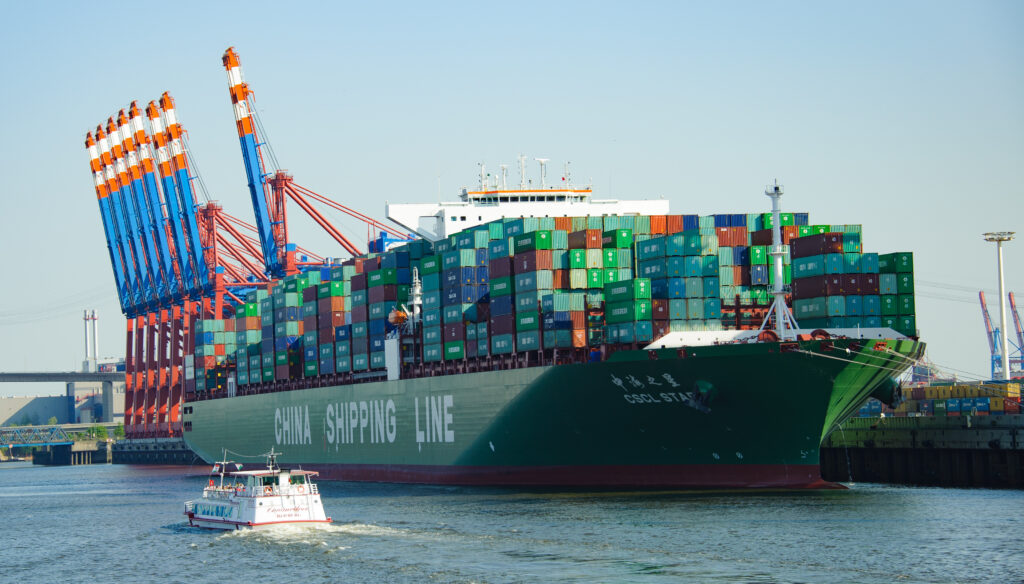

Judging by the political language surrounding China–Europe relations, one might conclude that the two sides are becoming incompatible partners. Europe speaks of de-risking and economic security; China warns against protectionism and the politicization of trade. Electric vehicles have become a test of industrial competitiveness, market access, and strategic trust. Interdependence, once celebrated as a foundation of globalization, is increasingly discussed in the language of vulnerability.
Yet the economic relationship remains substantial. China and Europe are deeply connected through trade, investment, technology, and supply chains. They share interests in climate action, the green transition, global economic stability, and the effective functioning of multilateral institutions. Their disagreements are real, but so are the costs of allowing those disagreements to dominate the relationship. The paradox is that cooperation remains necessary precisely when the political conditions for it are becoming more difficult.
China–Europe relations need neither the illusion of a conflict-free partnership nor the assumption that confrontation is inevitable. The real challenge is to build a relationship in which competition remains manageable, cooperation remains possible, and differences do not crowd out every other consideration.
Having worked for years at the intersection of international journalism, policy analysis, and dialogue, I have come to believe that the problem is not simply a lack of communication. Chinese and European officials, businesses, and scholars talk to one another regularly. What is often missing is the willingness to look beyond familiar narratives and examine what the other side is trying to achieve. At the Beijing Club for International Dialogue, the platform I help lead, we return frequently to a simple principle: dialogue should make differences more understandable, even when it cannot resolve them. That distinction matters. In a context of strategic suspicion, understanding the reasons behind another party’s position can be the first step toward managing a disagreement rather than escalating it.
Recent progress in China–Europe trade consultations offers a measure of encouragement. The 16-point consensus reached in early October does not settle every dispute, and its significance should not be exaggerated. It does, however, create room for further negotiation and practical action. At a time when economic disagreements can quickly acquire geopolitical overtones, that room is worth preserving.
De-risking Needs a Clearer Definition
Europe’s concerns about economic security are understandable. The pandemic exposed supply-chain vulnerabilities; Russia’s war against Ukraine transformed European thinking about energy dependence; and competition in advanced technologies has raised questions about data sovereignty, critical infrastructure, and strategic capabilities.
China cannot reasonably expect Europe to disregard these concerns. Equally, Europe should distinguish between addressing a demonstrable vulnerability and treating reduced economic engagement with China as an objective in itself. The first requires evidence, clear criteria, and proportionate measures. The second risks turning de-risking into a geopolitical reflex, in which almost any commercial connection can be treated as a security problem.
There is also a practical question that political declarations cannot answer: what would make Europe more resilient? Alternative suppliers must be available, production capacity must be built, workers must be trained and hired, technologies must be developed, and infrastructure must be financed. Diversification has a cost, and reducing one dependency may create another. A credible de-risking policy should therefore begin with three questions. What specific vulnerability is being addressed? What evidence demonstrates its seriousness? And is the proposed measure the most effective way to reduce it without unnecessarily disrupting legitimate economic activity?
These standards should apply to Chinese companies as well. Businesses operating in Europe must comply with local laws, respect legitimate regulatory requirements, and recognize that market access entails responsibilities. In return, they should be able to expect transparent rules, predictable procedures, and non-discriminatory treatment.
The Electric Vehicle Dispute
The dispute over Chinese electric vehicles illustrates the deeper challenge facing both sides. Tariffs, subsidies, and market access are the immediate points of contention. Beneath them lie much larger questions: who will manufacture the technologies of the green transition, where will production take place, which workers and regions will benefit, and how will the costs of industrial change be distributed?
Europe’s concerns are rooted in the importance of its automotive industry. The sector supports extensive networks of component suppliers, engineering firms, research institutions, and skilled workers. It is embedded in the economic identity of countries and regions, particularly in Germany and Central Europe. The shift to electric mobility therefore involves much more than replacing one type of engine with another. It raises questions about employment, industrial competitiveness, and social stability.
But protecting an industry from competition is not the same as preparing it to compete. Trade restrictions may offer temporary relief, but they cannot substitute for innovation, investment, productivity gains, and workforce development. If protection delays adaptation, the underlying difficulties may become more expensive to address later. Chinese companies face a different but related challenge. Competitive prices and manufacturing capabilities can open European markets, but long-term success increasingly depends on local investment, partnerships with suppliers, skills development, and meaningful contributions to the communities in which they operate.
This brings us to a less discussed aspect of Europe’s electric transition: it cannot be understood through a single map. Three maps are needed, and the gaps between them reveal much about the economic choices facing China and Europe. The first map tracks new-car sales. It shows how quickly consumers adopt electric vehicles, how charging infrastructure develops, and how prices, incentives, and consumer confidence influence purchasing decisions. It captures the visible pace of the transition, but only part of the story.
The second map shows the existing vehicle fleet. Cars remain in use for many years. A rapid shift in new-car sales does not immediately transform the vehicles on the road, the infrastructure that supports them, or the broader transport system. The transition in sales and the transition in everyday mobility therefore proceed at different speeds.
The third map traces industrial capacity. It identifies where batteries are manufactured, where components are produced, where research takes place, and where vehicles are assembled. This map is increasingly international, or at least regional. A car sold in one European country may contain a battery produced in another. A Chinese manufacturer may invest in a European factory, employ local workers, and purchase components from other European suppliers. Meanwhile, a European company may depend on Chinese materials or technologies even as its government seeks to strengthen domestic production. The three maps overlap, but they do not coincide. Their misalignment matters, because public debate often treats national economies as though the costs and benefits of industrial transformation remain neatly within national borders.
Consider a hypothetical case in which Chinese investment expands battery production in a European region. The investment might create jobs, strengthen local suppliers, and improve access to competitive technology. At the same time, it could intensify pressure on existing European manufacturers or expose weaknesses in their business models. Consumers might benefit from lower prices, while some workers and regions face difficult adjustments. Whether the investment is beneficial cannot be determined by its national origin alone; nor can its consequences be understood by looking only at aggregate trade figures. The more useful question is how to distribute the gains, manage the adjustment costs, and build capabilities that endure after the initial investment has been made.
For Europe, this means strengthening research, manufacturing, and workforce capabilities rather than relying on trade barriers alone. For China, it means recognizing that lasting access to the European market increasingly depends on becoming part of its industrial ecosystem, not simply supplying it from abroad. The choice is not between European industry and Chinese investment. It is about the conditions under which competition and investment can reinforce industrial development rather than deepen political mistrust.
From Exporting to Building Industrial Ties
The future of China–Europe economic relations will depend increasingly on what happens after products cross borders. For Chinese companies in electric vehicles, batteries, and renewable energy, exporting finished goods remains important, but local production, research partnerships, workforce training, and cooperation with regional suppliers are becoming more consequential. European policymakers should assess these investments on their merits: whether they create sustainable employment, develop local technical capabilities, support research, strengthen supply chains, and meet environmental and regulatory standards. This approach does not require Europe to set aside national security concerns. It requires those concerns to be addressed through clearly defined procedures rather than broad presumptions about the risks associated with a company’s country of origin.
The green transition offers substantial room for cooperation. Europe brings established industrial expertise, research institutions, specialized suppliers, and a large consumer market. China has developed extensive manufacturing capacity and competitive technologies across several clean-energy sectors. Neither possesses every capability the transition requires. Battery recycling, charging infrastructure, energy storage, smart grids, and industrial decarbonization all offer opportunities for collaboration. Research institutions can work on common technical challenges, while companies can explore investment models that combine manufacturing efficiency with local employment and innovation.
Such cooperation will not eliminate competition. It can, however, help ensure that competition contributes to technological progress and industrial renewal rather than becoming an obstacle to both. Europe’s industrial future will depend on its capacity to innovate and adapt. China’s continued integration into global markets will depend increasingly on whether its companies can establish productive, sustainable relationships with the communities and economies in which they operate.
Strategic Autonomy is More Than Choosing Sides
Economics cannot be entirely separated from geopolitics. The transatlantic relationship remains central to European security, while Russia’s war against Ukraine has fundamentally reshaped European threat perceptions. Strategic competition between the United States and China also increasingly influences European decisions on trade, technology, and investment. Europe must therefore manage several objectives simultaneously: maintaining its security relationship with the United States, responding to Russia’s war against Ukraine, strengthening its industrial competitiveness, and defining its approach to China. These objectives do not always align.
For China, a Europe with greater economic resilience and strategic capacity is never a threat. A Europe confident in its own choices may be better positioned to sustain pragmatic relations with China, even when the two sides disagree. For Europe, engagement with China does not imply accepting every Chinese position. Governments have their own political systems, security concerns, and domestic constituencies. Some disagreements reflect genuine differences in interests and perceptions; others arise from different understandings of how markets should operate and what constitutes fair competition. These differences need to be addressed directly, rather than reduced to assumptions about the other side’s intentions.
The danger is that strategic rivalry becomes the default framework for interpreting every economic decision. When that happens, a commercial investment can be read as a geopolitical signal, a regulatory measure as an act of containment, and a supply-chain adjustment as evidence of hostile intent. Each side then responds to the other’s defensive measures with further restrictions, making the relationship harder to manage.
China and Europe have reasons to support an effective multilateral system, even when they disagree about institutional reform or the distribution of responsibilities. A world in which rules are applied selectively and economic pressure routinely replaces negotiation would serve neither side well. The practical task is to establish clearer boundaries between legitimate security concerns and ordinary economic competition. Without those boundaries, neither strategic autonomy nor economic security will provide the predictability that governments and businesses need.
What Belgrade Can See
My recent participation in the 1st Horizons Sustainable Development and Connectivity Forum in Belgrade offered another perspective on China–Europe relations. From Serbia, the relationship looks different: less like a bilateral contest between two major economic actors, and more like a set of choices that can shape the development prospects of countries connected to both. Serbia has expanded its economic ties with China in infrastructure, manufacturing, and trade, while maintaining its ambition to move closer to the European Union. These two dimensions of its external relations are often discussed as though they must eventually collide. Yet Serbia’s development needs do not fit neatly into a binary choice between Beijing and Brussels.
For Serbia and other countries in Central and Eastern Europe, the consequences of China–Europe relations are tangible. They concern transport links, industrial investment, employment, access to markets, and the ability to attract technology and capital. A project that connects a local industrial center to wider supply chains may have practical value regardless of the geopolitical arguments surrounding it. Equally, an investment that creates unsustainable financial obligations or fails to develop local capabilities may prove disappointing, whatever its political symbolism.
If China–Europe competition hardens into opposing economic blocs, countries with links to both sides may find their options narrowed. Projects could become entangled in disputes that have little to do with their immediate economic purpose. Governments may face pressure to choose between partners even when cooperation with both would better serve their development interests. A more predictable China–Europe relationship would give countries such as Serbia greater room to make decisions based on economic viability, national priorities, and long-term development. It could help them attract investment, develop local supply chains, and connect European markets with international production networks.
This is not an argument for treating every Chinese investment as beneficial or every European concern as protectionist. Projects should be assessed on transparent terms, including financial sustainability, environmental impact, employment, technology transfer, and their contribution to local economic capacity. The same standards should apply regardless of the investor’s origin.
Serbia also highlights a question that deserves greater attention in Brussels: can the EU maintain common standards on legitimate security concerns while allowing room for different national economic strategies? Member States and neighboring countries do not share identical industrial structures, energy needs, or development priorities. A policy that makes sense for one economy may impose different costs on another.
The broader lesson is that countries do not experience China–Europe competition from the same vantage point. For Beijing and Brussels, the debate may center on strategic influence, market access, and economic security. For the countries in between, the more immediate question is whether the relationship creates opportunities for development or makes those opportunities harder to pursue. A mature China–Europe relationship should take these differing perspectives seriously. It should not require every country to adopt an identical position on every aspect of international economic cooperation.
Dialogue as a Practical Instrument
In periods of tension, dialogue is often treated as something to resume after political relations improve. Yet it is most useful precisely when differences are difficult to resolve. Through the Beijing Club for International Dialogue, we have sought to create space for substantive exchanges among Chinese and European scholars, policy practitioners, and other international interlocutors. The purpose is to examine the assumptions behind different positions, understand the constraints under which others operate, and identify areas where practical cooperation remains possible.
This is the value of Track II dialogue. It allows participants to explore questions that may be difficult to address in formal negotiations, test ideas before they become policy positions, and examine disagreements without the immediate pressure of producing an official outcome. Dialogue cannot substitute for political decisions, nor can it guarantee agreement. Its contribution is more concrete: it can help policymakers and other participants distinguish genuine conflicts of interest from misunderstandings and identify where the scope for compromise is larger than public rhetoric suggests.
There is also a human dimension to the relationship. Universities, businesses, cities, research institutions, and professional networks connect Chinese and European societies in ways that cannot be captured by trade statistics or strategic assessments. These connections do not remove political differences, but they make it harder to reduce complex societies to simplified images of one another.
In Europe, discussions of China can become concentrated around security risks, industrial competition, and political differences. In China, European policies may increasingly be interpreted as evidence that Europe is unwilling to accept China’s development or is retreating from its commitment to open markets. Once these narratives reinforce each other, even reasonable policy adjustments can be interpreted in the least cooperative way. The task of dialogue is not to persuade either side to abandon its interests. It is to create enough understanding that disagreements can be discussed on their merits, without assuming in advance that every decision reflects hostility.
A More Practical Agenda
Several priorities could help make China–Europe relations more stable. First, define economic security more precisely. Measures should respond to identifiable risks, be supported by evidence, and be assessed against clear criteria. This would protect legitimate security interests while giving businesses greater predictability.
Second, turn trade consultations into sustained problem-solving. The recent 16-point consensus provides a basis for further work, but its value will depend on implementation. Progress on market access, export licensing, and sector-specific disputes should be assessed through concrete outcomes rather than diplomatic language alone.
Third, treat the green transition as both an arena of competition and a field for selective cooperation. Electric vehicles, batteries, recycling, energy storage, and charging infrastructure offer opportunities to combine different strengths. The relevant test is whether arrangements support innovation, employment, environmental objectives, and resilient industrial capacity.
Fourth, make reciprocity tangible. Both sides need clearer market-access rules, greater regulatory transparency, effective intellectual-property protection, and predictable investment conditions. Reciprocity does not require identical trade balances in every sector, but it does require credible opportunities for businesses on both sides.
Finally, preserve channels of engagement beyond government. Think tanks, universities, businesses, and professional networks can help identify problems early and contribute perspectives that formal negotiations may overlook. Their role is to complement official diplomacy and make it better informed. None of these steps will remove the structural competition between China and Europe. They can, however, make it more predictable, and reduce the risk that disputes in one area spread unnecessarily into others.
Competing Without Closing Doors
The international environment is unlikely to become less complicated. Technological change will reshape industries and labor markets; climate change will demand investment and coordination; and geopolitical rivalry will continue to influence economic decisions. Countries will also seek greater freedom to determine their own development paths. China and Europe cannot insulate their relationship from these pressures. What remains open is how they choose to manage them.
A cycle of mutual suspicion would be costly. If each side interprets the other’s defensive measures as evidence of hostile intent, restrictions will multiply and opportunities for cooperation will narrow. A more sustainable approach begins with recognizing that competition is a lasting feature of the relationship, while the extent to which it becomes confrontation remains a matter of political choice. That choice will be reflected in the rules governing trade, the treatment of investment, the management of critical supply chains, and the willingness to maintain communication when disputes arise.
Europe should be able to protect its legitimate interests without treating economic engagement with China as inherently problematic. China, in turn, needs to recognize that sustainable access to European markets depends on addressing European concerns through credible practices and long-term local partnerships. Ultimately, China and Europe do not need to see the international order in the same way to sustain a workable relationship. They need to be clear-eyed about where their interests diverge, honest about where they overlap, and willing to build rules that allow both sides to pursue their objectives without undermining the other.
The goal is not to eliminate competition, but to keep it from becoming the logic that governs everything else. If Beijing and Brussels can learn to compete without closing the door to cooperation, they will have achieved something of lasting value—not only for their own relationship, but for a world that has too few channels for managing differences without turning them into confrontation.