

There is a widespread assumption in politics and international relations that we are ‘Better together’—as the slogan of the campaign opposing the departure of Scotland from the United Kingdom put it. There is a lot in this proposition, but not as much as widely thought. To be sure, breaking up the Union would be a hazardous enterprise. Brexit demonstrated the difficulty and economic cost involved in disentangling even two political systems that remained on relatively good terms. More importantly, the extraordinary expansion of global commerce since the Cold War has coincided with an equally extraordinary rise in standards of living. Around 1.5 billion people have been lifted out of extreme poverty since 1990, with growth in East Asia, and especially China, accounting for much of this transformation. The resulting connectivity certainly makes us richer—at least in nominal dollar terms—but does it make us safer?
Here the historical evidence is mixed. Economic integration undoubtedly retains the potential to make conflict more costly and therefore less attractive. But it can also fuel commercial rivalries and create dependencies which states fear their opponents might exploit. Trade ties can be bonds, but they can also be shackles. Although supply chains may connect countries, they also afford governments a connection to sever.
This distinction matters because we are now in an age in which economic security must increasingly take precedence over economic efficiency. ‘De-risking,’ ‘friend-shoring,’ export controls, industrial subsidies, and strategic autonomy are slowly restructuring the world economy according to political as well as commercial relationships. Executives who spent the last 30 years assuming that governments shared an overriding interest in preserving free trade have been greatly disappointed.
Yet it would be equally mistaken to imagine that the world is simply reverting to the autarkic blocs of the 1930s. China wants to remain deeply connected to world markets. India refuses to be confined within anybody else’s camp. The United States seeks economic security while continuing to maintain global alliances. Europe desires both strategic autonomy and American protection. What seems to be emerging is a world of networked spheres, that is, of overlapping economic systems clustered around rival centers of political power. The question, then, is not whether globalization should simply be reversed. It is instead whether some calculated reduction in dangerous dependencies might make rival powers safer, without damaging our common prosperity more than necessary.
The Great Illusion
Many hailed the great age of globalization before 1914—though they did not, of course, use that term—as heralding the end of great-power conflict. The radical free-trader Richard Cobden, and later the writer and Liberal MP Norman Angell, saw the bonds of commerce as fetters which would constrain the great powers from going to war with one another again. In The Great Illusion (1910), Angell argued that the extraordinary financial and commercial interdependence of modern economies had made conquest economically futile. Although conflict remained a possibility, the victor would ostensibly have little to gain from it.
A mere four years later, Europe was at war again. The point is not that Angell was simply wrong. World War I was indeed economically catastrophic. But 1914 demolished any simple assumption that high levels of trade and financial integration could serve as a bulwark against great-power conflict.
Indeed, the great age of globalization had myriad vulnerabilities of its own. William Mulligan’s new book The Fraying Bonds of Peace. Economic Origins of the First World War (2026) shows how governments before 1914 both depended upon international commerce yet remained prepared to weaponize it. Britain and Germany alike understood that the trade, finance and maritime networks which generated wealth also bore strategic vulnerabilities; naval planners developed schemes for blockade, the defense of trade and even attacks on enemy credit systems. Once war began, networks which had once ensured prosperity became vehicles of coercion. Britain used its command of the seas to throttle German commerce, while German submarine warfare sought to exploit Britain’s dependence on maritime trade.
Nor were the destabilizing effects of integration confined to Europe. Although China and Japan had co-existed peacefully with the European powers for centuries, they had not been fully absorbed into a Western-dominated international system. This changed dramatically in the nineteenth century. The Opium Wars exposed China’s vulnerability, and U.S. Commodore Perry helped end Japan’s long isolation. Japan then modernized with extraordinary speed, following the Meiji Restoration, and within decades had attacked both China and Russia, before embarking on its own imperial project.
The only power which achieved anything like complete security was the United States which asserted dominance of the Western Hemisphere under the Monroe Doctrine. By the end of the nineteenth century, it was able to make good that claim. No new European colonies were allowed and any external attempt to interfere, such as the notorious Zimmermann Telegram of 1917, by which Imperial Germany expressed support for Mexican territorial demands, met a furious reaction.
The postwar economy after 1918 was, at first, much less ‘global’ than the world which had existed before 1914. By common measures of trade openness, it took more than half a century for the pre-war peak clearly to be surpassed. Then, in the 1930s and 1940s, the Depression saw the world split into fragmented rival blocs with much lower levels of trade. This did not guarantee peace either. On the contrary, the Axis powers bitterly resented their ‘have not’ status in the face of the ‘haves,’ primarily the British Empire and the United States, which enjoyed access to enormous resources. While Germany turned to Lebensraum in Eastern Europe, Japan’s Greater East Asia Co-Prosperity Sphere seemed to promise the resources required to escape dependence upon suspicious Western powers.
If autarky did not mean war per se, then the quest to achieve it certainly did. A state which lacked the resources it considered necessary for independence might obtain them only by controlling somebody else’s territory or political choices. One man’s autarky became another man’s dependency.
Good Fences, Good Neighbors?
It was in this context that the controversial German international lawyer Carl Schmitt developed his Grossraum theory, probably the first systematic vision for a world divided into geographically distinct ‘great spaces’. His political association with National Socialism is of course inextricable from the theory—a German-led European Grossraum echoed Hitler’s vocabulary for domination. Yet Schmitt’s geopolitical logic is more interesting than the evil regime he served. His model was the Monroe Doctrine. If the United States could exclude outside political interference from the Americas, Schmitt asked, why should an equivalent principle not apply elsewhere? America might have its hemisphere, but Germany would organize Europe.
Despite his ideological opposition to both capitalist America and the communist Soviet Union, Schmitt was relatively accommodating towards both on account of their land-based nature. He accepted the Monroe Doctrine but expected in turn that the United States respect his demand (and Hitler’s) for a ‘Europe for the Europeans.’ His particular hostility was reserved for the sea power-based and ‘universalist’ British, whose power crossed continents and whose conceptions of international order purported to impose common rules globally.
The Axis project went down to catastrophic defeat. But Schmitt was only one participant in a much wider age of continental imagination. Pan-Slavism, Pan-Asianism, Pan-Africanism, Pan-Islamism, Mitteleuropa, and Greater Britain all imagined political communities larger than the nation-state but smaller than humanity. Richard Coudenhove-Kalergi envisaged a world divided broadly among Pan-Europe, Pan-America, the Soviet Union, the British Empire, and an East Asian bloc.
Imperial China offered a rather different historical model. Tianxia [all under heaven] imagined concentric political relationships radiating outwards from a Chinese center, Zhongguo [the Central State]. Tributary states could retain considerable autonomy at home, while recognizing Chinese primacy. Crucially, however, this was not necessarily an economically closed system, and political hierarchy coexisted with extensive commerce.
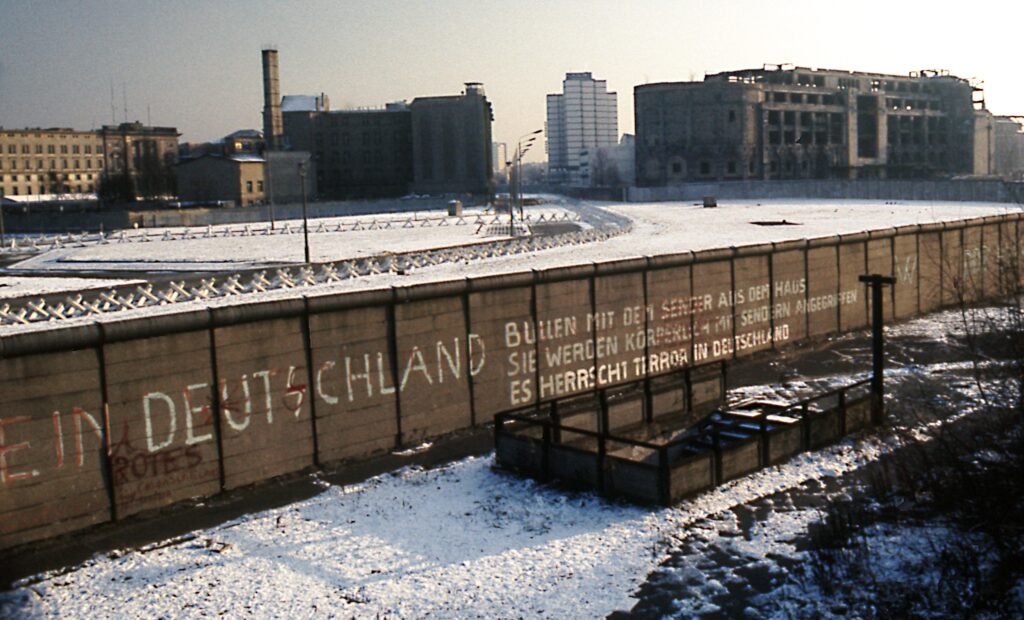
The Cold War supplied a grim partial test of the notion that ‘good fences’ make ‘good neighbors.’ American and Soviet blocs did not abolish violence, they simply relocated much of it to Korea, Vietnam, Afghanistan, and elsewhere through a series of proxy wars. Yet the superpowers never came to Armageddon. Nuclear deterrence mattered above all, but did these legible boundaries and rules of crisis behavior not also help? In other words, did Schmitt, in one important respect at least, have a point? Could rival powers stay more firmly in their geographical lanes, agree rules governing access to the world’s resources and common spaces, and in doing so reduce the number of places at which they may collide? Might good fences truly sometimes make better neighbors?
The Return of the Great Spaces
For a generation after 1989 the world appeared to answer emphatically no. Trade expanded, China entered the World Trade Organization, and supply chains put down roots across continents as capital shifted with unprecedented freedom. The gains were manifold: rapid growth, cheaper goods, and a dramatic decline in global poverty.
But those gains were not evenly distributed. Communities exposed to import competition and deindustrialization often experienced globalization less positively. Brexit drew support from places skeptical that integration had worked for their communities. In the United States, Donald Trump’s invocation of ‘American Carnage’ transformed closed factories and dying industries into potent symbols of a more widespread national decline. This domestic backlash coincided with a global strategic one. Western companies had assumed that all serious participants in the global trading system ultimately shared an interest in preserving it. They had been wrong.
Covid exposed concentrated supply chains, while Russia’s illegal invasion of Ukraine illustrated the hazards of energy dependence. Western sanctions revealed the leverage embedded within financial networks, while Russian energy policy showed that two could play at weaponized interdependence. It has become clear that telecommunications, semiconductors, batteries, pharmaceuticals, critical minerals, energy, and data should no longer be seen simply through an economic lens but need to be integrated into national-security policy.
But can the fish soup of globalization really be turned back into a goldfish bowl of individual national, or continental, fish? Probably not. Nor do most great powers appear to want that. What is emerging looks less like economic deglobalization than the political reconfiguration of globalization. There is a growing salience of ‘continental’ thinking in popular and elite circles. The United States National Security Strategy of December 2025 formally revived the Monroe Doctrine through a new ‘Trump Corollary,’ asserting American pre-eminence in the Western Hemisphere, and articulated a claim to dominance of the two American continents. At the same time, it has interfered repeatedly in Europe, claiming descent from that continent, although arguably in a way that does not much mirror the Europe of today.
In the Western Hemisphere, the Trump administration is determined to exclude China and—some say—Europe from North and South America. In Venezuela, American forces kidnapped President Maduro shortly after a delegation from the PRC had left town. In Panama, the Chinese logistics company CK Hutchison was expelled at U.S. request. President Trump also repeatedly suggested that Canada should become America’s 51st state and continues to menace Cuba. Beyond this, the administration is building a South America in its image by supporting friendly governments in El Salvador, Honduras, Colombia, and Argentina.
Europe, meanwhile, remains a continent desperately seeking to cohere but struggling to discover a common identity and geopolitical purpose. Through SAFE, the European Defense Fund, the European Political Community—which includes the UK—and other arrangements, European governments are attempting to mobilize a greater continental capacity against external threats.
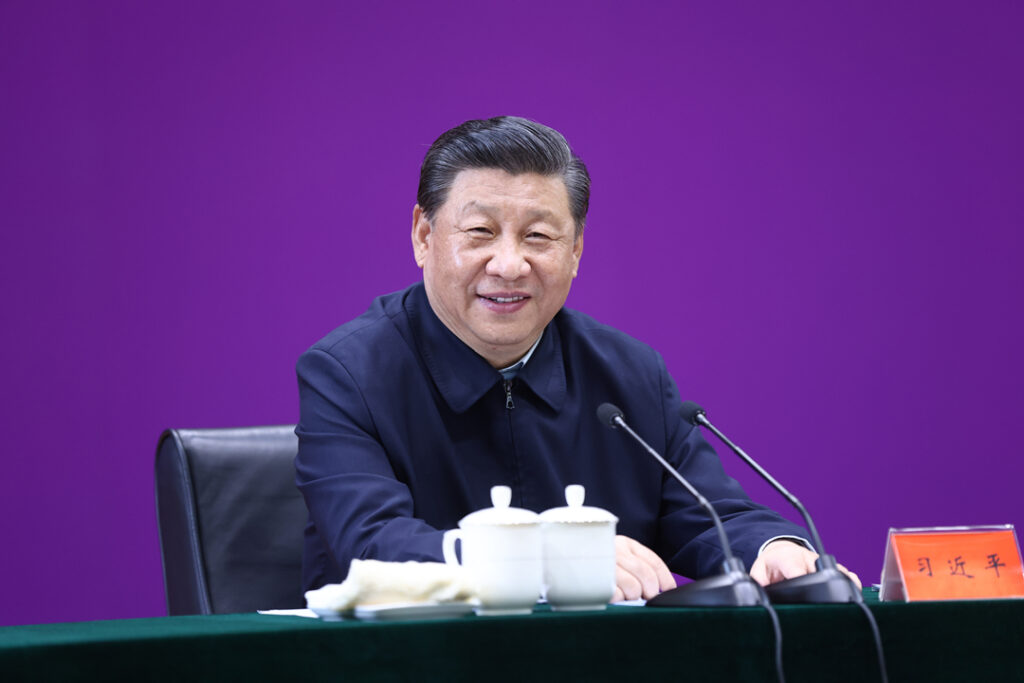
Concurrently, Xi Jinping’s PRC is positioning itself as the leader of ‘Asia’ against America and its local allies, such as Taiwan and Japan. The ‘New Asian Security Concept’ that Xi elaborated in 2014 stated clearly that ‘Asian affairs should be run by Asians.’ Some describe Beijing’s hostility to western ‘Freedom of Navigation Operations’ as an ‘Asian Monroe Doctrine,’ similar to that articulated by Imperial Japan. It certainly regards arrangements involving non-Asian powers such as The Quad and AUKUS as alien intrusions. Today, wherever one looks, the PRC is trying to consolidate its control over the continent, by attacking India in Ladakh, by staking claims to the South China Sea through the large-scale creation of artificial islands, and by intimidating Taiwan and the Philippines. Its infrastructural ‘Belt and Road’ is a bid for economic supremacy in Asia.
Yet this does not amount to straightforward Chinese deglobalization. The Belt and Road Initiative captures the apparent contradiction perfectly. It is conceived both as a means of integrating the Eurasian continent more closely around China, and as a bridge connecting China ever more deeply to Africa, Europe, and the rest of the world. Russia offers another manifestation of this continental turn. Moscow now formally describes itself as a distinctive ‘state-civilization’ and a Eurasian power in an emerging multipolar world.
India makes any tidy division of the world harder still. New Delhi participates in The Quad with America, Japan, and Australia, while belonging to BRICS and the Shanghai Cooperation Organization and maintaining substantial ties with Russia. Indeed, while they are geographically part of Asia, Japan, Taiwan and South Korea are politically very much part of the West.
We may conclude, then, that the world will not divide neatly into self-contained continental empires, at least not without considerable coercion. It looks far more likely to consist of networked spheres. That is, the globe may become a series of overlapping systems in which the degree of connection varies according to whether the subject is trade, finance, defense, technology, information, or energy. The continents will probably not become the ‘great spaces’ once envisioned by Schmitt and his contemporaries. But the question remains whether they—or looser political regions resembling them—are becoming more meaningful units of world politics than they have been in our lifetimes.
Happier Apart?
Despite all the talk of deglobalization and friend-shoring, trade between geopolitical rivals is still very high. Around $1.4 trillion of Chinese imports and exports passed through the Taiwan Strait in 2022, while China relied upon it for nearly a third of its imports. War would threaten the ports, supply lines, foreign consumers, and manufacturing networks which had facilitated China’s rise, before Western sanctions had even begun.
The financial consequences could cut deeper still. China has built its economy while remaining deeply integrated with Western capital markets, dollar finance, and Western professional services. A maximal G7 sanctions package against China’s largest banks could place trillions of dollars of trade and financial flows at immediate risk, not to mention the damage such measures would do to Western economies themselves. We can plausibly speak, to borrow the language of nuclear war, of something approaching ‘mutually assured economic destruction.’
That, of course, is exactly what Angell thought. It did not stop Europe from destroying itself in the first half of the twentieth century. The same could happen again. China might think, wrongly, that the West had too much to lose economically by taking action to stop it invading Taiwan. The West might make the same mistake in assuming that the commercial cost would deter the PRC. These assumptions—based on the theory of ‘interdependence’—are deeply embedded across global leaderships and they may be as ill-founded as those of our forefathers in 1914. Much better, surely, to establish clear dividing lines between the major economic blocs to reduce not only tension but to rid ourselves of the myth that economic ties will prevent conflict.
So it may be time, to think about geo-economic ‘apartness.’ Here we must neither rely upon trade as a guarantee of peace nor pursue complete decoupling. Governments must instead distinguish between interdependence which gives sides something valuable to lose, and the dependency which affords one side a devastating chokehold over the other. Naturally, Western democracies need not manufacture everything they consume. Attempting to do so would make them poorer and reproduce the failures of autarky. Instead, government might maintain something resembling a national economic-security risk register. If relations with a competitor power were to collapse tomorrow, which outsourced goods, technologies, or systems could impose intolerable damage upon essential state, military, or economic functions?
Advanced semiconductors form an obvious example, although the sharpest geographical concentration currently lies in Taiwan rather than the PRC. China’s dominance of battery production and rare-earth processing is more direct. Similar scrutiny should apply to pharmaceuticals, telecommunications infrastructure, and other supply chains which could trigger a national crisis. In this respect, the objective should not be maximum independence but rather minimum coercible dependence.
To be concrete, there is no direct security reason not to buy rubber ducks or shirts from the PRC, though there may be ethical objections to the way they are produced. There is every security reason to avoid becoming dependent on Chinese electric cars, particularly if these can serve as trojan horses for the transfer of sensitive data back to the PRC. There is also a broader case for not being so enmeshed with rival states—economically, educationally, and in many other ways—so as to create tensions and dependencies.
De-conflicting will be a costly exercise. Strategic reserves are not free, nor are duplicated supply chains nor allied production. A more fragmented world economy will almost certainly make us poorer. The geopolitical danger may also lie precisely in that transition, if one state or bloc’s attempt to secure itself convinces the other it is preparing for confrontation. That was certainly a lesson of the interwar years. There is a moral danger too. ‘Bloc de-confliction’ cannot mean handing Eastern Europe to Russia, or Southeast Asia to China, or recognizing anything resembling a ‘sphere of influence.’ Any viable system must preserve the sovereignty of smaller states even if it recognizes that certain military, technological, and economic activities create disproportionate security fears among great powers.
Our answer, then, is neither universalist hyper-globalization nor 1930s autarky. We cannot completely reverse globalization. Nor should we try. The task is to preserve enough interdependence to ensure residual prosperity while removing the choke points which make coercion irresistible. This should be accompanied by disentangling China and other strategic competitors from the areas most critical to our national security. This will come at a financial cost—there is no doubt about that—but it will be worth it. In the best of worlds, we would be richer together. Sadly, we are far removed from that happy state. With the right fences—and enough garden gates between them—we may just be safer apart.