
Europe’s economic relationship with China is entering a more difficult phase. What is often portrayed as a dispute over trade balances, electric vehicles, or industrial subsidies reflects a deeper structural shift: China and Europe are no longer primarily complementary economies. Increasingly, they compete in the same high-value manufacturing sectors, and this technological convergence is reshaping trade flows, investment patterns, and policy debates across the continent.
Competition between Europe and China therefore cannot be avoided. The question is whether it can be managed through credible rules, reciprocal market access, and institutional cooperation, or whether it will escalate into a cycle of tariffs, retaliation, and decoupling. The stakes are high. China remains one of Europe’s largest trading partners, while Europe remains one of China’s most important export markets and sources of technology and investment. A deterioration in the relationship would impose costs on both sides and further weaken an already fragile global trading system.
The Real Source of the Tension
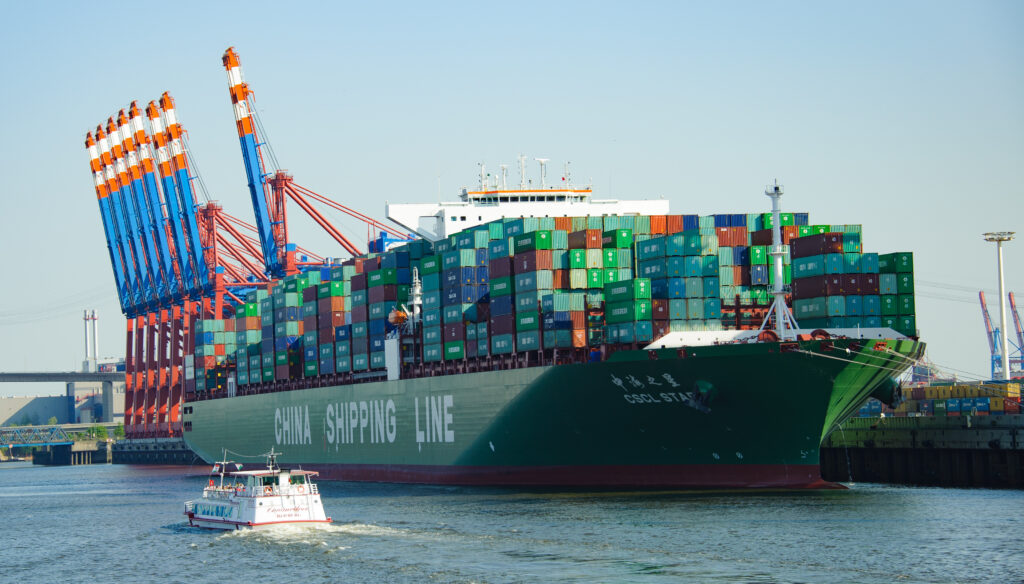
The most visible symptom of the current friction is Europe’s widening trade deficit with China, now running at almost €1 billion per day, or about 2 percent of Europe’s GDP. The large and growing imbalance reflects not only China’s strong exports but also its weak imports. In fact, China’s exports to Europe between 2020 and 2026 grew at roughly the same pace as Europe’s total imports. In other words, China did not expand its share of European imports over that period. The problem, rather, is that China’s imports from Europe fell markedly between 2024 and 2025. At the macro level, China’s housing slump and investment recession dampened domestic demand. At the sectoral level, Chinese producers moved up the value chain and increasingly substituted for foreign suppliers.
But trade imbalances alone do not explain the emerging tensions. The deeper cause lies in the interaction between China’s domestic economic conditions and its industrial transformation. Over the past decade, China has steadily moved up the manufacturing value chain, making technological convergence the central source of tension. Export-similarity indices show that China’s export basket has moved materially closer to those of key European economies, notably Germany and Italy. The overlap is concentrated in autos, machinery, electrical equipment, and clean technologies—sectors that anchor Europe’s industrial model and export performance. The issue is not simply that China exports more; it is that China increasingly exports what Europe also produces.
This dynamic affects Europe through three channels. First, European markets are absorbing larger volumes of Chinese manufactured goods. Second, European producers face intensifying price competition from Chinese firms that benefit from scale, rapid technological learning, and extensive industrial ecosystems. Third, China’s own industrial upgrading is reducing its reliance on imports of European machinery and capital goods. Many European firms therefore face both greater competition at home and weaker demand abroad.
This situation differs fundamentally from the “China shock” that affected Western economies in the early 2000s. That episode centered on labor-intensive consumer goods and the relocation of manufacturing to lower-cost regions. Today’s challenge is competition in technologically sophisticated sectors at the core of Europe’s industrial model.
Why Europe Feels Vulnerable
The emergence of Chinese competition does not, by itself, explain Europe’s concerns; competition among major economies is a normal feature of globalization. Europe’s unease stems from the collision between Chinese competitiveness and several long-standing weaknesses in the European economy.
Energy costs remain high and volatile. Capital markets remain fragmented despite decades of integration efforts. Innovation financing is less abundant than in the United States, and scaling companies across borders remains difficult. Productivity growth has also been relatively weak for much of the past decade. Together, these structural constraints have limited Europe’s ability to respond quickly to competitive pressure.
As a result, many policymakers increasingly view Chinese competition not merely as a commercial challenge but as a strategic threat to Europe’s industrial base. This perception has fueled support for anti-subsidy investigations, investment-screening mechanisms, and tariffs on Chinese electric vehicles.
Yet framing the issue solely as a problem of Chinese exports risks obscuring an uncomfortable reality: many of the factors making Europe vulnerable are domestic. Even the most effective trade barriers cannot resolve Europe’s underlying competitiveness challenges. Tariffs may slow adjustment, but they cannot substitute for innovation, productivity growth, or capital-market reform.
China’s Uneven Impact Across Europe
Europe’s political debate is often portrayed as a confrontation between countries favoring toughness toward China and those seeking engagement. In reality, the divide is more nuanced. The size of a country’s trade deficit with China does not reliably predict its policy position. Several EU Member States with substantial deficits have maintained relatively pragmatic approaches toward Beijing, while others have advocated more aggressive defensive measures. The difference lies less in aggregate trade balances than in sectoral exposure and supply-chain positioning.
Countries whose industrial sectors compete directly with Chinese producers are naturally more concerned about import pressure. France’s support for stronger action on electric vehicles reflects the importance of its automotive sector, that sector’s vulnerability, and the direct challenge posed by Chinese manufacturers. By contrast, countries with more complementary economic structures or greater dependence on Chinese investment often adopt more accommodating positions. Hungary, for example, has become a major destination for Chinese investment in battery and automotive manufacturing, creating incentives that differ from those facing other EU Member States.
This divergence illustrates an important point: Europe’s debate over China is not fundamentally about ideology. It is about how different national economies are positioned within emerging industrial value chains. Any durable solution to EU–China tensions must therefore account for these differing interests rather than assume a uniform European position.
The Limits of Defensive Measures
Europe’s recent policy response has focused heavily on defensive instruments. The Foreign Subsidies Regulation, the Anti-Coercion Instrument, and the Carbon Border Adjustment Mechanism all aim to address distortions, unfair competition, and strategic vulnerabilities. Europe has also increasingly relied on anti-dumping investigations, investment screening, and sector-specific trade defenses.
Such measures are understandable. All major economies seek to protect critical industries and ensure a level playing field. But defensive instruments alone cannot provide a stable, long-term framework for managing economic relations between two of the world’s largest trading powers.
Tariffs may offer temporary relief to selected industries, but they rarely address the root causes of competitive pressure. If the underlying drivers remain unchanged, governments are drawn into an escalating cycle of protection. What begins as a targeted intervention can gradually evolve into broader economic fragmentation.
The suspension of the EU–China Comprehensive Agreement on Investment illustrates this problem. In the absence of an institutional framework for addressing market access, reciprocity, and investment conditions, disputes are increasingly politicized and managed through unilateral action. A relationship governed primarily by defensive instruments is inherently unstable. Both sides are tempted to respond to perceived discrimination with additional restrictions, creating a cycle of retaliation that benefits neither.
A Practical Agenda for Stabilization
The most promising path forward is neither unrestricted globalization nor outright decoupling. It is managed competition, supported by stronger rules and selective cooperation. Hence, the first priority should be to restore a structured dialogue on market access and reciprocity. European concerns about subsidies, state support, and competitive neutrality are unlikely to disappear. Chinese concerns about discriminatory treatment and expanding trade restrictions in Europe are equally persistent. The absence of a formal mechanism for addressing these issues only magnifies tensions. Reviving an investment framework would not require complete political convergence. It would require practical agreements on transparency, dispute resolution, investment protection, and market access. Even modest progress would reduce uncertainty and lower the risk of future disputes.
Second, Europe and China should prioritize cooperation on carbon governance. Climate policy is both a source of friction and a potential area of convergence. Europe’s Carbon Border Adjustment Mechanism has generated concern in Beijing over its methodology and compliance requirements. China’s emissions-trading system is expanding rapidly and is increasingly ready for international collaboration. Greater alignment on carbon-accounting standards, emissions verification, and measurement methodologies could reduce trade frictions while advancing climate goals. Climate cooperation offers a rare opportunity for strategic interests to overlap. Neither side benefits from creating separate, incompatible carbon regimes.
Third, Europe should address its own structural weaknesses. The most effective response to Chinese competition is not insulation but greater competitiveness. Deepening the single market, accelerating capital-markets integration, improving venture financing, and supporting innovation would strengthen Europe regardless of developments in China. These reforms have long been recognized as priorities; the challenge is implementation. A stronger Europe would be better positioned to compete with China while remaining open to trade and investment.
Fourth, both sides should preserve channels for investment cooperation in clearly defined sectors. The stock of Chinese foreign direct investment in Europe remains relatively small, despite rapid growth in selected countries and industries. Such investment can play an important role in specific sectors and regions, particularly in advanced manufacturing and clean technologies. Properly structured, it can support technology diffusion, supply-chain resilience, and productivity gains. The objective should be neither indiscriminate openness nor blanket exclusion, but transparent and predictable rules for strategic investment.
Finally, Europe and China should avoid allowing economic disputes to become proxies for broader geopolitical rivalry. Economic competition is manageable; strategic confrontation is far less so. The more trade disputes become entangled with security concerns, ideological debates, and geopolitical alignments, the harder pragmatic solutions become.
Choosing Rules Over Fragmentation
The future of Europe–China relations will not be determined by the latest tariff dispute or quarterly trade figures. It will be shaped by how both sides respond to a profound structural transformation in the global economy.
China’s industrial upgrading and Europe’s manufacturing specialization are bringing the two economies into closer competition than at any point in recent history. That competition is real, and it will intensify. Yet rivalry need not lead to confrontation, especially where opportunities for synergy can still be found along supply chains.
The strategic choice facing Brussels and Beijing is whether to manage competition through reciprocal rules, transparent institutions, and economic reform, or to rely increasingly on defensive measures that gradually erode economic integration. The first path is politically demanding but economically sustainable. The second may provide short-term protection, but it risks creating a fragmented economic landscape that leaves both sides poorer, less innovative, and less resilient.
For Europe, the answer ultimately lies less in restricting China than in strengthening itself. For China, sustainable access to foreign markets will increasingly depend on addressing concerns about market access, subsidies, and reciprocity. Neither side can achieve its objectives unilaterally. The challenge is not to eliminate competition, but to ensure that it remains governed by rules rather than retaliation. In an era of growing geopolitical uncertainty, that may be the most important economic negotiation of the coming decade.