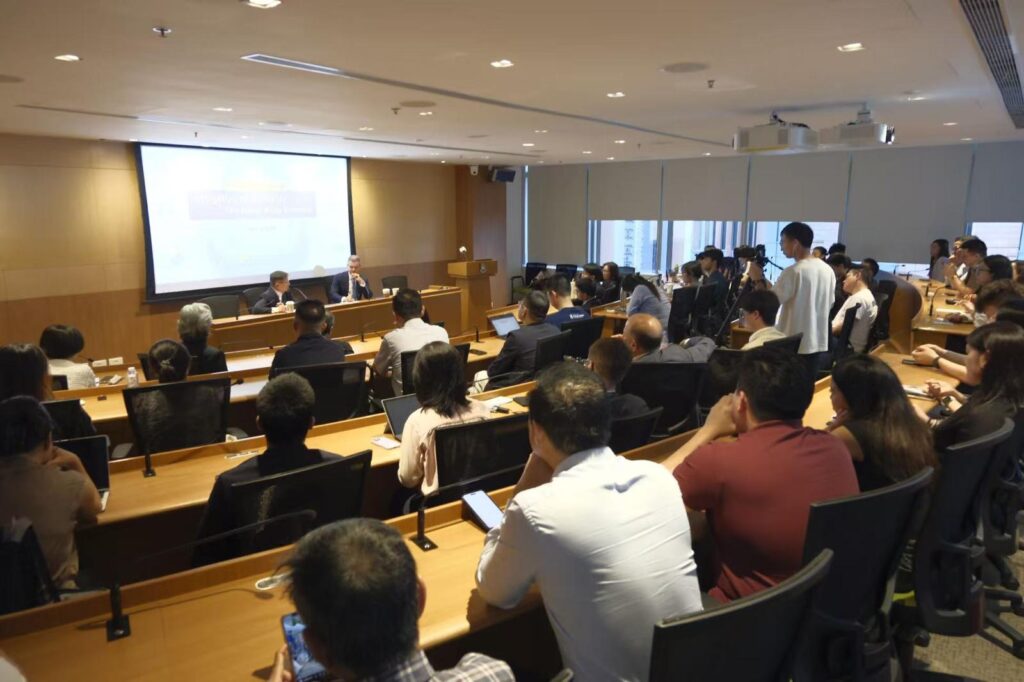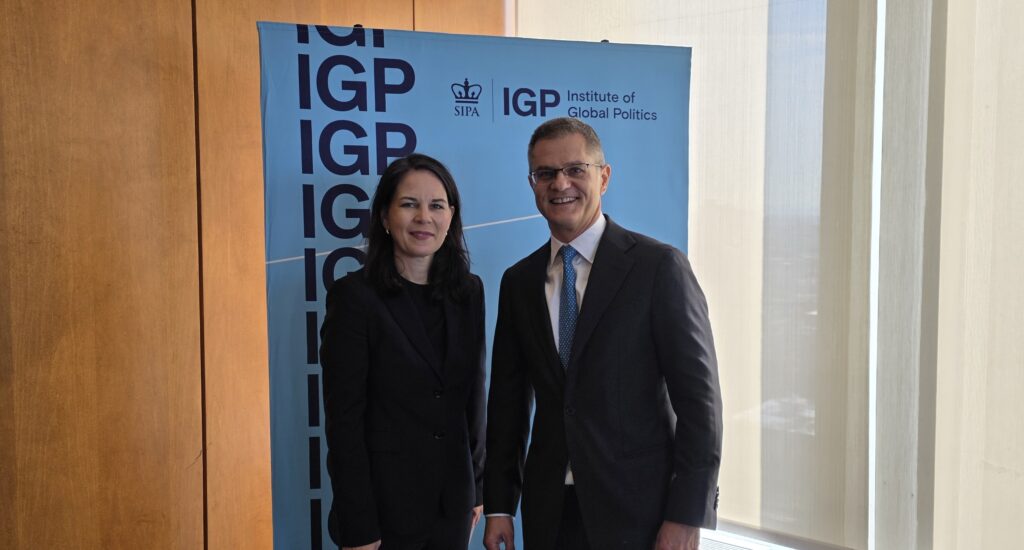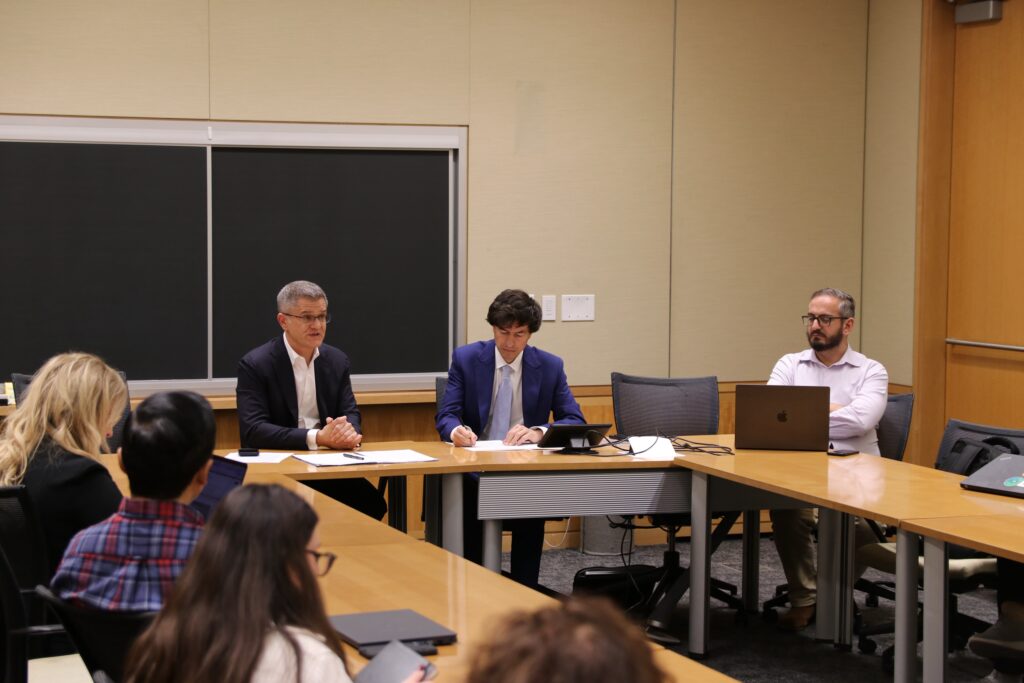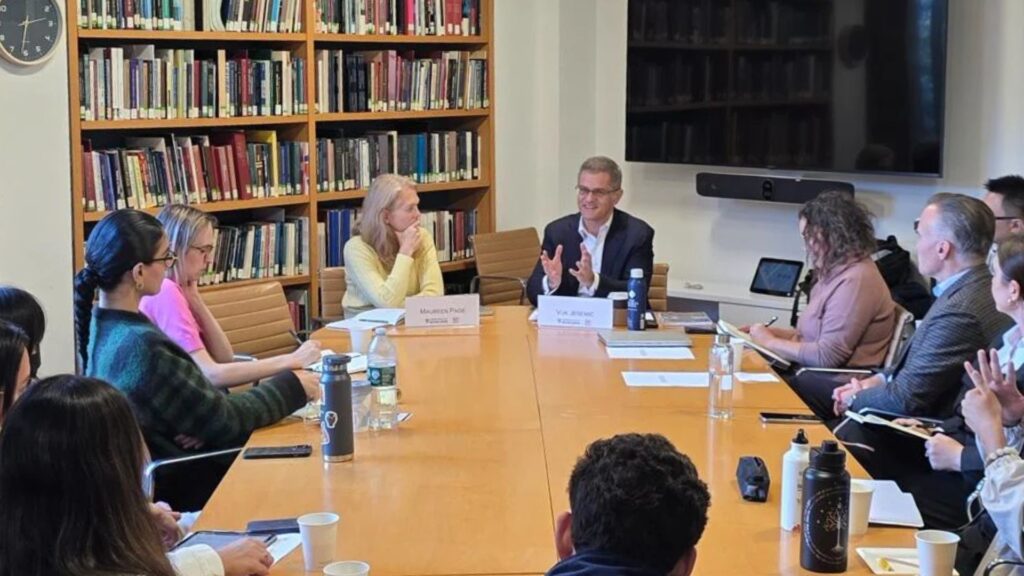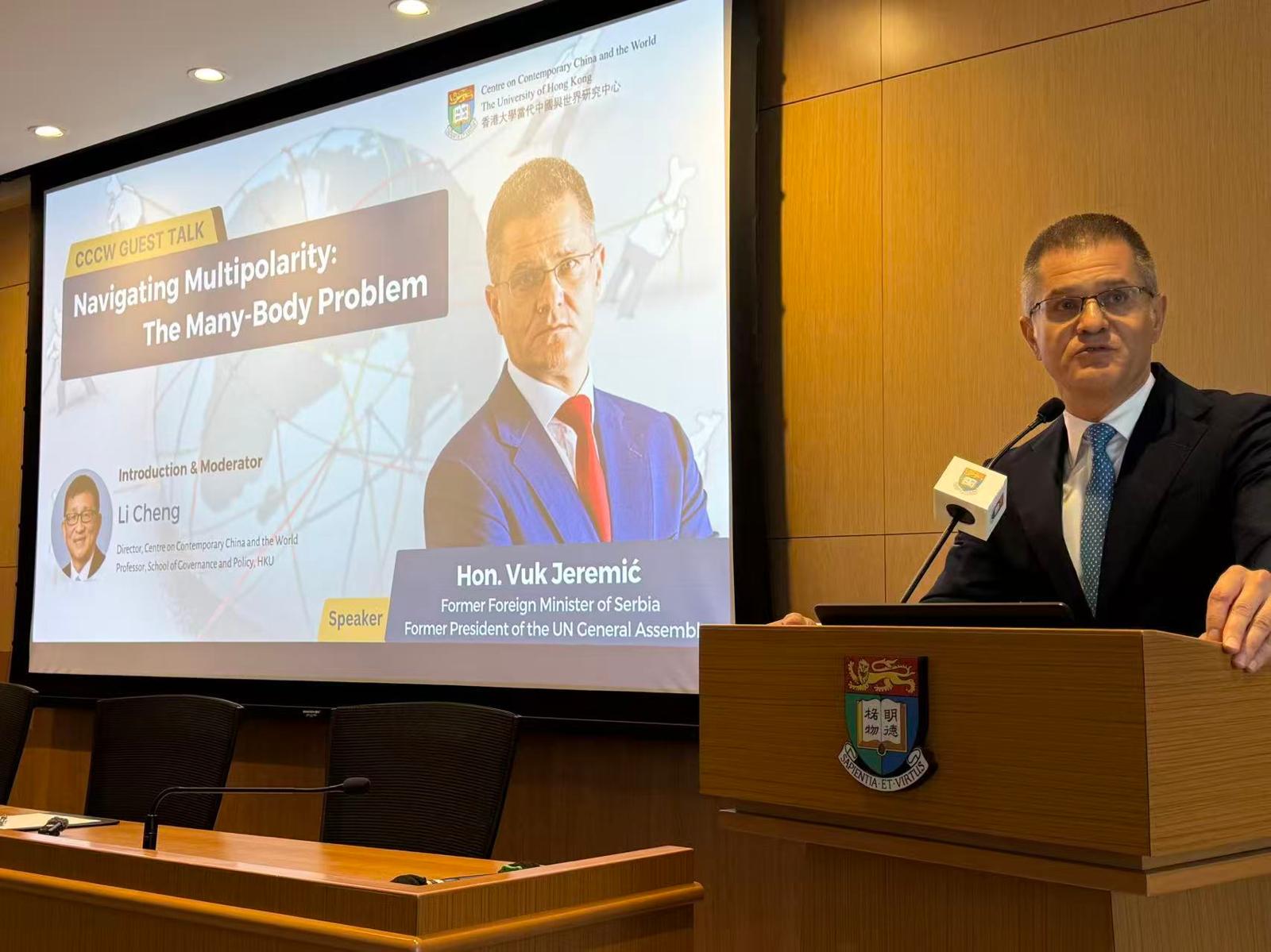
The world has already become multipolar, but the international order has yet to adapt to this new distribution of power, Vuk Jeremić said during a keynote lecture at the University of Hong Kong, warning that growing rivalry between major powers could push the international system towards deeper instability and conflict.
Jeremić, President of the Center for International Relations and Sustainable Development, former Serbian Minister of Foreign Affairs and former President of the United Nations General Assembly, delivered the lecture at the University of Hong Kong’s Center on Contemporary China and the World.
Speaking on the challenges of navigating multipolarity, Jeremić described the current international environment as a period of “geopolitical recession”, characterized by declining trust among major powers, increasingly transactional relations and the weakening effectiveness of international institutions.
According to Jeremić, the transition from the unipolar system that followed the end of the Cold War towards multipolarity has accelerated precisely because major powers are becoming less willing to cooperate and increasingly prepared to bypass the rules of the existing international order.
“The world is multipolar, but we still do not have a multipolar world order,” he said, emphasizing that many international organizations and treaties were designed for a different era and no longer adequately reflect the present distribution of global power.
Jeremić outlined three possible responses to the growing gap between international institutions and geopolitical reality: reforming existing organizations, strengthening alternative or regional frameworks, and pursuing unilateral action.
He argued that reform should remain the preferred option, particularly when it comes to the United Nations. However, when reform becomes blocked, countries are likely to increase cooperation through organizations and initiatives such as ASEAN, the European Union, BRICS and the Belt and Road Initiative.
The third option—acting unilaterally—carries the greatest risks, Jeremić warned. Military interventions, trade wars and other unilateral measures rarely unfold according to plan and can further destabilize an already fragmented international system.
He identified three possible forms that a future multipolar order could take.
The first is a competitive or conflictual system in which major power centers increasingly view one another as enemies. Such a world could become divided into rival political, economic and technological blocs, with incompatible systems and limited cooperation.
Jeremić warned that this scenario could push the world from a geopolitical recession into what he called a “geopolitical depression”—the equivalent of a world war.
A second possibility is managed multipolarity, in which major powers recognize and respect each other but continue to compete for influence under agreed rules. While more stable, such a system would place smaller countries under constant pressure to choose between competing blocs.
Jeremić said his preferred model was a multipolar order based on shared responsibility, in which major powers, smaller countries, companies, regional organizations and civil society cooperate to address global challenges.
Such cooperation, he argued, is particularly necessary in areas including climate change, emerging technologies and the reform of global governance.
UN reform remains essential
Addressing criticism of the United Nations, Jeremić said the organization was not primarily responsible for its current lack of effectiveness.
He described the UN as a club of sovereign member states whose ability to act ultimately depends on the willingness of its members to cooperate. When the most powerful states are in conflict, he explained, the institution inevitably becomes blocked.
Despite its weaknesses, Jeremić said the United Nations was likely to remain indispensable because no other organization possesses comparable universal membership and legitimacy.
He recalled that during his 2016 campaign for UN Secretary-General, he presented a platform containing 53 concrete reform proposals. At the time, he believed the international environment still allowed major powers to reach agreements on issues such as climate policy and sustainable development.
Reforming the UN is considerably more difficult today, he said, but abandoning the organization would be even more dangerous.
Europe must change its strategy
Jeremić devoted a significant part of the discussion to Europe’s position in the emerging multipolar system, warning that the continent was moving in the wrong direction.
He argued that Europe had entered difficult relationships simultaneously with Russia, the United States and China, weakening its ability to establish itself as an independent center of global power.
According to Jeremić, Europe should work towards ending the war with Russia, restoring economic and energy cooperation, and negotiating a new economic relationship with China.
He said the future of European industries, including the automotive sector, could depend on agreements that combine Chinese technology and investment with production in Europe.
Rather than attempting to exclude Chinese investment, Europe should negotiate arrangements that protect its industrial base while creating mutually beneficial opportunities, Jeremić said.
A stronger and more strategically autonomous Europe would then be in a better position to negotiate the future of its relationship with the United States and the transatlantic alliance.
Geopolitical, technological and climate crises are converging
Jeremić also warned that geopolitical instability was developing alongside two other major global disruptions: rapid technological change and the climate crisis.
Artificial intelligence, he said, is advancing at an unprecedented speed without an effective system of international regulation. The use of AI by terrorist organizations or other non-state actors, particularly in combination with biological agents, could create consequences severe enough to force major powers to begin serious negotiations.
However, he cautioned that the world should not wait for such a disaster before establishing international rules.
At the same time, geopolitical rivalries have pushed climate change away from the center of international attention, even as extreme weather events become increasingly frequent.
Jeremić concluded that the future of the international order would depend on whether the world’s leading powers choose confrontation, regulated rivalry or genuine cooperation.
A stable multipolar order, he argued, will only be possible if states accept that power must be accompanied by shared responsibility.