

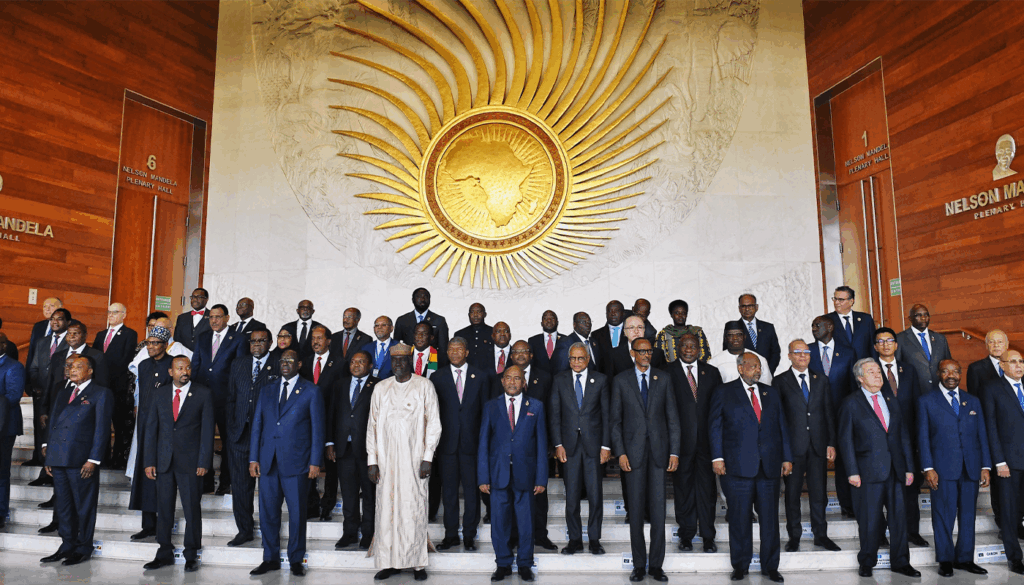

Historically, Africa was systematically excluded from the architecture of the international system. At the San Francisco Conference of 1945, the foundational moment of the United Nations, the African continent was represented by a mere four states: Ethiopia, Egypt, Liberia, and the apartheid regime of South Africa. The remainder of the continent lay submerged under European colonial rule, subject to exploitation and control rather than representation. This profound absence entrenched a logic of structural marginalization at the very inception of global governance. Consequently, African states have consistently critiqued the inherent inequalities of this system, specifically challenging the concentration of decision-making power in the hands of the few Allied powers that claimed victory over the Nazi regime eight decades ago.
Today, the international system is undergoing a volatile transition—an uneven shift from the unipolar hegemony of the United States toward a diffuse, contested, and uncertain multipolar order. There is a burgeoning consensus that the multilateral institutions, forged by the victors of World War II to secure a specific peace, must now evolve to survive. To effectively address the converging crises of our time—peace and security, climate governance, the regulation of artificial intelligence, and global socio-economic development—these institutions must become radically more inclusive. This transition signifies more than a mechanical shift from unipolarity to multipolarity; it represents a fundamental contestation over the principles and legitimacy of the global order itself.
What does Multipolarity Mean for Africa?
Despite its scale, the African continent remains confined to the periphery of global decision-making—perceived too often by external powers as an object of strategic competition rather than a subject of international order. But, this marginalization is becoming increasingly untenable. Africa is undeniably emerging as a locus of demographic dynamism, vast resource endowment, and rising political activism. With the world’s youngest population, a stranglehold on the critical minerals essential for the green transition, and rapidly expanding consumer markets, the continent is positioned to become a decisive variable in the calculus of global power. However, the transmutation of this raw potential into genuine geopolitical agency rests on two precarious factors: the strategic coherence of Pan-African initiatives and the institutional effectiveness of African governance.
African statesmen, diplomats, and intellectuals have long critiqued the polarization of global politics, arguing that it fundamentally corrodes multilateral cooperation. They point to the selective application of international law and the instrumentalization of global institutions as proof of a structurally biased system. This skepticism has been vindicated by a cascade of contemporary crises that expose the hollowness of collective security. The abduction of the Venezuelan head of state by U.S. forces, Russia’s invasion of Ukraine, the devastation in Gaza, the forgotten civil war in Sudan, and the spread of violent extremism across the Sahel, Mozambique, and Somalia—all serve as grim indictments of the United Nations’ inability to provide stability.
In the vacuum created by this systemic failure, Africa has begun to assert itself with newfound vigor. No longer content with merely requesting fair representation in decaying institutions, African governments and civil society are now articulating a distinct ambition: to actively shape the rules, norms, and narratives of the emerging global order.
Pan-African Perspectives
Pan-African perspectives gravitate toward a fundamental rethinking of the global order itself. Africa’s role can no longer be confined to belated participation in existing institutions; it must be understood as an active force contesting the legitimacy of the status quo and advancing alternative principles of solidarity, justice, and accountability. The African Union’s Agenda 2063 serves as the long-term visionary framework through which the continent articulates these collective aspirations.
These sources illustrate that Pan-Africanism is not merely a diplomatic project, but a vehicle utilized by African actors to reshape the international system. Concepts of collective self-reliance and historical redress continue to inform contemporary debates, challenging a literature on multipolarity that too often frames change solely through the prism of great-power rivalry, reducing the Global South to a passive backdrop.
Global order is frequently described through a deceptively simple realist prism: as the mere arrangement of power and authority in international relations. However, order is neither neutral nor inevitable. It is a historically constructed configuration of rules, institutions, and norms, buttressed by material capabilities and maintained by selective ideologies. Consequently, global order is as much about legitimacy and claims to universality as it is about coercion and force. Viewing the system in these terms opens the space to examine not only the structures that sustain it but also the contestations that reveal its inherent fragility.
The very principles enshrined in the United Nations Charter—such as sovereignty and self-determination—are applied selectively, particularly by the major powers that designed the multilateral system. The history of international law reveals a catalogue of interventions that define hypocrisy and double standards, mechanisms designed to legitimize domination while foreclosing claims to equality. For Africa, these dynamics have meant that the global order was never a neutral arena into which states could simply enter; it has always been a terrain of subordination and struggle.
This structural inequality has become increasingly visible in the contemporary crisis of multilateralism. The failures of the collective security system are not new, but the accumulation of unresolved crises has eroded what remains of its credibility. The genocide in Rwanda in 1994, where the United Nations proved unwilling to prevent mass atrocity despite clear warnings, remains a devastating reminder to African policymakers of the costs of selective inaction. Similar failures in Srebrenica in 1995, and the catastrophic aftermath of NATO’s 2011 intervention in Libya—which unleashed a torrent of radicalized forces across the Sahel and into West Africa—reinforce the perception that global institutions are often more effective at reproducing instability than ensuring security. These episodes are not exceptional lapses; they expose deep pathologies in a system where legality and legitimacy are subordinated to the strategic interests of the victors of World War II.
The Security Council epitomizes this dilemma. Its design—granting permanent membership and veto power to the five victorious powers of 1945—was from the outset an expression of great-power privilege rather than democratic representation.
In practice, the Council’s authority has been repeatedly undermined by deadlock, selective enforcement, and blatant double standards. The United States and the United Kingdom justified unilateral intervention in Iraq; France joined similar misadventures under the rubric of NATO in Kosovo and Libya on the grounds of humanitarian necessity. Not to be outdone, Russia’s invasion of Ukraine stands as the starkest modern representation of the pathology of selective adherence to the Charter. China, meanwhile, invokes non-interference to shield its own acts of internal subjugation, from Xinjiang to Tibet. The Council has thus become less a guarantor of collective security than an arena where normative claims are weaponized for geopolitical ends—functioning, in effect, as a “United Nations Insecurity Council.” For African states, often relegated to the margins, this spectacle of great-power delinquency highlights the unfairness of a system that demands compliance while denying voice.
The economic dimensions of this order present parallel contradictions. Institutions claiming to manage interdependence for the collective good—such as the IMF, the World Bank, and the WTO—have historically entrenched the subordination of African economies. The Structural Adjustment Programs of the 1980s and 1990s imposed austerity and liberalization that hollowed out social welfare and eroded state capacity, burdening nations with unsustainable debt. More recently, trade regimes have constrained African industrialization by enforcing intellectual property rules while protecting Global North agricultural subsidies. Even initiatives framed as inclusionary, such as climate finance or pandemic relief, have reproduced dependency by failing to transfer resources at scale or attaching conditionalities that reinforce hierarchies.
Against this backdrop, the transition to multipolarity is frequently hailed as an opportunity to rebalance global governance. Yet, multipolarity, if understood merely as the diffusion of material capabilities, does not guarantee equity. The rise of emerging powers like China, India, and Brazil has created new poles of influence and lines of credit, but it has not dismantled the fundamental hierarchies of governance. The BRICS grouping has articulated demands for reform, but it has also revealed the contradictions of middle powers pursuing their own strategic interests rather than collective transformation. Multipolarity thus risks entrenching a fragmented order where competing hegemonies vie for influence, leaving Africa caught between rival patrons.
African perspectives, therefore, do not simply seek belated inclusion in decaying structures; they question the legitimacy of those structures altogether. Resonating with the intellectual traditions of Kwame Nkrumah and Julius Nyerere, Pan-African critiques insist that solidarity, justice, and accountability must underpin the global order, replacing the logic of great-power privilege and economic extraction. African actors are not merely petitioning for recognition; they are articulating alternative visions of what international order could—and should—become.
African Agency: A Mixed Bag?
African agency is a complex phenomenon that resists romanticization. While states frequently invoke the rhetoric of unity in international forums, the continent often fractures along linguistic, ideological, or clientelist lines when votes are cast. The African Union has articulated ambitious normative frameworks—most notably the Ezulwini Consensus and the Common African Position on United Nations Reform—yet the translation of these positions into hard bargaining leverage has been uneven. External dependence, intra-continental divergence, and capacity bottlenecks continue to hamper execution. Nevertheless, the very existence of an African Common Position signals a refusal to accept marginality as a structural destiny, demonstrating a growing capacity to generate global norms rather than merely absorb them.
These contradictions are starkest in the domain of peace and security. African states are among the largest contributors to UN peacekeeping, frequently providing the troops for missions whose mandates are designed in New York or Paris. Regional organizations like the African Union have shown proactive leadership, as seen in early responses to crises in Burundi and Darfur. However, these interventions also highlight a debilitating reliance on external funding, which inevitably delimits the scope of strategic autonomy.
A similar dynamic defines economic governance. African participation in climate diplomacy has historically been constrained by limited leverage. Yet, a shift is visible: states are becoming increasingly assertive in demanding climate finance, technology transfer, and the acknowledgment of historical responsibility through calls for climate reparations.
The African Continental Free Trade Area (AfCFTA) represents a deliberate attempt to shift these terms of engagement. It is not merely a project of trade liberalization; it is a geopolitical instrument designed to build a continental market that enhances collective bargaining power. From this perspective, market integration operates as a form of “sovereignty pooling”—a mechanism to manufacture negotiating authority in a world of giants.
Taken together, these dynamics locate the contemporary crisis of multilateralism not in the domain of efficiency, but in the domain of legitimacy. African perspectives reveal that an order predicated on exclusion, hierarchy, and asymmetric enforcement cannot plausibly claim universality. By privileging solidarity, justice, and accountability as ordering principles, Pan-African approaches open the analytical space to rethink not just how global governance is implemented, but how it is authorized—and by whom.
From Spectator to Architect
The debate over whether the so-called unipolar order is being replaced by a multipolar one is, at its core, a symptom of the crisis of multilateralism. For some, the condition of multipolarity already exists; for others, the world is currently undergoing a transformation which will lead toward that condition. Regardless of the timeline, Africa remains marginalized, sidelined, and often perceived as peripheral within the existing international order. Despite historical transitions from colonization to independence, the continent still functions under residual colonial structures that determine its role as a supplier of raw materials and a recipient of global decisions, rather than a shaper of global governance. Africa often finds itself relegated to the background in global negotiations, where symbolic moments of presence rarely translate into concrete influence.
A key obstacle to Africa’s effective engagement is its institutional fragility, marked by poorly resourced diplomatic missions; inadequate negotiation capacity, especially in trade and international law; and fragmented, underfunded regional institutions. Africa’s agency is further undermined by a dependence on foreign aid, a lack of indigenous policy ownership, and an externally driven reform agenda. While the continent has generated numerous policy frameworks, implementation remains weak or inconsistent due to the failure of progressive political action, governance failures, and the half-hearted execution of national and regional mandates.
A self-evident antidote to this is the revival and reanimation of Pan-African unity as a force to be reckoned with in the international sphere. Pan-Africanism serves as an important driver of agency—a uniting ideology and framework underpinning African solidarity. However, Pan-Africanism needs to evolve and take on new forms to address contemporary challenges, empower African agency, and shape the continent’s profile in the global arena.
Africa must intentionally reclaim its agency. This involves crafting internal coherence and community-informed positions, drawing upon indigenous knowledge systems to inform policy solutions. On this basis, the continent can forge a cohesive external foreign policy strategy by leveraging the provisions of the African Union’s Common African Defense and Security Policy. Crucially, African governments must commit to financing their own security by adopting an African Union levy of 5 percent on national defense budgets. This mechanism would generate the significant resources required to buttress a robust continental security capability. Furthermore, it is vital to assert moral authority—as seen in South Africa’s legal action at the ICJ—which illustrates how Africa can take principled positions based on its own historical experiences.
Africa holds tremendous potential, notably because it has the youngest population in the world, holds 30 percent of the world’s critical minerals, and controls 8 percent of the world’s oil supply. There is significant scope to scale up its digital, green, and blue economies. African states must move beyond raw material exports to value-added production and insist on local beneficiation in foreign investment agreements. It is equally important to negotiate better trade terms, especially with the Global North metropoles—Washington, London, Paris, Brussels, Beijing, and Moscow—in the absence of which the continent will not fully utilize the export opportunities that are the primary factor for its growth.
Economic integration initiatives like the AfCFTA serve as a pathway toward increasing Africa’s competitiveness and leverage in global politics. To buttress these processes, the African Union needs to fully ratify its Protocol on the Free Movement of Persons and issue AU passports to facilitate the cross-border trade and knowledge exchange required for integration. Furthermore, the transition from unipolarity to a more multipolar order provides African countries with more options to engage with a wider range of global powers. The diversification of partnerships is an opportunity to leverage the competition between different powers to pursue African interests more actively.
There is immense value in common African positions and the role of the AU in advancing a unified voice. As an illustration, the 2026-2036 theme of “Justice for Africans and Peoples of African Descent through Reparations” provides the continent with a policy framework to compel partners, particularly in Europe, to renegotiate the principles of their partnership. This must be based on an acknowledgment of the historical exploitation that fueled the industrial growth of European colonial empires and the United States’ slave-ownership-driven economy. For African policymakers, reparations are not exclusively about financial compensation; they are about the restoration of the humanity of African people, who find themselves deliberately and permanently consigned to the lowest scales of socio-economic existence in the West. In this regard, the call for reparations is an integral part of the campaign to agitate for systemic repair and a remaking of the world order to achieve restitution for Africa’s exclusion from the formation of the multilateral system.
Securing Africa’s Interests
The evolving global order presents a landscape of complexity, fraught with challenge yet rich with opportunity for Africa. As the international system undergoes a transition whose trajectory remains unquantifiable, the continent confronts a governance architecture that is structurally inequitable, contested in its legitimacy, and increasingly questioned in its relevance for the twenty-first century.
To assert itself effectively, Africa must overcome internal governance deficits, strengthen economic independence, and foster regional cooperation by leveraging its demographic dividend and the mechanisms of the AfCFTA. Carlos Lopes, the former Executive Secretary of the United Nations Economic Commission for Africa, presciently argues that “the future of multilateralism is likely to hinge on a new approach centered on coalitions of the willing.” Faith Mabera concurs, noting that African leaders and citizens are increasingly challenging “long-held tropes of peripherality,” asserting agency in a quest for genuine strategic autonomy.
The imperative is for African states to pivot from a reactive diplomatic stance to one of proactive global leadership—grounded in indigenous values, strategic partnerships, and a reimagined continental foreign policy. However, a palpable gap remains between policy vision and implementation reality. The under-utilization of cultural and demographic soft power, combined with the persistent failure to forge a unified voice in global governance, remains a strategic liability.
While grounds for cautious optimism exist, Africa’s ability to shape the new global order will depend on the revival of Pan-African solidarity not merely as a slogan, but as a functional diplomatic weapon. Transformative change will be gradual, incremental, and arduous. Ultimately, the effectiveness of African participation in the twenty-first century depends on the continent’s collective commitment to navigating a system shaped by historical injustice, while insisting on a future that is equitable, participatory, and inclusive.
A Pathway to Reform
As a concrete and practical way forward, African stakeholders—and specifically AU member states—must move beyond mere petitions for reform and utilize the dormant procedural levers of the United Nations itself. The most potent of these is Article 109 of the UN Charter. African diplomats should build a “coalition of the willing” at the General Assembly to invoke this provision, which calls for a General Conference to Review the Charter. This mechanism offers a legal pathway to launch a broad negotiation on the foundational elements of a new multilateral system.
Crucially, a General Assembly resolution invoking Article 109 cannot be vetoed by the Permanent Five members of the Security Council. Consequently, there is significant scope for African countries to bypass the paralysis of the P5 and force a debate not only on the composition of the Security Council but also on the architecture of the global financial and trade systems anchored by the IMF, the World Bank, and the WTO.
In the emerging multipolar order, African societies working individually remain structurally vulnerable to global manipulation. The African Union’s capacity to act as a decisive international player is currently hamstrung by the difficulty of forging consensus among fifty-five states with divergent national interests. In this regard, a cogent Pan-African posture—evident in the adoption of common continental positions—remains emergent and embryonic rather than a fully-fledged expression of collective will.
To transcend this limitation, African countries must shed the comfort of “illusionary sovereignty.” True agency requires the proactive pooling of resources and the aggregation of political capital. In this context, Pan-African agency must be understood not as a sentimental aspiration but as a hard-nosed geopolitical claim: the reclamation of full, independent control over the continent’s affairs from the grip of illegitimate external interference. This requires reviving the practical spirit of Pan-Africanism, incorporating non-state actors and civil society into the project of continental renewal.
Ultimately, Africa must prioritize regional integration not just for economic growth, but as a strategy of survival. Initiatives like the AfCFTA and African contributions to international jurisprudence at the International Court of Justice are the building blocks of this new power. The continent must irreversibly transition from being a passive spectator in the galleries of global governance to becoming a primary architect of the multipolar world order.


