

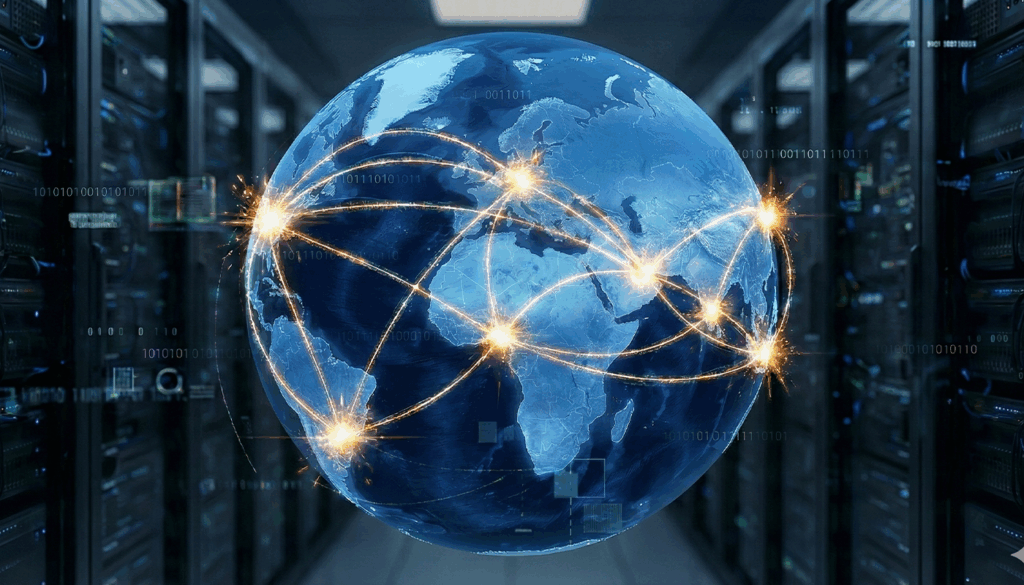

The world is drifting toward a form of multipolarity that few policymakers fully anticipated and even fewer know how to navigate. What makes the present transformation unusual is not merely the rise of new powers or the diffusion of material capabilities; The catalyst is the unmistakable role of emerging technologies—most prominently AI and blockchain—which are accelerating geopolitical realignments that once unfolded over decades. These technologies are reshaping the incentives, vulnerabilities, and aspirations of states at a pace that outstrips existing institutions and erodes the coherence of the post–Cold War order.
As Washington and Beijing lock themselves into a structural competition over technological supremacy, a wide constellation of middle powers is discovering unexpected sources of leverage, autonomy, and risk. Their choices are now among the most decisive variables in determining whether the next international system stabilizes into pluralistic coexistence or fragments into overlapping blocs and technological spheres of influence that global governance is too brittle to reconcile.
Artificial intelligence has become the primary engine behind this acceleration. States that can harness AI efficiently—whether through domestic innovation, foreign partnerships, or strategic alliances with technology firms—gain an extraordinary multiplier of economic power and national security capacity. But the geopolitical consequences go beyond the predictable race for advanced chips, data dominance, and computational scale.
AI reconfigures how states perceive their vulnerabilities and opportunities. It alters cost-benefit calculations around risk-taking, military posture, and diplomacy. Even countries with modest industrial bases are discovering that AI-enabled analytics allow them to act with a sophistication once reserved for great powers, whether by refining energy strategies, optimizing logistics, conducting more effective sanctions evasion, or manipulating information environments abroad. In a sense, AI is democratizing certain forms of statecraft—though not evenly or predictably—and the result is a more volatile, less hierarchical world.
Blockchain technology, often dismissed as peripheral to grand strategy, has simultaneously begun to influence geopolitical behavior in ways that are subtle but consequential. By providing tools for value transfer that operate outside traditional financial intermediaries, blockchain softens the ability of established powers to wield dominance through monetary coercion. It does not eliminate the influence of reserve currencies or global banks, but it diversifies the channels through which capital can move and offers states under sanctions, scrutiny, or pressure new avenues for resilience.
A country that previously feared dependence on a single financial system can now cultivate parallel infrastructures—some state-backed, some decentralized, some hybrid—that reduce strategic exposure. This does not immediately overturn the existing financial order, but it erodes its exclusivity. At a time when geopolitical fractures are widening, blockchain becomes a mechanism that subtly redistributes financial autonomy and thus strategic confidence.
The convergence of AI and blockchain accelerates the broader transition toward multipolarity by empowering states to reassess alliances, economic dependencies, and diplomatic priorities. The traditional markers of power—territory, population, industrial depth—are still important, but they no longer tell the full story. What increasingly matters is whether a state can integrate emerging technologies into coherent national strategies and align them with geopolitical realities. Middle powers such as Türkiye, the United Arab Emirates, South Korea, Saudi Arabia, Indonesia, and Brazil have recognized this shift with unusual clarity. Their leaders understand that technological capability is not only a domestic development priority but also a diplomatic asset that can be traded, leveraged, or withheld. For middle powers, AI laboratories, data centers, digital regulatory frameworks, and blockchain innovation hubs are becoming instruments of statecraft on par with naval bases, energy reserves, and sovereign wealth funds.
This technological empowerment coincides with a moment of profound uncertainty in global governance. Institutions built after World War II were designed for a world where technological change was incremental and geostrategic alignments were predictable. Today’s environment is the opposite: change is exponential, and alignments are fluid. The established institutions—whether the UN, IMF, WTO, or even NATO—struggle to accommodate the speed and complexity of technological disruption.
Regulatory approaches to AI remain fragmented. The United States favors market-driven innovation safeguarded by national security protocols. Meanwhile, the European Union pursues stringent rights-based frameworks and China advances a state-controlled model oriented around political stability and central oversight. These incompatible regulatory philosophies create normative competition that spills outward into the developing world, where governments must navigate competing offers of technology, financing, and digital infrastructure.
As global governance struggles to adapt, the cracks widen. Sanctions regimes become less effective when blockchain enables parallel pathways for financial flows. Arms control frameworks become obsolete when AI-powered systems evolve faster than diplomats can negotiate oversight. Information disorder expands across borders, exploited by both state and non-state actors who understand that algorithmic manipulation is now an affordable form of coercion. And as climate change accelerates geopolitical tension—from food insecurity to mass migration—governments turn toward technological tools for resilience rather than multilateral cooperation. The result is a world in which traditional diplomacy becomes reactive rather than strategic, perpetually responding to technological disruptions rather than shaping them.
Middle powers interpret these fractures not as obstacles but as openings. For decades, their influence was constrained by the binary logic of great-power competition; they either aligned with stronger patrons or remained marginal. Today, they possess unprecedented autonomy. They can engage in multi-vector diplomacy, extracting concessions from competing tech blocs while maintaining a posture of strategic ambiguity. They can form issue-specific coalitions—whether around digital currencies, semiconductor supply chains, energy transition technologies, or AI safety—without subordinating themselves to traditional security alliances. Their leverage increases precisely because the system is fragmented. And as they accumulate technological capacity, they can shape norms, markets, and even diplomatic outcomes that once lay outside their reach.
But this autonomy comes with new vulnerabilities. Middle powers must now navigate the risk of overdependence on the technological ecosystems of great powers, exposure to cyber threats amplified by AI, and the delicate balance between regulatory flexibility and national security. The choices they make in the next decade will determine whether they become stabilizers of multipolarity or accelerators of fragmentation.
The United States and China remain the gravitational poles around which this transformation unfolds, but even their influence is mediated by the technological dynamics reshaping the global system. Washington’s strategy blends defensive measures—semiconductor export controls, investment restrictions, and alliances such as the Quad and AUKUS—with affirmative efforts to retain its innovative edge and preserve a rules-based order that protects its technological advantages.
However, American policymakers increasingly confront the reality that their capacity to unilaterally set norms in AI, data governance, and digital regulation is diminishing. Allies appreciate U. S. leadership but resist full alignment when it constrains their domestic technological ambitions or commercial partnerships. Even Europe, historically the most closely aligned with the United States, diverges on regulatory philosophy, data sovereignty, and the balance between national security and digital rights. This does not imply disengagement from Washington but demonstrates that, in a multipolar technological environment, even close partners assert a degree of digital autonomy.
China, meanwhile, has woven AI and blockchain into an expansive strategy of systemic influence that includes the Belt and Road Initiative, digital infrastructure exports, and leadership bids in global standard-setting bodies. Beijing recognizes that shaping the architecture of digital governance is as important as developing leading-edge technology. Its model emphasizes state control over data, tight integration of corporate and government capabilities, and the projection of digital ecosystems abroad through cloud services, surveillance technologies, and cross-border payment systems.
This model appeals to governments that prioritize stability, state authority, and rapid development over liberal governance. However, China confronts its own challenges: demographic decline, capital constraints, U.S. export controls, and growing skepticism in many regions about technological dependence on a single provider. The result is a more competitive environment in which China must bargain rather than dictate, making the emerging order more fluid than Beijing anticipated.
Where the United States and China exert overwhelming influence is in the global narrative surrounding AI and blockchain. American firms dominate foundational models, algorithmic research, venture finance, and the software ecosystem, while Chinese companies excel in scaling AI applications and providing integrated digital infrastructure across the developing world. Blockchain adoption, by contrast, is more geographically diffuse, with innovation hubs emerging in Singapore, Dubai, Seoul, Lagos, São Paulo, and Tallinn. No single country controls the evolution of blockchain technology, and this decentralization aligns with the ethos of multipolarity itself: a world where power is distributed, influence is negotiated, and no single actor can monopolize the channels of economic or political coordination.
In this environment, middle powers are developing a distinctive posture. They understand that aligning fully with either great-power ecosystem risks technological dependency and strategic vulnerability. Instead, they pursue an architecture of selective engagement—partnering with the U.S. for security cooperation, with China for infrastructure, with Europe for digital regulation, and with emerging tech hubs for venture and innovation partnerships. This mosaic of relationships gives them room to maneuver and reinforces their ability to hedge.
Türkiye uses this approach to deepen defense partnerships with NATO while expanding technological collaboration with Qatar, Azerbaijan, and Asian partners. The UAE positions itself as a global AI and blockchain pioneer, forming strategic partnerships with both U.S. and Chinese firms while cultivating sovereign AI capabilities through national laboratories and data policies tailored to attract international investment. South Korea and Japan deploy cutting-edge technological ecosystems as geopolitical tools, not only supporting U.S. strategy in Asia but also leveraging their semiconductor dominance to influence global supply chains.
This pattern is not limited to the developed world. Saudi Arabia is building a future-oriented digital economy that aims to transform its geopolitical identity from a petro-state to a diversified innovation hub. Indonesia and Vietnam are emerging as competitive digital markets that resist falling into a singular strategic orbit, balancing Chinese infrastructure investments with growing U.S. and Japanese technology partnerships. African nations, long marginalized in the design of global economic systems, are now shaping the future of blockchain governance through rapid adoption, experimentation, and policy innovation. Nigeria and Kenya, for example, are leveraging blockchain to expand financial inclusion and reduce transaction costs, while Rwanda and Ghana experiment with AI in health systems, agriculture, and public services. These developments illustrate how emerging technologies can partially offset the structural disadvantages that defined earlier phases of globalization.
But the rise of technologically empowered middle powers introduces new complexities. Their ability to extract concessions from competing blocs can encourage transactional diplomacy at the expense of long-term stability. Their pursuit of technological diversification can lead to fragmented digital environments that complicate interoperability, data protection, and cybersecurity. Their strategic ambiguity can generate distrust among partners seeking clearer alignment. And their internal political dynamics—ranging from populism to governance challenges—can undermine the coherence of their technological strategies. In other words, while middle powers gain unprecedented autonomy, they also bear unprecedented responsibility for stabilizing the multipolar order they are helping to create.
The fractures in global governance widen as more actors gain the capacity to shape technological ecosystems. Traditional multilateral institutions struggle to keep pace with the technical sophistication required for AI oversight or blockchain regulation. Standard-setting bodies become arenas of geopolitical contestation, with states attempting to embed their values and commercial interests into global norms. Export controls, data localization, and digital sovereignty laws proliferate, creating a more fragmented regulatory landscape. And as states deploy AI-enabled capabilities in military planning, cyber operations, and information warfare, the risk of miscalculation grows. The opacity of algorithmic decision-making, combined with the speed at which AI systems operate, reduces the time available for diplomatic intervention in times of crisis.
These challenges are compounded by the evolving nature of economic interdependence. In earlier eras, interdependence constrained conflict by raising the costs of escalation. Today it is a double-edged sword. AI-powered supply chains are both more efficient and more vulnerable. Blockchain-based financial channels mitigate exposure to sanctions but also weaken leverage instruments that previously deterred aggression. Energy transition technologies introduce new dependencies on critical minerals and battery components concentrated in a handful of countries. And as climate change intensifies, governments become more reliant on technological adaptation than on multilateral cooperation, reinforcing the trend toward national resilience strategies rather than global solutions.
However, the same technologies that fragment global governance also have the potential to reconcile it. AI can enhance international monitoring and verification mechanisms, enabling more effective arms control and climate compliance. Blockchain can improve transparency in supply chains, humanitarian assistance, and global financial governance. Middle powers, precisely because they occupy an intermediate position in the international hierarchy, can serve as brokers of consensus among competing great powers. But realizing this potential requires a conceptual shift: governments must view technological development not only as a domain of competition but also as a platform for coordination. Without such a shift, the world risks drifting into a multipolarity defined not by balanced power but by digital fragmentation and geopolitical distrust.
As the international system navigates this turbulent transition, one of the central questions is whether the emergent technological order can develop mechanisms of coexistence robust enough to prevent systemic breakdown. The history of great-power politics offers few optimistic precedents. Transitions from one dominant structure to another have often been accompanied by conflict, either directly or through systemic collapse. Yet the present transition is different in qualitative terms: power is now entangled with technologies that are both widely distributed and deeply interdependent. No state, not even the United States or China, can fully insulate itself from global technological ecosystems. Even the most ambitious autarkic strategies—China’s drive for semiconductor independence, U.S. reshoring efforts, Russia’s digital sovereignty model—remain ultimately constrained by global flows of data, talent, capital, and materials. This interdependence carries risks, but it also offers opportunities for cooperative stabilization that earlier eras lacked.
One such opportunity lies in the creation of shared frameworks for AI risk governance. Although states disagree on the political uses of AI, there is growing recognition that unregulated AI capabilities can generate catastrophic outcomes: runaway escalation in conflict scenarios, systemic financial disruptions, and the amplification of disinformation that undermines democratic processes. These shared vulnerabilities create incentives for limited cooperation even among strategic rivals. Early examples include the U. S.–China dialogue on AI safety, the European Union’s push for global standards on algorithmic transparency, and multilateral initiatives focused on responsible military use of AI. None of these efforts are sufficient on their own, but they signal that a minimal consensus on AI risk mitigation is possible.
Blockchain presents a parallel, though distinct, opportunity. Its decentralized architecture can serve as a trust-enhancing mechanism in areas where political trust is lacking. Cross-border carbon markets, anti-corruption monitoring, humanitarian logistics, and the verification of climate commitments are all domains where blockchain-based systems can reduce reliance on politicized intermediaries.
For middle powers and developing countries, these systems are particularly attractive because they allow participation in global governance without dependence on the institutions that historically marginalized them. The challenge is not technological capacity but political acceptance: major powers are reluctant to adopt systems that reduce their ability to leverage financial infrastructure and institutional dominance. But as blockchain-based regional financial systems mature—from the digital dirham initiative in the Gulf to cross-border CBDC pilots in Asia—the pressure on global institutions to adapt will intensify.
A more fundamental question concerns the nature of legitimacy in a technologically mediated global order. For decades, legitimacy derived from the principles embedded in postwar institutions: sovereign equality, rules-based cooperation, and universal norms. Today, legitimacy is increasingly tied to technological competence and resilience. States that can deliver digital services efficiently, protect citizens’ data, regulate AI responsibly, and build inclusive financial systems gain credibility domestically and internationally.
Conversely, states that fail to manage technological transitions face not only economic stagnation but political delegitimization. This creates a feedback loop in which technological capability becomes a central determinant of geopolitical position. Middle powers understand this clearly, which is why they invest heavily in digital infrastructure, digital education, and national innovation ecosystems.
Yet as states compete for technological legitimacy, the risk is that inequality between technological “haves” and “have-nots” will deepen. Many developing countries lack the infrastructure, regulatory capacity, or capital required to participate meaningfully in the AI revolution. Without targeted international assistance—whether from the IMF, World Bank, regional institutions, or emerging digital funds—these countries risk exclusion from new technological value chains. Fragmentation in the digital domain could reinforce global inequality more severely than the industrial revolutions that preceded it. The challenge for global governance is therefore not only to manage great-power competition but to ensure that technological transitions do not entrench structural inequities that destabilize the entire system.
Some states, however, are turning this challenge into an opportunity. African nations, in particular, are emerging as laboratories for innovative applications of AI and blockchain in health, agriculture, logistics, and education. These innovations are often more agile than those in developed economies because they operate within fewer legacy constraints. Latin American countries such as Brazil and Colombia are experimenting with blockchain for land registries, biodiversity monitoring, and supply-chain transparency. Southeast Asian nations like Malaysia, Thailand, and the Philippines are developing digital public infrastructures that rival those of more advanced economies. These examples reveal that technological multipolarity is not solely a story of great-power rivalry; it is also a story of distributed innovation across the Global South.
Still, the persistence of geopolitical distrust limits the ability of states to capitalize on these opportunities. Strategic competition between the United States and China shapes everything from semiconductor supply chains to global standards bodies. Europe’s insistence on stringent regulatory regimes—though grounded in legitimate concerns about privacy and ethics—creates friction with partners seeking faster digital development. Russia’s digital isolation pushes it toward experimentation with disruptive technologies that, while innovative, further fragment global interoperability. And middle powers, despite their flexibility, often struggle to coordinate among themselves because their interests diverge across regions and sectors.
In this environment, what might a stable multipolar technological order look like? It would not resemble the universalist liberal order of the post-Cold War era. Instead, it would be characterized by layered governance: competing but interoperable digital ecosystems; regional financial arrangements supported by cross-border blockchain networks; AI safety frameworks negotiated among rival powers; and a proliferation of middle-power-led coalitions focusing on specific technological challenges. Such a system would be pluralistic rather than universal, pragmatic rather than ideologically coherent. Its stability would depend not on shared identity or values but on negotiated coexistence—a recognition that states cannot afford the consequences of systemic technological collapse.
The most optimistic scenario is one in which technological competition accelerates innovation while shared vulnerabilities motivate sufficient cooperation to prevent catastrophic risks. In this scenario, AI augments global decision-making, blockchain enhances transparency, and middle powers play a stabilizing role by bridging divides between great powers. The most pessimistic scenario is one in which technological fragmentation fuels mistrust, AI-enabled conflict escalates rapidly, and blockchain-based financial fragmentation undermines global economic stability. Which path the world follows will depend not only on material capabilities but on political choices—and particularly on the willingness of states to integrate technological governance into their diplomatic strategies rather than treat it solely as a domain of zero-sum rivalry.
The accelerating transition toward multipolarity is thus not merely a shift in the distribution of global power but a deeper structural transformation in how power itself operates. AI centralizes intelligence; blockchain decentralizes trust; and middle powers leverage these technologies to reshape their strategic environment. Great powers remain central, but they no longer monopolize the tools of influence. Global governance fragments, but it also opens new avenues for coordination. The emerging order is neither chaotic nor orderly, neither fully competitive nor fully cooperative. It is a hybrid system—polycentric, contested, and technologically mediated.
Whether this system stabilizes or fractures will define the coming decades. The choices states make today about AI, blockchain, and digital governance will determine whether the multipolar era becomes one of renewed conflict or one of negotiated coexistence. Technological power is no longer merely an instrument of geopolitics; it is the terrain on which geopolitics unfolds. And in this new terrain, the most decisive form of power may be the ability to shape—not dominate—the invisible infrastructures that bind the world together.


