


Anthropogenic climate poses not only a fundamental challenge to the ways of life to which humanity has long been accustomed. It also transforms and rewires geopolitics—and the world order at large—in seismic and enduring ways.
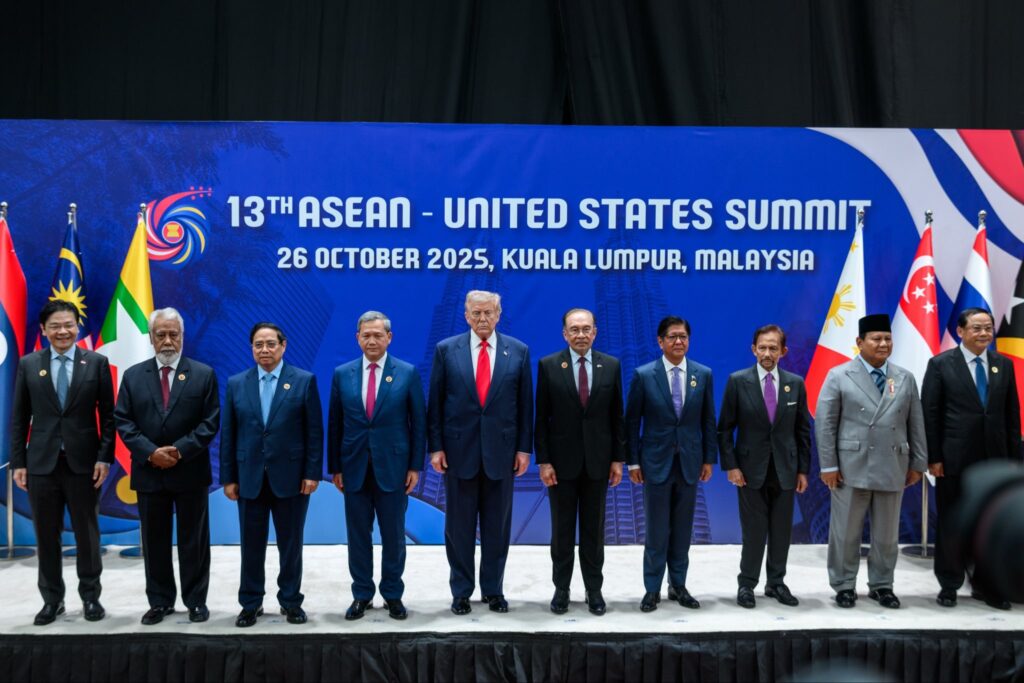
In an era of emerging “middle powers,” in the words of Canadian Prime Minister Mark Carney, ASEAN—a regional bloc comprising nearly 700 million individuals, with a median age of 30 to 31 and a significant endowment in critical raw materials (CRMs)—has a vital role to play. The perquisite, however, is that ASEAN Member States must play their cards tactfully, in ways cognizant of and complementary to one another’s interests, so that they may exercise greater and more meaningful influence over the rest of the world.
In short, ASEAN countries must both securitize and leverage their reserves and burgeoning processing capabilities as sources of gravitas and bargaining strength. Likewise, they need to negotiate with other states as a unified bloc on select issues—such as CRM processing technologies and supplies.
The Geopolitics of the Renewable Transition
Let us begin with three observations about the world today.
First, a vast majority of governments—save perhaps for the political leadership of the world’s largest economy—are cognizant of the challenges and opportunities presented by climate change. Escalating environmental threats, including rising sea levels and extreme weather, are crippling agricultural output and elevating climate change into a top-tier global challenge. Despite recent setbacks, the global shift away from fossil fuels is positioning the renewable energy sector for unprecedented growth.
In 2024, over 90 of new global electricity capacity came from renewable sources—including solar, wind, hydro, and geothermal. The decade prior saw a 140 percent surge in annual electricity capacity driven by renewables. Investment in renewables not only makes sense from the standpoint of slowing climate change and thereby buying global stakeholders more time to adapt to its effects; it is also a sound economic strategy in terms of both energy diversification and re-industrialization.
On the diversification front, the oil-rich Gulf states are seeking to reduce their reliance on oil and gas export revenue by pivoting towards technology, tourism, financial services, and renewable energy. Indeed, with the ongoing conflict in the Gulf, the imperative for countries both in and outside the region to wean themselves off oil and shift towards renewable sources of energy – where possible – has never been clearer.
As for re-industrialization, China’s push for “new-quality productive forces” represents a strategic shift away from overleveraged sectors such as real estate and infrastructural construction. This focus on green manufacturing has been transformative; by 2025, green technologies—including solar power and photovoltaic cells, electric vehicles, and related sectors—were estimated to have driven more than a third of the country’s total GDP growth. Beyond its environmental benefits, green energy has become a cornerstone of modern economic strategy for countries around the world.
Second, the renewable transition hinges on the procurement and processing of specific natural resources. These CRMs include lithium, nickel, cobalt, and graphite for batteries; copper and aluminum for electrical grids; and rare earth elements (REEs) for wind turbines and electric vehicle motors. Underpinning all of these technologies is steel, the foundational material essential to reinforcing and scaling green infrastructure. The International Energy Agency estimates that the demand for lithium will grow eightfold by 2040, while the demand for nickel, cobalt, and REEs will likely double in the same period.
While many of these natural resources can be found in abundance globally—it has now become a favorite mantra in some circles to insist that “rare earths are not rare”—the capacity to mine, extract, and refine them into finished products remains asymmetrically concentrated in hands of a few select powers. In the case of rare earths specifically, China controls 70 percent of global mining and 90 percent of refining and processing capacity, while maintaining a particular stranglehold over magnets and heavy REEs. Similarly, although approximately 70 percent of the world’s cobalt is mined in the Democratic Republic of the Congo and Australia leads in lithium extraction, both elements are primarily refined in China. This creates a significant caveat to the resource multipolarity thesis: it does not yet apply to China, which has effectively monopolized the REE processing ecosystem.
Third, these processing capabilities are increasingly being weaponized. In the broader geopolitical context, this is hardly surprising: as Edward Fishman notes, “chokepoints” are par for the course in geopolitical struggles. Western-led sanctions on Iran and Russia have turned Western banks and their collaborating partners into pliant adherents of carefully crafted strategies designed to squeeze the finances of both regimes. The 2022 CHIPS and Science Act represented a landmark attempt by the Biden administration to wield semiconductor exports as a bargaining chip against rivals and nominal adversaries. As of writing, Iran—in retaliation for strikes on Tehran—has effectively closed the Strait of Hormuz to vessels from states it deems hostile.
China’s alleged 2010 ban on REE supplies to Japan, followed by its larger-scale restrictions during the 2025 tariff disputes with the United States, signals an emerging strategic landscape in which consistent access to processed materials can no longer be taken for granted. More generally, vast swathes of the Global North—especially European states—lack the near-term capacity to play catch-up. This is largely because CRM processing tends to be environmentally costly and difficult to implement amid stifling regulations and the “NIMBY” (Not In My Backyard) sentiment that reigns supreme in many advanced economies.
ASEAN’s Role in the Conversation
This landscape offers ASEAN a unique opening. Indeed, ASEAN countries have ambitiously set a tentative target of raising the renewable share of their total primary energy supply to 20 percent by 2030. In relation to the renewable transition, there are three dimensions in which ASEAN possesses significant wherewithal which, if properly harnessed by key policymakers and decision-makers, could yield substantial dividends for the region’s strategic standing on the world stage. These dimensions comprise the abundance of renewable energy sources, the availability of CRM mines and processing facilities, and the considerable manufacturing and supply-chain prowess of ASEAN economies.
To begin with, many Southeast Asian nations are endowed with an abundance of natural sources of renewable energy. The combined potential for utility-scale solar and wind energy exceeds 20 terawatts (TW)—roughly 55 times the region’s current total power capacity. Vietnam, Thailand, and the Philippines are leading the deployment of photovoltaic cells, while Cambodia and Myanmar are seeking, with varying degrees of success, to close the gap. The significant density of rivers and water basins, particularly along the Mekong River, renders the region an ideal site for hydropower installations—though the environmental consequences must be carefully and preemptively managed. In addition, agricultural residues from the palm oil, rice, and sugarcane industries—key economic pillars for Indonesia, Malaysia, and the Philippines—can be readily converted into sources of bioenergy.
Another key dimension is that ASEAN occupies an important and distinctive position in the global CRM mining, refining, and processing sectors. Indonesia alone supplies over 50 percent of the world’s nickel, while Vietnam possesses the world’s second-largest proven rare earth reserves, amounting to just under 20 percent of the global total. War-torn Myanmar mined around 31,000 tons of REEs in 2024, accounting for 8 percent of global supply. While most of these REEs were exported to China for further processing, this could change as the military junta in Naypidaw seeks a thaw in relations with a less doctrinaire Trump administration.
The production bottleneck and resulting dependence on outsourcing remain significant impediments. They are not, however, insurmountable. These constraints can be overcome through appropriate deregulation and the creation of incentives to support foreign, technology-enabled REE mining operations.
Furthermore, ASEAN has emerged as one of the leading nodes in global manufacturing supply chains—especially those anchored in REEs and CRMs produced either within the region or in China. Total Foreign Direct Investment (FID) inflows into ASEAN rose by 8 percent in 2024, despite an 11 percent decline in global investments. For the fourth consecutive year, ASEAN retained its position at the top of FDI recipients among developing regions.
As Chinese, American, and European corporations seek to diversify their manufacturing operations away from their home countries, many have turned to ASEAN as part of a “China+1” strategy. They are eager to draw upon untapped land for infrastructural investment and to establish operations that benefit from historically low wages of workers in Continental ASEAN. It remains uncertain how long such advantages will endure, given emerging competition from Latin America and Africa, and the region’s dearth of energy self-sufficiency laid bare by the ongoing conflict in the Middle East. Yet the broader point is clear: ASEAN has the potential to punch above its weight in the resource rivalries induced by the renewable transition.
Persisting Challenges and Roadblocks
It is not all roses, however. The points outlined above highlight the seeds of strategic strength, but there is no guarantee that they will grow and ripen into fully fledged fruits. As of April 2026, the region remains heavily dependent upon fossil fuels, which account for 80 percent of its energy mix. The previous target of a 23 percent renewable energy share by 2025 ultimately missed. Fundamentally, several key issues persist.
ASEAN systemically underinvests in the development of both grid infrastructure and clean energy research and development. Despite the much-hyped “Power Grid” vision, many ASEAN grids remain atavistic and anchored in centralized fossil-fuel plants that do not integrate well with new renewable energy infrastructure. The problem is exacerbated by a heightened risk premium for investors, spurred by wariness over deeply opaque regulatory environments.
A 2025 World Economic Forum article, “What happened at the Energy Transition meeting in ASEAN,” noted that ASEAN would need “at least $200 billion” in annual energy investment by 2030. However, it also pointed out that only $30 billion had been mobilized annually by 2021. While private funds remain hesitant, public funds in some Member States are coming under increasing scrutiny for possible misuse and misappropriation. This lethargy in investments is compounded by entrenched bureaucratic and business interests that regard it as their mandate to obstruct any radical moves that may “rock the boat,” as evidenced by the sluggish progress in ending petrol subsidies in Malaysia.
Likewise, there is an apparent trade-off for Southeast Asian states, as identified by former Indonesian Minister of Trade Gita Wirjawan. An aggressive push to phase out non-renewables may strain economies that need immediate and massive energy growth for poverty reduction and modernization; yet without such a push, policy inertia and risk aversion on the part of bureaucrats and entrenched interests may preclude meaningful progress altogether. For archipelagic nations such as Indonesia, grid modernization is far easier said than done. If governments are to avoid “greenflation”—inflation induced by supply-side shocks during the phasing-out of non-renewables—they must commit to bolstering transmission, storage, and localized renewable energy production so that additional capacity translates into a reliable power supply.
Moreover, many ASEAN Member States are afflicted by political crises or internal fragmentation. Myanmar has been embroiled in an intense civil war for over five years, with ethnic militias and rebel groups controlling vast swathes of REE-rich land in the north. With the junta controlling only 21 percent of the country, civilian energy infrastructure has suffered significant damage at the hands of various forces vying for control. Less dramatic examples include the Philippines, where a former president has been arrested and the sitting executive leadership is locked in a vitriolic political struggle, as well as Thailand and Cambodia, which remain enmeshed in territorial disputes and regional tensions.
Short political cycles in electoral democracies also nudge politicians toward fossil fuel projects that deliver quick wins and short-term gains in employment and revenue, rather than long-term renewable reforms. Pork barrel politics and bureaucratic intransigence over take-or-pay contracts end up cementing a reliance on coal and natural gas. In particular, the powerful coal and gas lobbies in a number of countries such as Indonesia render the renewable transition a highly arduous process.
Additionally, thinking of ASEAN as a homogenous actor often obscures the fundamental malaise that has long afflicted the bloc—ASEAN is not 1, but 11 disparate countries, each with their own regulatory frameworks, laws, customs, and rituals. Even where commonalities may be identified, they cannot be reliably guaranteed. This lack of alignment gives rise to inter-member disunity that manifests in two distinctive ways.
One form of disunity is a vicious zero-sum competition that exists between Member States scrambling over the same pool of resources. Vietnam, for example, has been a key promulgator of competitive, tender-based auctions and Direct Power Purchase Agreements (DPPAs) to facilitate the private and direct provision of renewable energy to the private sector. While such policy innovation has enabled it to attract substantial inflows of capital and technology—often at the expense of neighboring ASEAN states competing for the same investments—growth in production has outpaced the expansion of its national grid, thereby constraining more rapid scaling.
Indirectly, external players such as China—which leads in solar and wind energy production—or Japan and South Korea, which are at the forefront of batteries and semiconductor technology, have successfully played ASEAN Members against one another in extracting investment terms maximally favorable to themselves, and not necessarily in the interests of the local populations.
Another form of divergence lies in conflicting policy priorities and competition over strategic leverage across different Member States, both of which render coordination difficult. In an interview I conducted with the Malaysian Transport Minister, YB Anthony Loke, I asked him about the challenges of getting Thailand and Laos on board with his vision for a Pan-Asian railway extending all the way from China down to Malaysia. Under former Thai Prime Minister Srettha Thavisin’s leadership, Bangkok was intent on advancing the Kra Land Bridge, which—according to some analysts—would undercut Malaysia’s and Singapore’s geopolitical leverage by enabling the bypassing of the Strait of Malacca.
At the same time, in seeking to connect the Malaysian railway system to the Chinese system via Thailand and Laos, there were concerns among some in Thailand that such a project could reduce Bangkok’s importance in the eyes of China. This was because Chinese goods could then be shipped abroad through Malaysian ports. One can only hope that YB Loke’s view of transportation connectivity in ASEAN as a positive-sum, rather than zero-sum, phenomenon is shared by more of his counterparts across the region.
The Way Forward and Possible Solutions
Fundamentally, ASEAN is no monolith. Indeed, this is precisely why we cannot speak of ASEAN as a single fulcrum, but as a series of different fulcra.
My submission, however, is not that ASEAN should come together as a wholly cohesive bloc; nor does the path ahead presume such total alignment or consistency. The ask is not that ASEAN countries cease all bilateral negotiations with outside powers. Instead, it is that, on the front of renewable transition—among several other issues—ASEAN leaders should deliberate over and minimize their tactical differences. They should follow this by developing a commonly shared set of rules of engagement with external powers. I offer two suggestions in this regard
The first suggestion is a turn towards strategic weaponization of REEs and other CRMs for economic and investment gains. Three years ago, I delivered a keynote at a conference on CRM stockpiling in Madrid. One of the participants observed that REEs were difficult to find in Europe, and even more difficult to extract and process. They asked: “What can we do?” I vividly remember advising that Europe must look beyond the walls of its own “garden”—in a not-so-subtle nod towards Josep Borrell’s now-infamous remark. European leaders must proactively engage with Southeast Asia, Africa, Latin America, and Oceania (chiefly Australia), even if it entails dealing with governments they find morally incompatible, if not outright problematic.
In this era of multi-alignment, emerging and established regional powers and blocs alike must build connective bridges and partnerships with one another: the EU with ASEAN, the Gulf Arab States with India, Central Asia with Latin America. Such engagements are not pursued for the sake of diplomatic handshakes, but out of necessity. The EU possesses capital and technology, yet is far too expensive, bureaucratically burdened, and REE-poor to position itself as a meaningful alternative in the REE race alongside China and the United States. That calculus, however, can shift radically were the EU to forge a more robust partnership with ASEAN and Australia.
On the flipside, ASEAN states should proactively leverage their resource abundance in bargaining with outsiders. On December 19th, 2025, the Indonesian Minister of Energy and Mineral Resources, Bahlil Lahadalia, announced that Indonesia would cut nickel production in 2026 in order to stabilize prices. This was as much an attempt to stabilize supply as it was a clear signal to the rest of the world: Indonesia’s nickel supply is not to be taken for granted. Just as Beijing and Washington can transform scarce resources into chokepoints in global supply chains, so too must ASEAN nations. Gone are the days when market openness can be presumed as a given. ASEAN Member States should implement selective export controls that ration the flow of CRMs to non-ASEAN states. Such outflows should be permitted only on the condition that additional FDI, knowledge and technology transfers, and other economic injections are commensurably provided.
The second suggestion is to foster issue-specific unity. I agree with former Permanent Secretary of Singapore’s Foreign Ministry Bilahari Kausikan, whose view—expressed in a 2024 ThinkChina op-ed—is that ASEAN “centrality” is best understood as “being useful.” In the same piece, he warned that a “failure to adapt quickly enough” to shifting geopolitical circumstances could fundamentally undermine ASEAN’s usefulness and lead to its marginalization.
Yet I remain cautiously optimistic. While consensus across all fronts would be too tall an order, it is not implausible that leaders of individual ASEAN Member States may come to recognise that, on the front of energy, everyone stands to gain through collective bargaining. Such efforts could help shore up non-renewable prices, drive renewable sector growth, and better align internally disparate regulatory, bureaucratic, and infrastructural standards.
United—at least on the renewable transition—ASEAN stands. Divided, its Member States must bear the brunt as great powers treat them like pieces in a cruel and unforgiving chess game. When negotiating the terms and conditions for renewable energy investments, CRM extraction deals, and the advanced manufacturing of goods such as electric vehicles and lithium batteries, ASEAN capitals should be better prepared to speak up, push back, and stare down the powerful elephants that surround them—as one voice rather than many. Such unity is necessary if these capitals to defend, respectively, the interests of their own people.
Can ASEAN become an independent pole in a multipolar global energy order? It is still far too early for us to answer this question in earnest. On the one hand, ASEAN governments remain enmeshed in conflicting interests and incentives, both domestically and in relation to one another. Infrastructural investment and connectivity remain weak, while political strife threatens to derail painstakingly earned progress.
On the other hand, there is no doubt a growing awareness that, to paraphrase the philosopher Antonio Gramsci, the old world is dying and the new world struggles to be born.
Yet now need not be the time of monsters. Now is the time for realists.


