
Is Europe still important? Will China-Europe relations continue to matter to China? These questions are asked often in China today, and the answers depend largely on how one reads Europe’s current position. That position has become a subject of debate far beyond China: as the world undergoes profound change, a number of countries, including European ones, are reassessing Europe’s power, status, and international influence. Three representative views have emerged.
The first is the so-called “Europe-is-marginalized theory,” a view that is quite common in Europe itself. Since the outbreak of the Russia-Ukraine war in 2022, European countries have provided more aid to Ukraine than any other country, yet Europe has had almost no say in the various negotiations over a ceasefire. A belief amongst Europeans is that the continent has been marginalized—that it is “no longer at the table” and that its fate is at the mercy of others.
The second is the so-called “European decline theory.” In recent years, Europe has been hit by a series of challenges and crises, including the European debt crisis, the refugee crisis, Brexit, the Russia-Ukraine war, and the energy crisis that the war triggered. As a result, both its hard and its soft power have weakened, and its international status and influence have declined. The most obvious change is that, in little more than a decade, the European Union’s share of world GDP has shrunk significantly. According to the World Bank, when the international financial crisis broke out in 2008, the combined GDP of the EU Member States exceeded that of the United States and accounted for 25 percent of the world total; by 2025, the EU’s share had dropped to 17 percent. On November 24th, 2025, William Hague—former leader of the Conservative Party—wrote an article in The Times warning that today’s Europe might degenerate into the equivalent of China’s late Qing dynasty in the nineteenth century.
The third is the theory of the “erasure of European civilization,” a view held by quite a few people in the Trump administration. The new National Security Strategy released by the U.S. government in early December 2025 holds that, compared with economic decline, civilizational erasure is the more serious prospect facing Europe. The document argues that Europe is confronting grave problems: the destruction of political freedom and sovereignty by the EU and other transnational institutions; immigration policies that have produced domestic conflict and transformed European societies; censorship of free expression and suppression of political opposition; a rapidly falling birth rate; and the loss of national identity.
It concludes that, if current trends continue, Europe will be unrecognizable in 20 years or less. This view is essentially the same as the one U.S. Vice President J. D. Vance expressed at the Munich Security Conference in February 2025, when he said that the greatest “threat” facing Europe comes not from Russia or China, but from European countries’ own suppression of free speech and their laissez-faire immigration policies.
China’s Perception
As in many places around the world, Europe has also been hotly debated in Beijing. The mainstream view, however, is that Europe remains an important global power—because of its single market and monetary union, and because of the significant role it has played in addressing climate change and participating in global governance.
In the view of Chinese experts, the so-called “European decline theory” stems mainly from “European anxiety”: Europe’s anxiety over the loss of its own advantages and over the rapid changes in the world situation. The Trump administration’s view of Europe, meanwhile, represents the “European perspective” of the anti-establishment camp in the United States. On the surface, it seems to express a mixture of ‘sorrow at Europe’s misfortunes and anger at its failure to fight back’; in fact, it reflects the sharp opposition between so-called “liberals” and “populists” on both sides of the Atlantic. For Chinese academics, the debate over Europe’s power and status has driven research on two strategic issues: Europe’s economic competitiveness and its capacity for independent defense.
Since the end of World War II, the European economy has maintained a relatively strong position in the world. This is attributable to multiple factors: the scale and regional effects generated by the integration of markets and currencies; high-quality manufacturing supported by advanced technology; a stable energy supply from Russia; and the security guarantees provided by the military alliance between Europe and the United States. In recent years, however, the European economy has been sluggish, with weak growth. A position taken by some Europe analysts is that apart from long-standing structural problems such as an aging population and persistently high social-welfare costs, the main reasons behind Europe’s slowdown are closely related to the loss of favorable conditions Europe once enjoyed, including security and energy security.
More important still, against a backdrop of increasingly fierce international economic competition, the EU has imposed excessive regulation. This has suppressed innovation and investment, making it difficult for Europe to sustain its advantages in the division of labor within global production and supply chains. This point was confirmed by the well-known Draghi report. In September 2024, former President of the European Central Bank Mario Draghi released a report titled “The Future of European Competitiveness,” which states that enhancing innovation capacity and competitiveness must be the top priority for European countries, now and for a long time to come.
The capacity for independent defense is the other major topic in Chinese research on Europe in recent years. It has been exactly 10 years since the European Union began to put forward the idea of strategic autonomy in 2016. During Trump’s first term, many European countries did not truly recognize the need to pursue autonomy in defense. Hence, it can be argued that one of the most significant changes in Europe over the past decade is that European countries have reached a basic consensus on the need for strategic autonomy.
With Trump’s return to the White House in 2025—after major differences emerged between the United States and Europe over ceasefire negotiations between Russia and Ukraine, and especially after the United States repeatedly threatened to seize Greenland—most European countries began to doubt America’s security commitments and acknowledged that Europe must develop independent defense capabilities. Some Chinese experts now believe that, as Europe’s strategic autonomy moves from the stage of building strategic consensus to that of building defense capacity, the transatlantic relationship will also enter a crucial period of reconstruction.
The Importance of Sino-European Ties
From the Chinese perspective, given the respective weight and influence of China and the EU, the significance of China-EU cooperation today extends beyond the economic sphere and beyond the bilateral relationship itself. China and Europe are among the most important economies in the world; together, they account for one-third of global GDP. Given the scale of their economies, China-EU cooperation bears not only on the interests of the two sides but also on the growth and prosperity of the world economy.
Yet the significance of China-EU cooperation is not only economic. The end of the Cold War more than 30 years ago marked the conclusion of the era of bloc confrontation and ushered in economic globalization and a multipolar world. In recent years, the shadow of a new Cold War has hung over the world. The direction of China-Europe relations will help determine the future of the international landscape and the world order. As Chinese leaders have emphasized many times, so long as China and Europe join hands and cooperate, bloc confrontation will not occur; and so long as China and Europe refuse to decouple and sever industrial chains, there will be no fundamental reversal of economic globalization.
However, the Trump administration is now vigorously promoting unilateralism. Global and regional organizations such as the United Nations, the World Trade Organization, and the G20 are all under heavy pressure. China and Europe have a responsibility to defend multilateralism and the multilateral system: to unite in safeguarding the United Nations, reforming the WTO, promoting a greater role for the G20, and to commit themselves jointly to addressing global challenges and maintaining world peace, stability, and prosperity.
Growing Complexity
Over the past several years, Sino-European relations have gone through a difficult period, for multiple reasons. Since 2019, the EU has defined China not only as a partner, but also as a competitor and a systemic rival. This new positioning was formally set out in the 2019 European Commission policy document “EU-China: A strategic outlook,” but it was not a sudden change; the document merely made it explicit. Once China was perceived as a rival, the negative effect on Europe’s attitudes and policies toward China was easy to imagine. The direct consequence has been a sharp narrowing of the space for cooperation between the two sides.
The outbreak of the Russia-Ukraine war in 2022 had a significant impact on Europe. As the crisis escalated, Europeans came to regard Russia as a threat to their security and began not only to review their security situation but also to rethink their relationship with the rest of the world. Relations between Europe and Russia, unsurprisingly, were the first to deteriorate sharply. The EU announced comprehensive and severe sanctions against Moscow, and since February 2022, the two sides have been locked in full-scale confrontation.
At odds with Russia, Europe came to realize once again that its security still depends on the United States. In the face of the war, U.S.-led NATO played an important role. U.S. President Joe Biden worked with European countries to deal with the conflict, convincing Europeans that the United States was their most important ally. At the same time, he stepped up efforts to exploit Europe’s security reliance on the United States in order to contain China jointly with European countries. As a result, the war further deepened Europe’s negative perception of China.
The biggest challenge facing Sino-European relations today is the growth of trade friction, which now spans several fronts. Trade imbalance and supply-chain security are currently the European Union’s two major concerns. The EU highlights that the bloc’s goods trade deficit with China reached €359.9 billion in 2025. Chinese researchers view the figure as inaccurate, since it does not account for the significant volume of exports to Europe by European companies operating in China. Even so, it has become a major source of dissatisfaction for some EU Member States in their relations with China.
Together, these factors have further reduced Europe’s willingness and room to cooperate with China, producing a downward trend in China-EU relations in recent years. Diplomats, businesspeople, and academics on both sides have all felt the change.
Opportunities
At the same time, China-Europe relations enjoy several favorable conditions and opportunities. First, there are no direct geopolitical contradictions and no fundamental conflicts of interest between China and Europe.
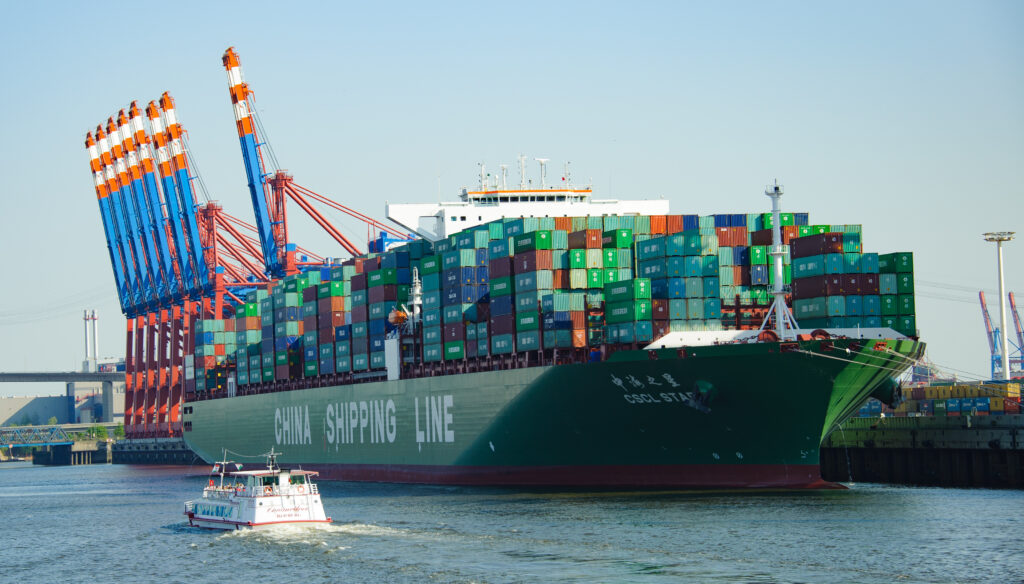
Second, the industrial chains, supply chains, and value chains of China and Europe are deeply intertwined and integrated, and neither side can do without the other. Despite growing trade friction, China and the EU remain each other’s second-largest trading partners. According to Chinese customs statistics, China’s imports and exports with the European Union reached CN¥5.93 trillion in 2025, an increase of 6 percent, accounting for 13 percent of China’s total trade. Eurostat data show that trade in goods between China and Europe reached €759 billion in 2025.
Third, with continuing tension in the relationship between Europe and the United States, Europe has sought to diversify its foreign relations, including through cooperation with China. Since Trump began his second term, the transatlantic relationship has once again undergone intense turbulence and change. Indeed, one of the biggest shifts in major-power relations since Trump returned to the White House has been the serious rift in the transatlantic alliance. European countries increasingly feel that the United States is an unreliable partner and have begun to seek genuine strategic autonomy, including by reducing their reliance on it. Against this backdrop of complex and profound change in the international situation, Europe’s policy toward China has undergone a rebalancing and adjustment.
In April 2025 at a seminar held by the Elcano Royal Institute in Madrid, the EU’s former High Representative for Foreign Affairs and Security Policy Josep Borrell argued that in the Trump era, “the world cannot afford that China and the EU cannot cooperate on the most important issues and do not strive to understand each other.” He stressed that the EU and China should “strive to understand each other” and overcome mutual distrust in order to preserve a world order that Trump’s return to power had “blasted.” That same month, Germany’s CDU/CSU and Social Democratic Party reached a coalition agreement. The coalition document notes that Germany faces historic challenges, and states: “We seek cooperation with China that is in the interests of Germany and Europe, especially in addressing the common challenges faced by humanity.”
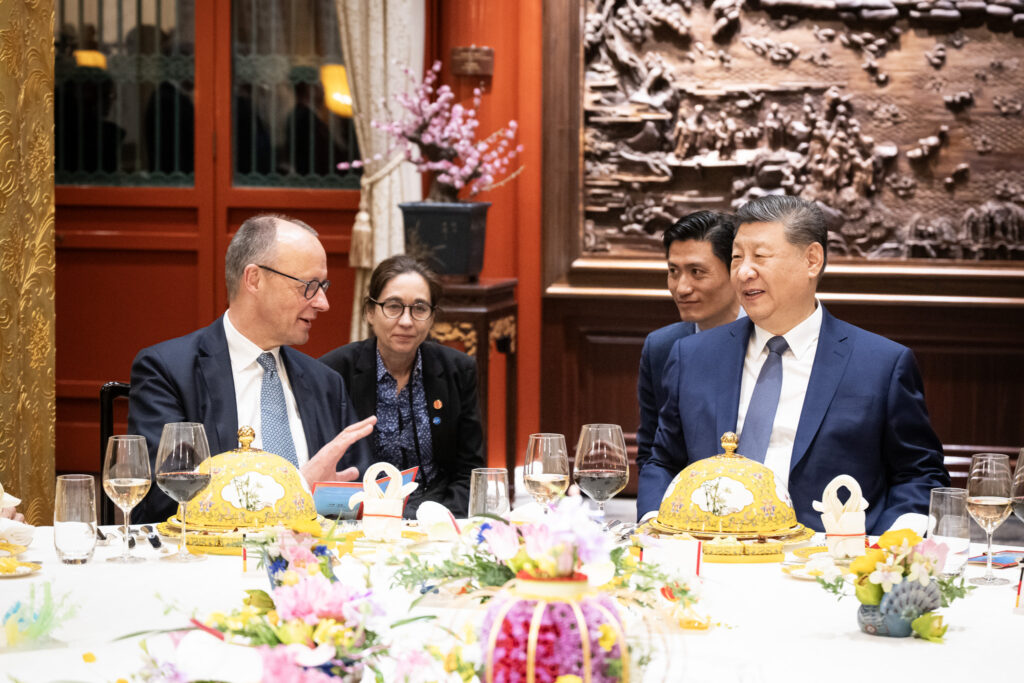
Since the end of 2025, the leaders of major European countries, including France, the United Kingdom, and Germany, have visited China one after another. While maintaining the EU’s “triple positioning” of China, European leaders have emphasized the importance of dialogue and cooperation. At the same time, that triple positioning is itself undergoing subtle change: the competitive and rival dimensions are receding, obstacles to cooperation are gradually being removed, and Europe’s willingness to communicate and cooperate with China is growing.
Prospects
The world is currently in a period of rapid change—indeed, the most tumultuous period since the end of the Cold War. We are witnessing the rise of emerging economies and significant shifts in the balance of power among nations. The question is how to maintain world peace and stability in a new era of multipolarity. The Russia-Ukraine war and the crisis in the Middle East persist, and climate change is becoming increasingly severe—all of which have deepened concern about the future of the world.
Multipolarity and multilateralism are two sides of the same coin: a multipolar world needs multilateralism to navigate it. The problems facing the world today must be addressed collectively. True multilateralism means that all countries respect one another, treat one another as equals, abide by the UN Charter and international law, and rely on global and regional multilateral institutions such as the United Nations and the G20 for consultation and cooperation. More than 10 years ago, China proposed the Belt and Road Initiative. In recent years, it has put forward the Global Development Initiative, the Global Security Initiative, the Global Civilization Initiative, and the Global Governance Initiative. China hopes that all countries will address, through multilateralism, the peace, development, security, and governance deficits facing humanity.
China and Europe both support multilateralism, free trade, and economic globalization, and both attach importance to maintaining stability and certainty in the world. Both believe that multilateral organizations such as the United Nations and the World Trade Organization are of vital importance.
China and Europe share not only common interests but also common responsibilities. Addressing climate change is one such responsibility, and an important area of cooperation. Both sides are committed to the global low-carbon transition, green technology, green finance, and related fields. After Trump’s return to the White House, the United States once again withdrew from the Paris Agreement. China and Europe urgently need to play a more active role in addressing climate change and achieving a green transformation. The two sides should continue to strengthen policy dialogue and practical cooperation in areas such as the circular economy, renewable energy, energy efficiency, green technology innovation, and carbon-market development, so as to inject strong green momentum into both their economies. On the international stage, China and Europe should join hands to advance global climate governance and biodiversity conservation, and to implement the goals of the Paris Agreement.
The digital economy and technological innovation are important engines of future development. China and Europe have potential for both competition and cooperation in fields such as digital technology, artificial intelligence, big data, and the Internet of Things. China has now become a global center of cutting-edge innovation in artificial intelligence, quantum computing, humanoid robots, and other fields. In recent years, the European Union has steadily increased its investment in digital transformation, especially in artificial intelligence. In April 2025, it released the AI Continent Action Plan, which focuses on strengthening the EU’s computing infrastructure through large-scale investment to address its shortfall in computing power. China and Europe should enhance dialogue and exchange in areas such as digital infrastructure, data security and privacy protection, and AI ethics; explore models and pathways for cooperation; and encourage enterprises and research institutions on both sides to undertake joint research and development, jointly promoting scientific and technological innovation and injecting new vitality into economic and social development.
The economic and trade frictions between China and the EU require sustained and serious negotiation. A trade war serves nobody’s interests. European enterprises in China are well aware that, although the Chinese market is highly competitive, it is also an important arena for strengthening their international competitiveness. 2026 marks the first year of China’s 15th Five-Year Plan. China’s development has benefited from its openness to the world and China will continue to pursue its strategy of opening up. This is a major opportunity for European countries.
In sum, it has often been said that China-U.S. relations will decide the world of the twenty-first century. The truth, however, is that the trilateral relationship among the United States, China, and Europe will be crucial to the world’s future. In a rapidly changing world, China and Europe need each other.