

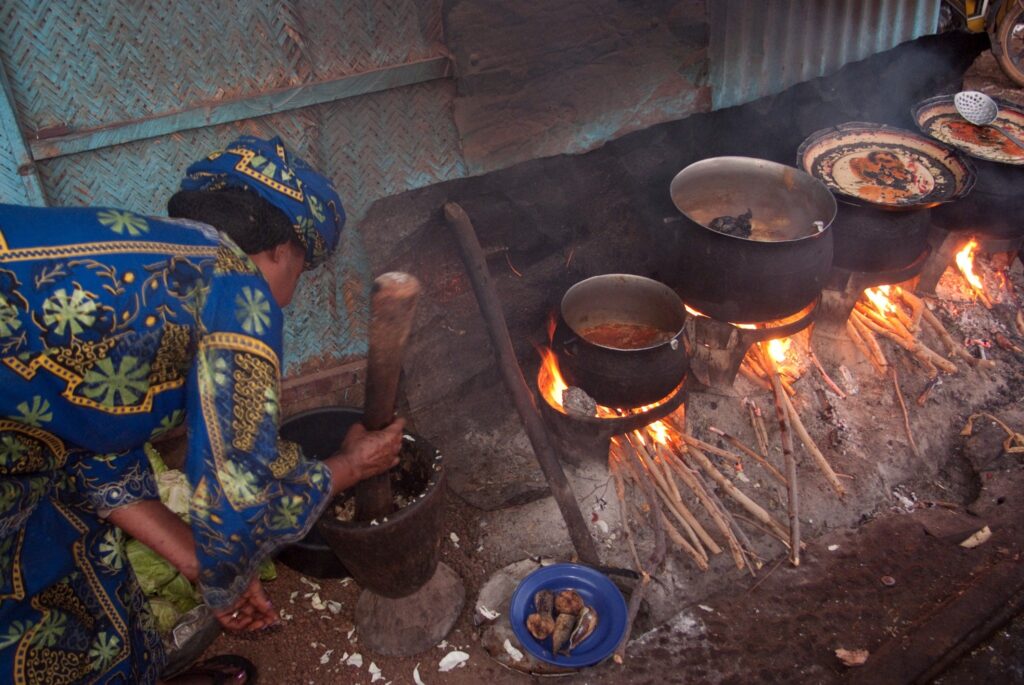

Across much of the world, connectivity is measured in roads built, grids extended, and networks deployed. Yet for hundreds of millions of households in Africa, the most fundamental disconnection is not measured at all—it happens not on highways or power lines, but in the kitchen, twice a day, every day.
In policy terms, these households are often considered connected. Energy systems may reach their regions. Liquified Petroleum Gas (LPG) distribution networks may exist. Electricity grids may extend into nearby towns. But connection on paper does not translate into meaningful access in practice. What matters is whether a household can reliably, affordably, and consistently cook without exposing women and children to harmful smoke. On that measure, the gap remains profound.
Every year, according to a 2025 World Health Organization household air pollution fact sheet, approximately 3.2 million people die prematurely from household air pollution caused by cooking with wood, charcoal, and other polluting fuels. The burden falls disproportionately on women and young children. In sub-Saharan Africa, where approximately 4 in 5 households still rely on such fuels, the health, economic, and environmental consequences are deeply embedded in daily life.
This reveals a fundamental contradiction. Connectivity is meant to link people to health, opportunity, and resilience. Yet in many African households, the very act that sustains life—cooking—remains a source of illness, lost time, and premature death. The issue is not simply access to energy. It is the failure to treat safe cooking as part of the infrastructure that underpins human wellbeing.
Rethinking What Counts as Infrastructure
For decades, clean cooking has been framed primarily as an energy-access challenge. This framing has helped mobilize investment in fuels, technologies, and distribution systems, but it has also constrained how the problem is understood. When cooking is treated as a subset of energy policy, success is measured in connections made, units distributed, or fuels supplied. Far less attention is paid to whether households can sustain clean cooking over time, or to the broader health, gender, and economic systems that shape how cooking actually happens.
Infrastructure, properly conceived, is not simply about physical assets but about systems that reliably deliver essential services over time. We rarely think of a stove as infrastructure—yet the conceptual boundary between household and network often determines whether policies succeed. Electricity and water are considered basic infrastructure because they provide predictable, affordable, and reliable access to public goods. By that definition, safe cooking fits perfectly: it protects health, supports economic activity, and contributes to sustainability.
This reframing is not semantic. It reorients who is responsible, how results are measured, and where investment flows. Once an issue is treated as infrastructure, it moves from the domain of charitable intervention into that of rights, governance, and systems performance. It becomes possible to apply the same rigor to clean cooking as we apply to water systems or rural electrification.
Policymakers typically visualize infrastructure as existing outside the home. Roads connect towns. Grids connect consumers. Broadband connects devices. Yet in much of the world, the ultimate test of connectivity is lived within domestic space—the household—where energy, health, and livelihood systems converge.
Domestic infrastructure is the missing layer of global connectivity: the systems that determine whether infrastructure actually works inside the home.
In the communities where I have worked, cooking happens in close proximity to infants—often in enclosed spaces—where infants breathe the same smoke their mothers inhale while preparing meals. The health consequences are severe: increased risk of respiratory infections, adverse birth outcomes, and long-term developmental harm.
A woman in rural Kenya may attend antenatal visits, receive care, and be counselled on nutrition, yet return home to an open-fire kitchen that exposes her to toxic smoke every day. The health system reaches her body. The energy system reaches her region. But neither reaches her kitchen. That gap—between the system and the kitchen—is the true last mile of development.
Learning from Parallel Sectors
When safely and reliably delivered, infrastructure transforms lives precisely because it makes essential services automatic. Once a community has piped water, people no longer carry jerrycans for kilometers. Once electricity is stable, families no longer depend on kerosene. Infrastructure makes the healthy choice the default.
Public health transformations often follow this model. The global effort to end open defecation, for instance, succeeded when sanitation was reframed from a matter of individual awareness to one of collective infrastructure. Safe cooking demands the same shift: from distribution campaigns to service systems.
Several African countries offer promising examples. In Rwanda, clean cooking has been incorporated into national electrification planning, with cooking-related targets embedded in the government’s Energy Development Strategy. In Ghana, pay-as-you-go LPG programs have reduced upfront cost barriers. In Kenya and Nigeria, partnerships between public health services and stove providers have integrated awareness campaigns into maternal outreach programs. These examples remain modest in scale, but they demonstrate how combining service delivery with behavioral insight can make adoption sustainable.
Reframing clean cooking as infrastructure changes the grammar of policy. It requires coordination among ministries that have long operated in silos: energy, health, environment, housing, and social protection. Each holds part of the puzzle, but none can resolve it alone.
Health systems can incorporate household air-pollution screening into antenatal visits, provide referrals or vouchers for clean-cooking solutions, and treat safe cooking as a preventive health measure. Housing and urban planning agencies can require ventilation standards and promote clean kitchens in new developments. Social protection programs, which already identify and support low-income households, can serve as delivery channels for subsidies or micro-payments that bridge affordability gaps. Energy planners can embed clean cooking metrics into national connectivity indices, moving beyond whether connections exist to whether they work for people.
Integration also transforms data systems. Household surveys and infrastructure statistics rarely converge. A national energy report might claim 85 percent electrification while a health report documents persistent indoor air-pollution exposure. The same household can appear as served in one dataset and vulnerable in another. Aligning measurement frameworks around actual wellbeing outcomes allows governments to see—and close—these disconnections.
The Mukuru Clean Stove and Domestic Infrastructure in Action
While policy frameworks are essential, the true test of infrastructure lies in implementation at household level. The Mukuru Clean Stove, developed and manufactured in Kenya, represents a practical model of domestic infrastructure in action. Built from recycled metal and produced locally, it is designed to be affordable, durable, and aligned with the daily cooking habits of low-income households. It requires no complex supply chains or wholesale behavioral change. In this respect it embodies a principle that centralized systems rarely achieve: it meets households where they are, rather than asking households to reorganize themselves around it.
To date, Mukuru Clean Stoves has reached over 3 million people across East and West Africa, demonstrating that locally manufactured, low-cost solutions can scale while delivering measurable reductions in fuel use, emissions, and household air pollution. Distributed through networks of women entrepreneurs, the Mukuru Clean Stove is embedded within local economies, creating livelihoods while ensuring last-mile access. Its use reduces fuel consumption by up to 60 percent, lowering household costs and reducing exposure to harmful smoke. Complementary fuels made from agricultural waste extend this impact into a broader ecosystem of sustainable energy use.
This model directly addresses the infrastructure gap within the home. Where national systems fall short, the Mukuru Clean Stove functions as decentralized infrastructure, delivering health, economic, and environmental benefits at the point of use. It also demonstrates a broader truth: infrastructure does not need to be high-tech to be transformative. Low-tech, high-impact solutions of this kind simultaneously deliver public health protection, economic empowerment for women, and climate resilience—demonstrating that connectivity, when designed at household level, can transform multiple systems at once.
Global connectivity is increasingly shaping geopolitical influence, from digital infrastructure to energy transitions. Yet the absence of clean cooking from these discussions reveals a critical blind spot.
Africa’s clean cooking transition represents one of the largest untapped infrastructure frontiers of the twenty-first century. The choices made today—between centralized fuel systems, decentralized manufacturing, or hybrid models—will shape supply chains, industrial development, and climate leadership for decades to come.
If connectivity is the new currency of geopolitical influence, then the ability to deliver last-mile, human-centered infrastructure at scale will determine which regions lead in shaping a just transition. Locally manufactured solutions like the Mukuru Clean Stove offer an alternative pathway: one that reduces import dependency, builds domestic industry, and anchors resilience within communities. Clean cooking, in this sense, is not only a development issue but a question of economic sovereignty and global equity.
Financing for Sustained Use
Most clean cooking programs have emphasized initial access: distributing stoves, subsidizing LPG connections, or launching public awareness campaigns. Yet the real challenge begins afterward—sustained use. For many households, affordability is not a one-time barrier but a continuous constraint. Recurrent fuel purchases, equipment maintenance, and economic shocks can easily push families back to traditional fuels.
Here the infrastructure analogy again proves useful. Just as water utilities plan for operation and maintenance, clean cooking systems must account for recurring costs. Financing models should be designed around service continuity rather than one-off distribution.
Emerging approaches provide valuable lessons. Pay-as-you-go financing allows households to pay in small increments using mobile money, converting a significant upfront cost into manageable micro-payments. Community credit models link clean cooking with savings groups, giving women both economic agency and access. Carbon credit mechanisms can channel results-based finance into subsidizing clean fuels, though this requires robust verification systems and equitable benefit-sharing with communities.
Governments can also use fiscal policy to support affordability: removing import duties on clean-stove components or micro-LPG cylinders, creating performance-based subsidies tied to sustained use, or blending public development finance with private capital. Each of these levers helps reinforce reliability and scale.
At a deeper level, financing mechanisms must reflect the long-term horizon typical of infrastructure investment. Roads and water systems are funded through predictable, multi-year commitments because their benefits compound over time. The same logic applies to clean cooking: the return on investment—in reduced health costs, improved productivity, lower deforestation, and climate gains—materializes only if continuity is guaranteed.
The Climate Dividend
Traditional cooking methods emit substantial quantities of black carbon and methane—short-lived climate pollutants with a global warming potential far exceeding that of CO₂. According to the WHO and the U.S. Environmental Protection Agency, household cooking accounts for roughly 25 percent of global black carbon emissions. Replacing biomass and charcoal with cleaner alternatives therefore provides a triple dividend: immediate health gains, gender and time savings, and climate mitigation.
Yet clean cooking rarely features prominently in national climate strategies. Of the many African countries submitting updated Nationally Determined Contributions under the Paris Agreement, fewer than half include explicit clean cooking targets—and those that do tend to frame them narrowly in energy terms rather than as integrated resilience measures.
Embedding clean cooking in Africa’s climate agenda would not only unlock climate finance but strengthen adaptation outcomes. Resilient households are those with reliable access to energy, reduced pressure on forests, and lower exposure to pollutants. Treating household energy as sustainability infrastructure makes climate policy tangible in people’s daily lives.
In addition, clean cooking sits at the intersection of environmental justice and gender equality. The global conversation on just energy transitions often focuses on large-scale questions: coal, renewables, workforce transformation. But justice also resides in daily routines. When a woman spends 4 hours collecting firewood, her opportunity cost is invisible in GDP figures yet enormous in human potential. When smoke inhalation causes chronic illness, its economic impact ripples through households and across generations.
Recognizing cooking as infrastructure reframes women not merely as users or beneficiaries but as co-managers of essential systems. Their insights should shape design, from fuel distribution to financing models. Gender-responsive budgeting and women-led enterprises in the clean cooking value chain can ensure that infrastructure genuinely serves those it is meant to empower.
This is already emerging in practice. In Nigeria, women’s cooperatives manage micro-LPG depots in peri-urban areas, improving both availability and community trust. In Kenya, women entrepreneurs supported by Mukuru Clean Stoves and similar initiatives have demonstrated how local manufacturing and distribution can create livelihood networks while tackling deforestation and waste. Scaling such models reinforces the definition of infrastructure as a living system—embedded in communities, not merely hardware deployed from above.
Towards a Framework of Domestic Infrastructure
If infrastructure is the skeleton of modern civilization, domestic infrastructure is its nervous system: subtle, distributed, and vital. The infrastructure lens invites policymakers to see households not as passive end users but as nodes in a national system of health, energy, and climate resilience.
A domestic infrastructure framework for clean cooking requires four things working together. It begins with recognition—national plans must explicitly classify clean cooking as essential infrastructure, elevating it from a social or energy intervention to a public service domain. Recognition in turn makes integration possible: ministries of energy, health, housing, and environment can only coordinate meaningfully when they are working toward shared targets within a common framework. Integration creates the conditions for financing continuity—long-term, results-linked commitments that ensure sustained uptake rather than temporary access. And all three depend on outcome measurement that tracks health, gender, and climate results alongside the cruder metrics of fuel consumption and connection rates. Together, these pillars do not simply describe a better policy—they describe a different kind of accountability.
Such a framework would shift the measure of success from the number of stoves distributed to the number of households consistently using clean cooking solutions three years later. It would stimulate partnerships between local innovators, global funders, and community organizations—treating each as part of an interdependent system rather than as isolated actors.
The word connectivity has become shorthand for progress. Policymakers speak of digital connectivity to close the education gap, energy connectivity to fuel industry, and transport connectivity to integrate markets. But connectivity must also describe the web of conditions that make life possible and dignified.
When a household cannot cook safely, it is disconnected from the very system designed to enable wellbeing—regardless of how many cables or pylons run nearby. Meaningful connectivity must therefore be measured by function, not proximity. It is not enough to extend infrastructure to communities; it must work for communities.
This shift also challenges how we understand resilience. In crises—from pandemics to natural disasters—households with clean and affordable cooking options demonstrate greater adaptive capacity. They spend less time gathering fuel, inhale less smoke in enclosed spaces, and are better placed to maintain nutrition and hygiene. Clean cooking is not peripheral to resilience. It is resilience.
Infrastructure That Begins and Ends at Home
Connectivity, at its core, is about linking people to the conditions that allow them to live healthy, productive, and resilient lives. By that standard, the continued reliance on polluting cooking methods represents a fundamental failure—not of ambition, but of design.
Closing that gap demands more than scale. It demands a transformation in how societies define infrastructure and measure access.
That transformation begins with institutions. Clean cooking must be housed within ministries that control core infrastructure budgets, not appended to energy-access programs—because where a policy sits determines how seriously it is taken and how reliably it is funded. From that institutional home, financing can be restructured: shifting from the distribution of hardware to the delivery of services, measured by sustained use and verified health outcomes rather than units deployed.
Governments can reinforce this by guaranteeing minimum offtake or providing concessional loans to scale domestic manufacturing of clean-stove components and fuel logistics networks, turning a social program into an industrial one. Social protection mechanisms already identify the households most at risk, and these can be enlisted as delivery channels for clean cooking support, capturing health, time, and gender benefits together rather than separately.
None of this will sustain itself without a shift in how clean cooking is talked about. Development communication must normalize it as a public entitlement—akin to safe water or sanitation—so that the acceptance of smoke and biomass as inevitable features of domestic life becomes as socially unacceptable as the acceptance of open defecation once was.
Roads, grids, and networks capture only part of the story of human connectivity. The true frontier lies where these systems meet daily life—where electricity becomes light, water becomes health, and energy becomes nourishment.
To treat clean cooking as infrastructure is to acknowledge that development does not end at the city boundary or the utility meter. It extends into the intimate spaces of the home—into kitchens where solutions like the Mukuru Clean Stove are already demonstrating, at scale, what this commitment looks like in practice. It is to assert that the kitchen is not peripheral to progress but central to it—and that the smoke filling it is not an inevitable by-product of poverty but a symptom of incomplete systems.
Infrastructure, ultimately, is not concrete but continuity. It is not wires or pipes but the assurance that a basic need will be met tomorrow as reliably as today.


