

The current international landscape is characterized by significant turbulence, and the global governance system faces serious challenges. Yet climate change, as the defining global challenge of our century, will not pause simply because political attention drifts or climate action slows. The physical laws governing our atmosphere recognize no borders, respect no electoral cycles, and make no allowances for short-term economic anxieties. It is precisely during moments of geopolitical strain that the world most needs steady direction and sustained cooperation. We believe that nations worldwide must build a broad consensus and work together to advance global climate and energy governance, grounded in three essential principles.
The first is the need to balance climate action, economic development, and energy security. As pressures to sustain economic growth and safeguard energy supplies have mounted sharply, some countries are showing signs of slowing their climate policies and weakening their commitments. This retreat, however understandable its political drivers, reflects an outdated framing of the choice before us. Green, low-carbon development is no longer merely a policy aspiration imposed from above—it is gradually becoming corporate behavior driven from within by technological innovation and market forces.
The economics of renewable energy, the falling cost curves of wind, solar, storage, and hydrogen, and the maturation of supply chains have reached a point where clean energy is increasingly the rational commercial choice, not a subsidized indulgence. We should therefore leverage a model that combines policy leadership with the dual engines of market mechanisms and technology, using green transformation to stimulate endogenous economic momentum and developing renewable energy to enhance the resilience of the energy system—truly achieving coordinated progress on climate goals, economic development, and energy security, rather than treating them as rival priorities that must be traded against one another.
The second principle is the need to manage prudently the symbiotic relationship between energy transition and energy security. Energy transition represents the defining trend of our times, yet energy security has recently become a more urgent and visible priority, sharpened by geopolitical conflict, supply disruptions, and price volatility. It is important to be clear about how these two imperatives relate. Ensuring energy security is the prerequisite and foundation for advancing energy transition, while accelerating energy transition is the pathway and guarantee for achieving lasting energy security. The two are not opposed—they are mutually reinforcing over any meaningful time horizon.
A system overly dependent on imported fuels and concentrated supply chokepoints will remain fragile no matter how carefully it is managed, while a system rich in domestically developed renewable resources, distributed generation, and flexible storage is inherently more robust. The goal of energy transition is to achieve net-zero emissions and carbon neutrality—it is certainly not simply about eliminating fossil fuels overnight, nor does it require any country to sacrifice reliability at the altar of ambition. It requires a planned, orderly substitution in which clean capacity is built up first and conventional capacity is wound down only as the new system proves itself.
The third principle is the need to leverage fully the synergy between technological innovation and the market environment. The fundamental purpose of addressing climate change is reducing emissions, and the essential solution lies in technological innovation. The world must not only vigorously develop renewable energy but also actively advance the clean utilization of fossil fuels and accelerate the deployment of carbon capture, utilization, and storage technologies, striving to reduce both incremental and existing greenhouse gas emissions. A serious climate strategy cannot afford to be doctrinaire about which tools it is willing to use.
At the same time, technological innovation itself depends on an open, inclusive market environment in which capital, talent, and equipment can flow to where they are most productive. Countries should reject unilateralism and protectionism, working together to maintain healthy, stable global supply chains for critical minerals, promoting the free flow of green technologies and products across borders, and fully leveraging international trade’s role in accelerating climate action. Fragmenting the clean energy supply chain into competing national blocs will raise costs for every country, delay the energy transition by years, and ultimately make the climate crisis harder to manage. Open competition, not closed confrontation, is what will deliver the scale and speed the world needs.
China’s Renewable Energy Sector
As President Xi Jinping observed at the 2024 China-France-EU trilateral leadership meeting, China’s renewable energy industry has developed genuine capabilities through open competition and has made tremendous contributions to the global climate response and green transformation. These capabilities were not built in a hothouse—they were forged through decades of fierce domestic rivalry, demanding customers, relentless cost pressure, and continuous iteration at scale.
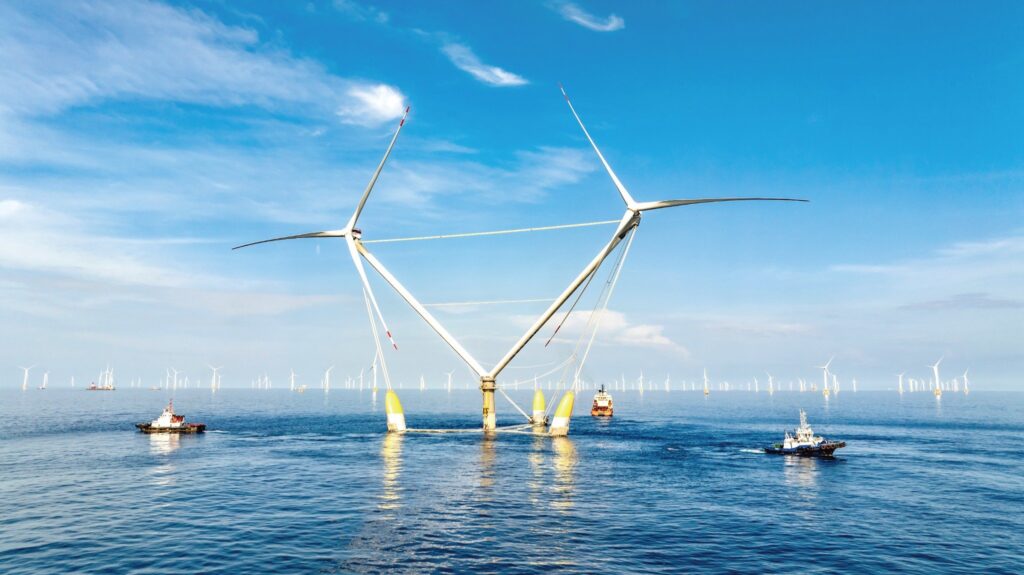
In October 2025, Dr. Steven Chu, former U.S. Secretary of Energy and Nobel laureate in physics, visited Ming Yang’s global headquarters. After touring Ming Yang’s Modern Energy Technology Experience Centre, he remarked that during his tenure as Energy Secretary he had believed that 7-megawatt wind turbines represented the upper limit of what humanity could engineer. Yet Ming Yang had already commercialized 25-megawatt turbines and plans to launch a 50-megawatt ultra-large floating offshore wind turbine next year, while completing a comprehensive wind-solar-storage-hydrogen renewable energy portfolio that spans the full value chain. He found it hard to believe—but the evidence was standing there in front of him.
From Ming Yang’s innovation journey, Dr. Chu could see how China has charted a new development pathway in renewable energy—particularly in major equipment technology—progressing from following to running alongside to leading, and in the process becoming the world’s largest manufacturer and installer of renewable energy. As a participant, builder, and beneficiary of this magnificent transformation, Ming Yang itself has evolved from the small-to-medium electrical transmission equipment company founded 33 years ago into one of the world’s 3 major wind turbine manufacturers and a global leader in comprehensive clean energy solutions. That trajectory is not the story of a single firm—it is a microcosm of the broader sectoral transformation that has taken place in China over the past 30 years.
Dr. Chu came away with a direct impression of the sheer industrial weight behind China’s renewable energy manufacturing. Roughly 80 precent of global solar capacity today is built with Chinese technology and equipment, and around 50 precent of the world’s wind power equipment and technology originates in China. China’s total installed renewable energy capacity is approaching 2 billion kilowatts, deployed not only at massive scale but across an extraordinary diversity of scenarios: onshore and offshore, in ultra-high and ultra-low temperatures, in grid-connected and off-grid configurations, from direct green power supply to zero-carbon industrial parks, from the desert and Gobi mega-bases of the interior to the deep-sea typhoon zones off the coast. Across radically different climates, resource endowments, operating conditions, and application scenarios, China has built a complete wind-solar-storage-hydrogen industrial ecosystem whose equipment technology and integrated solutions are adaptable to conditions almost anywhere in the world.
Take Ming Yang as one example of this ecosystem in action. We have cumulatively installed capacity exceeding 150 gigawatts across more than 600 wind farm projects. The environmental benefits of this installed base are substantial: the equivalent of reducing carbon dioxide emissions by 72 million tons annually, and forest carbon sequestration equivalent to 53 million cubic meters. China has many enterprises like Ming Yang engaged in renewable energy—with complete industrial chains, secure supply chains, advanced equipment technology, and leading service levels—and together they are illuminating the new Silk Road along the Belt and Road Initiative.
Energy Innovation and Application Scenarios
The global momentum toward green, low-carbon development has taken deep root and extends well beyond any single country’s policy cycle. Within China, the ambitious dual-carbon goals announced by President Xi Jinping—peaking carbon emissions before 2030 and achieving carbon neutrality before 2060—are catalyzing a multi-trillion-dollar market with direct implications for the rest of the world.
China’s National Development and Reform Commission and National Energy Administration have successively issued a series of comprehensive policies, most notably Document No. 136 on deepening market-oriented reform of renewable energy on-grid electricity pricing, alongside broader measures to promote renewable energy integration. Together, these reforms have sounded the clarion call for comprehensive market-oriented restructuring and injected tremendous momentum into high-quality renewable energy development under the 15th Five-Year Plan and the construction of a new power system.
China’s renewable energy sector is now experiencing explosive growth across desert and Gobi regions, offshore waters, low-wind-speed zones, large-scale scenarios, and international markets, while simultaneously facing more challenging environmental conditions than ever before. Each of these frontiers demands more reliable, more efficient, more grid-friendly, more economical, and more intelligent technological innovation. The old strategy of deploying standardized equipment into the easiest resource sites has reached its natural limits—the next phase of growth will be won by those who can customize at scale.
Ming Yang has accordingly advanced next-generation medium-speed compact semi-direct-drive wind power technology, invested in critical common technologies and major innovation platforms, and developed a 50-megawatt ultra-large floating offshore wind turbine product line. Fundamentally, this reflects our firm grasp of the inherent principles of renewable energy development: expanding the resource development boundary through technological innovation, improving conversion efficiency at every stage, empowering wind power’s high-quality development with artificial intelligence, and continuously creating value for customers through what we call the “two highs, one low” philosophy—high power generation, high reliability, and low levelized cost of energy. Every product decision and every research investment is ultimately measured against these three criteria.
The first application scenario is low-wind-speed regions. In China’s Central and Eastern regions, the premium wind resources have long since been fully developed, leaving behind low and ultra-low wind speed areas that were once considered uneconomic. The question is how to achieve more efficient development in these sites with lower whole-life-cycle costs. Our answer has been to combine carbon-fiber ultra-long blades and ultra-high hybrid towers for more efficient wind capture, intelligent control technology for finer-grained yield optimization, and low-wind-speed start-up capability that extends the productive hours of the machine. Together, these innovations allow a site with wind resources of only 4 meters per second to deliver more than 2,000 hours of annual power generation—turning what used to be marginal land into bankable generation assets.
The second is desert and Gobi mega-bases. The harsh natural environments of these vast interior regions—sandstorms, extreme heat, extreme cold—create a formidable list of engineering challenges. We have developed customized medium-speed permanent magnet semi-direct-drive products for these conditions, breaking through core technologies in aerodynamic optimization, blade materials, and electrical insulation reinforcement so that turbines can operate reliably year after year in environments where conventional designs would degrade rapidly. Leveraging our storm cut-out capabilities and AI-powered smart wind farm operating platforms, Ming Yang have achieved significant increases in power generation and reduced whole lifecycle levelized cost of energy in precisely those locations that are both resource-rich and environmentally challenging.
The third is deep and far offshore. Venturing into deep waters presents a distinct set of challenges: typhoon resistance, salt-fog corrosion, long-distance offshore construction, and long-distance power transmission back to shore. We successfully developed the world’s first deep-sea dual-rotor floating energy island, achieving core breakthroughs in critical technologies ranging from large-scale simulation systems to mooring systems to advanced materials, while building industrialized, standardized home ports capable of serial assembly and delivery. The result has been a dramatic reduction in the unit cost of floating offshore wind, from more than ¥20,000 per kilowatt to around ¥10,000. This ultimately lowers levelized cost of energy and, critically, opens the door to extending the green value chain offshore—linking generation, hydrogen production, and other downstream uses in a single integrated system.
The fourth is non-electric energy applications. Renewable energy is driving a profound green industrial revolution, and carbon neutrality is reshaping global trade patterns in ways that reach far beyond the power sector. We are converting our advantages in wind and solar resources and equipment technology into cost advantages in green electricity and hydrogen production. Then, transforming these in turn into energy storage—driving the evolution from energy to materials and feedstocks and ultimately to the large-scale hydrogen-ammonia-methanol application economy. This is where the renewable energy revolution connects to the real economy of shipping, heavy industry, and agriculture.
According to the International Maritime Organization “Fourth Greenhouse Gas Study,” global shipping emits approximately 1 billion tons of CO2 and other greenhouse gases annually, accounting for around 11 precent of transport sector emissions. The dilemma facing shipping is that vessels cannot be electrified as simply as automobiles—long-distance maritime transport requires fuels with high energy density that are easy to store and handle in liquid form. Green methanol is currently the most promising alternative, and within a full life-cycle framework it can achieve emission reductions of 63 to 99 precent compared with conventional marine fuels.
The constraint is not chemistry but economics. The cost bottleneck of green methanol lies in the cost of green electricity: when electricity is cheap enough, methanol becomes affordable enough—and only then will shipping genuinely adopt it at the scale the climate requires. Solving the green electricity cost problem therefore unlocks the decarbonization of one of the hardest-to-abate sectors in the global economy.
The fifth is zero-carbon industrial parks—transforming energy systems into services. China is home to approximately 15,000 industrial parks of various types, which together concentrate 80 precent of the country’s industrial enterprises and generate more than 50 precent of national industrial output. At the same time, these parks consume over 40 precent of national energy and account for 31 precent of national carbon emissions. They are simultaneously the engines of Chinese industry and the natural focal point of its decarbonization.
As the European Union’s Carbon Border Adjustment Mechanism gradually takes effect, export-oriented enterprises are beginning to face real, measurable carbon cost pressures on their products. Ming Yang is building China’s first zero-carbon economic industrial park in the central region, concentrating wind and solar resources through our Wind Harnessing Initiative to drive rural revitalization at the same time—creating a green electricity valley and establishing a new model for green zero-carbon industrial cluster development against the global net-zero backdrop. This model treats energy no longer as a commodity that the park purchases from outside but as an integrated service delivered within its boundaries.
At the same time, the Guangdong-Hong Kong-Macao Greater Bay Area is becoming one of the most dynamic economic stages in the world, and Ming Yang has had the privilege of being both a witness to and a participant in the great Maritime Guangdong strategy. Guangdong’s coastline stretches 4,314 kilometers—roughly a quarter of China’s total coastline—and the province’s annual electricity consumption exceeds 800 billion kilowatt-hours. Through high-quality development of marine energy resources, we are helping to transform the energy structure, the industrial structure, and the broader economic structure of the region, securing the energy supply of the Bay Area while simultaneously catalyzing the construction of a ¥1 trillion offshore economic belt alongside an onshore industrial belt. For the first time in history, a coastal economic belt and an offshore energy belt are being deliberately overlapped and co-developed, with each reinforcing the other.
What China can Offer the World
The global conversation about energy is now shifting from the dual-carbon framing toward a broader synthesis of energy security and energy transition, and green digital energy is catalyzing a new green digital industrial revolution. Through the capabilities developed in renewable energy, we are converting advantages in wind and solar resources and equipment technology into cost advantages in green electricity, hydrogen, and ammonia—driving the evolution from energy to materials and feedstocks and on to large-scale hydrogen-ammonia-methanol applications, promoting new forms of electrification and driving a new industrialization that is clean by design rather than clean by retrofit.
Looking globally, the picture varies by region, but the underlying logic is consistent. In the Middle East, governments are deliberately advancing renewable energy to substitute for fossil fuels in the domestic power mix, using localization and industrial clustering to achieve both energy transition and a new industrialization that can sustain economic development beyond the age of hydrocarbons. The region’s combination of exceptional solar resources, long coastlines, and deep capital makes it one of the most natural stages for integrated renewable deployment at scale.
In Southeast Asia, electricity demand is growing at more than 6 percent per year, coal-fired generation still exceeds 60 precent of the mix, and grid infrastructure upgrades are lagging the pace of demand growth. Countries across the region are vigorously advancing onshore and offshore wind alongside integrated wind-solar-storage-hydrogen systems, in pursuit of simultaneous energy transition and energy security. For Southeast Asian economies, renewable energy is not a climate virtue project—it is a direct answer to the twin pressures of load growth and import dependence.
In Europe, under the shadow of the energy crisis, renewable energy is no longer a multiple-choice question to be considered only in the context of dual-carbon goals. It has become the mandatory answer to energy security and cost reduction. The large-scale development of offshore wind urgently needs new solutions that can deliver both scale and affordability. Ming Yang has achieved core breakthroughs in the critical technologies for floating offshore wind—from large-scale simulation systems to mooring systems to advanced materials—and has built industrialized, standardized home ports that significantly shorten the commercialization timeline for offshore floating wind. Through comprehensive solutions and a whole-life-cycle approach, we have brought overall levelized cost of energy down by more than 40 precent, making projects bankable that would otherwise have remained aspirational.
In Africa, home to roughly 75 precent of the world’s population without reliable electricity access, renewable energy can play a uniquely transformative role. It can convert green electricity into green hydrogen, ammonia, and methanol—and green ammonia in particular can directly address the urgent need for agricultural fertilizer on the continent while also generating exports to Europe that support emission reductions on the buyer side. Africa’s renewable energy story is therefore not only about lighting homes, but about closing the fertilizer gap, creating industrial employment, and giving African economies a tradable stake in the global green economy.
In Latin America, large-scale development of premium wind and solar resources is already reducing the cost of energy and electricity, and that cost advantage is increasingly being converted into low-cost green hydrogen, ammonia, and methanol that can substitute for natural gas and enable new forms of electrification in industry and transport. Latin America’s renewable endowment is among the best in the world, and unlocking it has implications well beyond the region.
Looking out over the next 30 years, artificial intelligence is opening an entirely new era of energy demand, with global electricity demand projected to increase roughly tenfold. Efficient development of renewable energy—particularly the AI-empowered integration of computing power and electric power—can provide the low-cost, highly reliable, zero-emission smart energy systems that the world’s data centers and distributed computing networks will require. This is fully capable of meeting the comprehensive green energy needs of global computing infrastructure, including in the United States, where hyperscale data center expansion is now colliding directly with grid capacity and carbon constraints.
Ming Yang’s Globalization and International Cooperation
China’s Belt and Road Initiative is becoming a global consensus and a shared path to prosperity. Our investments, construction projects, and renewable energy development work across many countries have been warmly welcomed by host communities and governments alike. People everywhere—and especially in developing countries—have the right to enjoy high-quality, affordable, conveniently produced, clean, green renewable energy. That right should not be conditional on geography or geopolitics.
The record is concrete rather than rhetorical. As early as 2022, Ming Yang completed the Mediterranean’s first offshore wind project in Italy and continues to provide full life-cycle operation and maintenance services, marking the European debut of Chinese offshore wind turbines. We have partnered with energy majors including BASF, EDF, and TotalEnergies to create global green lighthouse projects that demonstrate what genuinely cross-border clean energy cooperation can deliver. In Southeast Asia, we provided equipment technology and comprehensive solutions for Vietnam’s 350-megawatt Ca Mau offshore wind project, currently the largest offshore wind project in the region. In the Middle East, Ming Yang won a 1,500-megawatt wind power project contract in the United Arab Emirates. In the Americas, we are supplying wind power and hydrogen production equipment for Brazil’s green hydrogen projects, with delivery scheduled for 2026.
Ming Yang is now implementing comprehensive global deployment and international cooperation, establishing four major business centers covering Europe, the Middle East and Africa, East and Southeast Asia, and the Americas. Across these centers, we are comprehensively advancing wind, solar, battery energy storage, hydrogen, and other renewable energy technologies, products, industrial chains, and solutions—extending them for global benefit and worldwide application. This is not a simple Chinese export in the old sense. It is a new model of cooperation, built on localized manufacturing, strategic supply chain systems, and locally rooted innovation and service systems. We aim to contribute to industries, technologies, and employment in the countries where we operate, while jointly promoting energy security, energy accessibility, and energy transition for the global community.
Clean energy is building an entirely new energy foundation for humanity. Ming Yang stands ready to join hands with partners of every kind—approaching markets, development, and the future with greater openness and more pragmatic cooperation—and to contribute more innovation, more wisdom, and more strength to the common project of building a clean and beautiful world together.


