

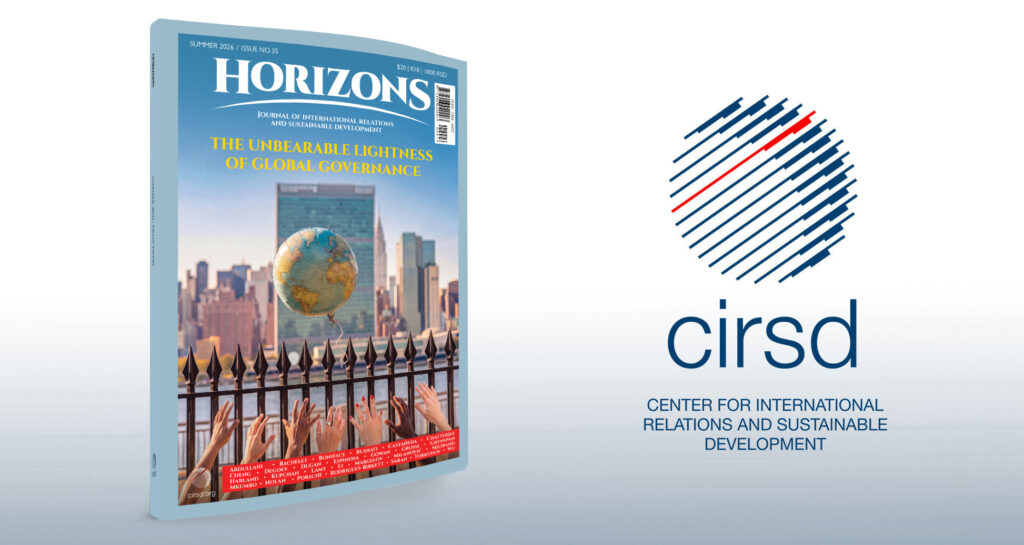
IN his celebrated novel The Unbearable Lightness of Being, Milan Kundera set the weightlessness of a life without consequence against the gravity of one bound by obligation and meaning. His paradox—that lightness, far from liberating, can become unbearable—speaks with unusual precision to the condition of global governance today. The institutions built to carry the weight of the world have grown lighter and less able to bear it. And that lightness, as our contributors make clear, has become a burden of its own.
EIGHT decades after its founding, the United Nations continues to command the universal membership and legitimacy that no other institution can claim, yet it struggles to convert them into results. The gap between what it is perceived to promise and what it delivers has widened into a crisis of credibility. Only 18 percent of the Sustainable Development Goals are on track. Armed conflicts stand at their highest level since 1945. The machinery creaks under budget cuts and low morale, while the selection of the next Secretary General unfolds through a process more opaque than the transparency reforms of the past decade were meant to allow. Candidates converge on a common diagnosis: the organization must return to prevention, to early and quiet diplomacy, and to delivery over declaration.
YET the deeper problem is structural. A Security Council frozen in the geometry of 1945 grants five states a permanent veto over the world’s choices, while Africa—54 countries and more than a billion people—holds none. The Bretton Woods institutions still reserve their top posts for a European and an American by unwritten custom. As economic weight shifts decisively toward Asia and the Global Majority, the old order’s revisionists and defenders alike are hollowing out the frameworks that once channeled rivalry into rules. Interdependence, once a source of restraint, has been weaponized—supply chains mapped as vulnerabilities, chokepoints like Hormuz transformed into geostrategic switches.
INTO this vacuum step new actors and new instruments. Mediation increasingly falls to private organizations, regional powers, and coalitions of the willing rather than to the UN alone. Middle and smaller states are discovering that predictability and cooperation are assets in a fragmenting world, and that those who organize rather than wait to be courted may yet shape the rules. Fresh mechanisms, from the International Organization for Mediation to Trump’s Board of Peace, test whether anything can substitute for the institutions now faltering.
LOOMING over all of it is artificial intelligence, which several contributors treat not as another technology but as a new species—an emerging civilization compressing decision cycles, redrawing sovereignty around computational power, and dividing nations into those who command frontier capabilities and those who merely access them. Governing it will demand cooperation of a kind the present system can barely muster.
KUNDERA understood that meaning arises only when we accept weight—when choices carry consequences. The task before the world is not to mourn the order that is passing, but to build one heavy enough to endure. Whether humanity possesses the collective will to do so is the question these pages leave our readers to answer for themselves.


