


While the administration of U.S. President Donald Trump doubles down on “America First” and U.S. think tanks propagate the narrative of “Peak China,” Beijing is quietly, yet methodically, eclipsing the United States in what Chinese policymakers describe as “comprehensive national strength.” This concept—though admittedly somewhat nebulous—encompasses five decisive dimensions: economic development, infrastructure, technological innovation, new energy, and military capabilities.
Beijing harbors no illusions about the current balance of power. It remains acutely aware of enduring American advantages in financial statecraft, cyber-infrastructure, cultural soft power, global military alliances, and the mechanisms of international legal arbitration.
Yet for Washington, comprehending China’s steady advancement across these five domains is not merely an academic exercise; it is a strategic imperative. Failure to do so risks catastrophic miscalculation and undermines the effectiveness of America’s own national development.
The Reality of Economic Supremacy
Economic power constitutes the bedrock of national competitiveness. The seemingly axiomatic statement that “China is the world’s second-largest economy” conceals a more fundamental reality: China’s economy has undergone not merely quantitative growth, but a qualitative structural metamorphosis.
At market exchange rates, U.S. GDP in 2025 is projected at roughly $30 trillion, compared with approximately $20 trillion for China. However, measured by purchasing power parity (PPP)—the metric preferred by the IMF for comparing living standards and real output—China overtook the United States as early as 2016.
By 2025, China’s GDP is projected to account for 20 percent of global output (PPP), compared to 15 percent for the United States. This divergence reflects profound price differentials: local services—from transport to healthcare—and basic goods are significantly cheaper in China, implying that the yuan’s true purchasing power is systematically undervalued. For instance, a subway ticket in a Chinese metropolis costs roughly one-fifth of its U.S. equivalent; a bottle of Coca-Cola, one-third. PPP filters out these exchange rate distortions to provide a clearer picture of economic scale. By this measure, China is already the world’s undisputed economic hegemon.
Furthermore, its manufacturing supremacy is even more pronounced. Since surpassing the United States in 2010, China has expanded its lead to the point where its manufacturing value-added will account for roughly 30 percent of the global total by 2024—exceeding the combined output of the United States, Japan, and Germany. Its crude steel production alone represents over 50 percent of the global total, dwarfing U.S. output by a factor of ten.
Crucially, China is the only nation possessing all industrial sectors classified by the United Nations. This supports a comprehensive domestic supply chain capable of producing everything from the simplest fasteners to complex aerospace systems, fabrics to intelligent robotics. During the pandemic, this self-contained ecosystem mitigated global supply chain disruptions, allowing China to deliver alternatives ranging from raw materials to finished goods while other nations faltered.
Manufacturing contributes approximately 27 percent of China’s GDP. The country produces over 70 percent of the world’s rare earths and controls 90 percent of the deep-processing technology required to refine them, dominating critical niches such as permanent magnets and hydrogen storage alloys. By contrast, U.S. manufacturing has atrophied to just 11 percent of GDP and remains heavily reliant on imports, rendering current efforts to “reshore” production largely symbolic.
The reach of China’s economy is defined by its ubiquity in global trade. Since 2009, China has been the world’s largest trader of goods, supported by a highly resilient structure. It serves simultaneously as the “world’s factory” and a premier consumer market. Moreover, the composition of Chinese exports has shifted decisively up the value chain—from traditional categories like textiles and furniture to high-tech, high-value-added products, including electric vehicles (EVs), lithium batteries, and photovoltaic equipment.
Today, China is a major trading partner for over 150 countries and regions; the United States holds that distinction for just over 50. The Belt and Road Initiative (BRI) spans roughly 150 nations, establishing a network of economic cooperation far more extensive than U.S.-led regional trade pacts. The Chinese economy also demonstrates fiscal resilience: its national debt-to-GDP ratio stands at 77 percent—far lower than the U.S. figure of 132 percent—providing a stable fiscal foundation for sustainable development.
Its momentum is further illustrated by its dominance in high-end equipment manufacturing. In 2024, it remains the world’s largest exporter of high-tech products, with exports totaling $825.2 billion—more than double the U.S. total of $385.3 billion.
China has overtaken Germany, the United States, and Japan to become the world’s largest automobile exporter and accounts for over 70 percent of global mobile phone production. The disparity is starkest in naval capacity: according to U.S. Navy data, China’s shipyards possess an annual production capacity of 23.25 million tons, compared to less than 100,000 tons for the United States—a gap of more than 230 to 1.
While the U.S. manufacturing sector hollows out—evidenced by the fact that 95 percent of Apple’s iPhones are produced overseas—China is deepening its industrial autonomy. Tesla’s Shanghai gigafactory contributes half of the company’s global output. In key strategic sectors, China can independently construct aircraft carriers and space stations, whereas the United States relies on imports for critical components, such as the single-crystal turbine blades essential for F-35 fighter engines.
In addition, China dominates emerging industrial sectors. DJI controls over 70 percent of the global consumer drone market, effectively setting the global standards for agricultural, commercial, and cinematic applications. Huawei, having rebounded from U.S. sanctions imposed since 2018, has achieved record revenue and R&D spending, signaling robust technological resilience. At the ecosystem level, China possesses the world’s most complete industrial system, spanning chip design, equipment manufacturing, material R&D, and end-use applications.
In sectors such as new energy vehicles, 5G, and drones, China has engendered a virtuous cycle of innovation, capacity expansion, cost reduction, and market dominance—a structural advantage the United States cannot match due to its dependence on fragmented global supply chains. Even in bottleneck industries such as semiconductors, China’s domestic substitution efforts are accelerating, threatening to gradually erode the last bastions of U.S. technological leverage.
Infrastructure: Building a Global Benchmark
Infrastructure development serves as a definitive indicator of wealth accumulation and economic potential. While the United States remains mired in debates over the rehabilitation of aging legacy systems, China has successfully constructed the world’s longest cross-sea bridge, the largest high-speed rail network, and the greatest port throughput capacity. This hyper-efficient network drastically reduces logistical friction, boosts systemic efficiency, and provides the physical bedrock for China’s real economy.
To the observer on the ground, China’s infrastructure has already established itself as the global benchmark, eclipsing the United States in scale, velocity, and technological sophistication. The high-speed rail sector is particularly illustrative: China’s operating mileage exceeds 45,000 kilometers, accounting for over 70 percent of the global total. It is the only nation to possess a fully integrated high-speed network that leads the world in speed, safety, operational cost, and innovation.
China boasts the world’s tallest and longest bridges, symbols of engineering prowess that dot its landscape. By stark contrast, high-speed rail development in the United States is glacial, while existing railways and bridges suffer from severe obsolescence. The disparity in rail transit between the two powers now constitutes a generational divide.
Innovation in energy infrastructure further underscores China’s strategic advantage. The Shidao Bay Nuclear Power Plant, the world’s first fourth-generation high-temperature gas-cooled reactor, has commenced commercial operations, signaling a leap in nuclear safety and efficiency. Furthermore, China has constructed more than 90 percent of the world’s ultra-high voltage (UHV) transmission network, a grid stretching over 40,000 kilometers—enough to encircle the Earth.
This UHV network solves a critical geographic imbalance, allowing electricity generated in the resource-rich west to be reliably transmitted to the energy-hungry megacities of the east. The result is a seamless national grid that the United States cannot match. This technological edge enables the efficient integration of clean energy from the interior with industrial demand on the coast, effectively ending the era of chronic power shortages. Conversely, the U.S. power grid remains fragmented, plagued by interstate coordination failures and high transmission losses that result in recurrent large-scale outages.
In maritime logistics, China accounts for seven of the world’s top ten ports by container throughput; no U.S. port ranks in the top five.
China’s dominance extends into digital infrastructure. By the end of August 2025, China had deployed 4.6 million 5G base stations, representing over 60 percent of the global total. The nation has built a world-leading information and communications network and holds 40 percent of 5G standard-essential patents, with firms like Huawei and ZTE serving as the primary architects of global technology standards.
In the realm of computing infrastructure, China has launched the strategic “Eastern Data, Western Computing” initiative, investing over 3 trillion yuan to construct eight national computing hubs and ten data center clusters. The growth rate of computing power in these western nodes has tripled that of the coastal areas, leveraging renewable energy to create significant cost advantages. In doing so, China has surpassed the United States in the systematic and green deployment of the computing power necessary to drive the AI revolution.
The Technological Shift
Technological innovation is a core driver of national competitiveness. In a widening array of frontier fields, China has successfully transitioned from a technological follower to a peer competitor and, increasingly, a global leader—effectively breaking the longstanding American monopoly on high-tech supremacy.
This transformation is fueled by a massive mobilization of human and financial capital. China’s R&D expenditure has expanded by over 7 percent annually for several years, now surpassing that of the United States to become the world’s largest. This capital is deployed by a workforce of staggering scale: China produces more than 4.7 million graduates in science, technology, engineering, and mathematics (STEM) annually—more than eight times the U.S. output. This demographic dividend forms the backbone of a national innovation system that provides continuous momentum for breakthroughs.
While the United States retains its traditional lead in basic research and Nobel-level recognition, China has officially reached parity or leadership in 37 critical technologies. The nation is rapidly ascending the value chain, evolving from a low-cost manufacturer into a progenitor of high-tech goods, earning global recognition through indigenous innovation rather than mere export volume.
The metrics of this shift are undeniable. China now ranks first globally in knowledge and technology output, leading in industrial designs, trademarks, and creative exports. According to the World Intellectual Property Organization (WIPO), China has topped the list of international patent applications for consecutive years, filing nearly double the volume of the United States.
Quality is catching up to quantity. In terms of high-quality scientific research tracked by the Nature Index, China surpassed the United States for the first time in 2022. In cutting-edge disciplines such as artificial intelligence, nanotechnology, and materials science, the citation rates of Chinese scholars have surged, demonstrating a robust capacity for original innovation.
This activity is concentrated in world-class hubs. China hosts 24 of the top 100 global innovation clusters, with the Shenzhen-Hong Kong-Guangzhou cluster recently overtaking Tokyo-Yokohama to become the world’s largest. The nation ranks second globally in late-stage venture capital and corporate R&D financing, with tech giants like Huawei and Tencent ranking among the top ten global R&D spenders. Even in the face of U.S. technological blockades, domestic breakthroughs are accelerating; Huawei’s Ascend AI chips illustrate a resilience that is rapidly narrowing the gap in semiconductor capabilities. While China may still lag in fundamental theoretical originality, it has cultivated a unique and decisive advantage in applied innovation.
The artificial intelligence sector exemplifies this dynamic. China has shifted from anxiety over computing deficits to confidence in its ability to support advanced AI and high-performance computing (HPC) applications. Stanford University’s 2025 Artificial Intelligence Index Report indicates that the performance gap between China’s top AI models and those of the United States narrowed dramatically, from 17.5 percent in 2023 to just 0.3 percent in 2025.
China currently holds 70 percent of the world’s generative AI patents—four times the U.S. share of 14 percent. It possesses a comparable number of HPC centers and supercomputers, but its intelligent computing power—holding a 31 percent global share—significantly outpaces the U.S. share of 19 percent.
In Addition, China demonstrates unmatched vitality in AI application. From the “City Brain” managing Shenzhen’s traffic to Hangzhou’s ubiquitous contactless payment systems, and from ByteDance’s algorithmic supremacy to SenseTime’s computer vision, AI is integrated into the fabric of daily life. Models such as DeepSeek now rival top-tier offerings from OpenAI, offering distinct advantages in cost efficiency and industrial integration. While the United States holds a “first-mover” advantage in underlying frameworks and algorithmic theory, China possesses unique structural advantages in commercialization, data scale, and the diversity of application scenarios.
The depth of China’s digital economy is frequently underestimated in the West. Mobile payment penetration, e-commerce saturation, and the user base for short-form video far surpass American levels. The digital ecosystems constructed by Tencent, Alibaba, and ByteDance are unparalleled in their complexity and pervasiveness, providing fertile ground for the rapid adoption and iteration of new technologies.
Likewise, breakthroughs in strategic hardware demonstrate China’s prowess in the physical domain. In radar technology, China’s latest long-range strategic early warning radar boasts a detection range of 8,000 kilometers—2,500 kilometers farther than the most advanced U.S. PAVE PAWS system. This capability allows for the detection of incoming missiles twenty minutes in advance and the accurate tracking of stealth assets, such as the B-2 and F-22, effectively neutralizing key components of American air superiority.
In quantum computing, the Chinese Academy of Sciences’ Jiuzhang-3 system can manipulate 255 photons, achieving computational speeds 100 quadrillion times faster than traditional supercomputers. This sets new world records for optical quantum information and establishes quantum supremacy in specific tasks. Concurrently, China has established the world’s first satellite-to-ground quantum communication network, providing unhackable communication channels for government and finance. These breakthroughs grant China a strategic initiative in the twin pillars of future warfare: information perception and information security.
The Green Superpower
In the global race to define the energy transition, China has emerged not only as the major economy most faithfully implementing the Paris Agreement, but as the undisputed hegemon of the new energy landscape. It has surpassed the United States in technology, production capacity, and market share, effectively turning the climate crisis into an engine of national ascendancy.
By 2022, China had reduced its carbon emissions intensity by 52 percent compared to 2005 levels, exceeding its Paris Agreement commitments ahead of schedule. By 2024, the scale of its commitment had become staggering: China accounted for two-thirds of all global investment in energy transition, leaving the United States—despite its legislative push—far behind.
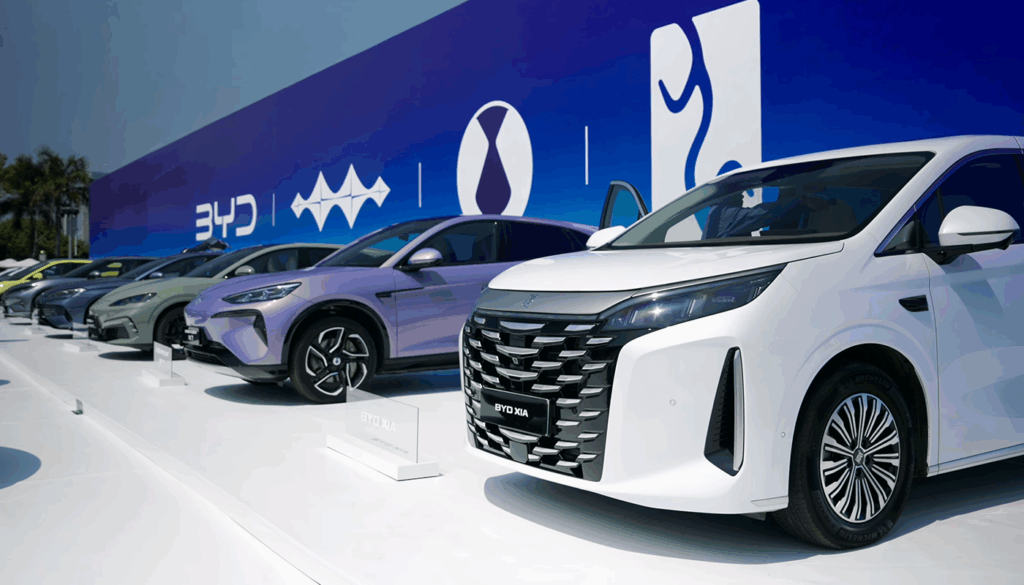
This strategic advantage is perhaps most visible in the New Energy Vehicle (NEV) sector. By 2025, production and sales are projected to exceed 15 million units, capturing more than 65 percent of the global total. This dominance is underpinned by a vertically integrated supply chain that spans from lithium mining to final recycling. Chinese automakers leverage artificial intelligence to optimize electric drive systems, establishing global leadership in motor control and battery technology.
The story is identical in renewable generation. China holds a chokehold on the photovoltaic (PV) and wind power industries. Across every stage of the PV process—polysilicon, wafers, cells, and modules—China controls over 80 percent of the global market. Economies of scale have driven PV costs down by 80 percent over the past decade, transforming solar into one of the world’s cheapest energy sources. A historic tipping point was reached in the first quarter of 2025: the cumulative installed capacity of wind and solar power hit 1.482 billion kilowatts, surpassing thermal power for the first time and accounting for 38 percent of the global total.
In energy storage, China produces 75 percent of the world’s lithium-ion batteries. In wind energy, it is pushing the technological frontier, recently connecting the world’s first 16-megawatt offshore turbine to the grid. By the end of 2024, China’s total installed wind capacity reached 521 million kilowatts—representing 45.8 percent of the global total—while its share of global offshore wind capacity stood at 54.8 percent.
The sheer magnitude of this expansion has widened the gap in aggregate power generation. Driven by clean energy growth, China’s total power generation capacity has more than doubled that of the United States. In 2024, China’s capacity stood at 3,349 gigawatts, compared to just 1,225 gigawatts for the United States.
This disparity positions China as the systemic protagonist of the global energy transition. While the United States has introduced the Inflation Reduction Act to jumpstart its clean energy sector, it is playing catch-up against a competitor with entrenched advantages in integrated supply chains and brutal cost efficiency.
China has solved the intermittency challenge that plagues Western grids. Relying on its ultra-high voltage transmission network and AI-driven load management, China’s smart grid coordinates renewable energy with remarkable efficiency, absorbing over 96 percent of fluctuating sources like wind and solar. This holistic approach—integrating generation, transmission, distribution, and storage—allows China to accelerate its transition and approach carbon neutrality at a velocity the United States cannot match.
The Strategic Deterrent
Military modernization serves as the ultimate expression of a nation’s scientific, technological, and industrial vitality. The 2025 Tiananmen Square military parade signaled a definitive inflection point: China has moved beyond the phase of mere quantitative catch-up. It is now securing notable qualitative advantages over the United States in critical domains, ranging from hypersonic delivery systems to manned-unmanned teaming in air combat.
The asymmetry in hypersonic capabilities is particularly stark. Reports indicate that China’s arsenal of hypersonic weapons exceeds the U.S. inventory by a factor of 1.8. In the air domain, the People’s Liberation Army Air Force (PLAAF) now operates approximately 400 J-20 stealth fighters, with an annual production rate of roughly 100 airframes. This tempo is rapidly narrowing the capability gap with American airpower in key operational scenarios. Furthermore, the introduction of the J-20S—the world’s first two-seat stealth fighter—demonstrates a maturing doctrine of “loyal wingman” operations, where manned platforms command swarms of unmanned systems.
At sea, the balance of power has shifted numerically. The Chinese Navy now fields 405 active hulls, surpassing the U.S. Navy’s 296 ships for the first time. The qualitative trend is equally concerning for Washington: the average age of the Chinese fleet is just 15.8 years, compared to 25.2 years for the American fleet. This modernization is fueled by an industrial juggernaut; in the first half of 2025 alone, China’s shipbuilding completions reached 24.13 million deadweight tons, capturing more than 50 percent of the global market and 63.1 percent of the global backlog.
Conversely, U.S. naval shipbuilding is constrained by budgetary pressures and a severely atrophied industrial base. The launch of the Fujian aircraft carrier, equipping China with three carrier strike groups and advanced electromagnetic catapults, symbolizes the rapid closing of the naval aviation gap.
Strategically, China has deployed 1,300 fourth- and fifth-generation aircraft in the Western Pacific. These assets, combined with the medium-range DF-26 ballistic missile—dubbed the “Guam Killer”—create a formidable area-denial envelope designed to blunt U.S. force projection.
In the realm of unmanned combat, China is demonstrating leadership in underwater systems and high-end drone warfare. Platforms such as the “air swarm mothership” can deploy 200 to 300 micro-drones or cruise missiles in a single sortie, providing unprecedented operational flexibility. While the United States continues to refine autonomous AI decision-making and cross-platform data links, its efforts are hampered by fiscal constraints and a fractured industrial base.
While the U.S. military retains enduring advantages in combat experience, aggregate firepower, and global logistics, China is successfully establishing a defensive deterrent in the Western Pacific through asymmetric technologies and anti-access/area-denial (A2/AD) capabilities. Over the next decade, the locus of competition will shift to 6G spectrum control, space-based electronic warfare, and anti-swarm defenses. In this contest, China’s integrated industrial base and its capacity for coordinated domestic production serve to further consolidate its regional hegemony and strategic influence.
The Dawn of a New Era
History demonstrates that the rise and fall of national power adhere to long-term secular trends, indifferent to the political cycles of any single capital. China has now surpassed the United States in the decisive material domains of economics, trade, industry, energy, infrastructure, and military production. This is not a victory claimed on the basis of a single indicator, nor is it driven by a crude desire for hegemony or zero-sum triumph. Rather, it reflects a form of systemic, structural, and institutional leadership that is increasingly difficult to reverse.
To acknowledge China’s quiet overtaking of the United States in these five domains is not to deny that the United States remains, for the moment, the world’s preeminent power in aggregate terms. Washington retains the exorbitant privilege of the global reserve currency, unparalleled dominance in basic scientific research, global force projection capabilities, and a cultural soft power that remains beyond Beijing’s reach in the short term. China continues to study and respect these enduring American strengths.
However, China’s advancement is not the result of short-term fortune or isolated breakthroughs. It is the product of specific institutional advantages and unleashed market vitality, combining quantitative accumulation with a systemic transformation across economic structures, industrial systems, and technological paradigms. From the factory floor to the digital frontier, from the green energy revolution to the shipyards of the PLA Navy, China is reshaping the fundamental framework of great power interaction.
Consequently, the nature of U.S.-China competition is evolving. The United States cannot halt China’s rise through external pressure or containment alone. The most rational course for both powers is to prioritize domestic renewal and the aspirations of their own citizens. As President Trump himself has noted, the greatest threats to the United States are often domestic, not foreign. China’s rise need not be an existential threat to American progress. In Beijing’s view, strategic competition is best understood not as a boxing match or wrestling bout—where one side must be bludgeoned into submission—but as a marathon or a game of golf: a contest where the primary objective is to surpass one’s own previous best performance.
China views its quiet overtaking not as a destination, but as a new baseline. Beijing is acutely aware that significant domestic challenges remain, including gaps in basic research and high-end lithography, rapidly shifting demographics, local government debt, and persistent external technological containment. Over the next decade to a quarter-century, China’s strategic objective is to transmute its current material gains into lasting global leadership, continuing its steady, low-key ascent on the world stage—confident that time is on its side.


