In one of Europe’s founding myths, the continent takes its name from Europa, a princess of Tyre, on the Asian shore of the Mediterranean, whom Zeus carried off to Crete. Her brother Cadmus went in search of her and, the Greeks said, brought the Phoenician alphabet with him. They added vowels, made the script their own, and passed it on to the rest of Europe and to much of the world. Read plainly, the myth says that where a thing comes from matters less than what is done with it, and for whose benefit.
In medicine, that lesson arrives as a dilemma. Some of the treatments Europeans will need are increasingly likely to come from China, just as Europe is trying to depend on China less. Europe can answer with suspicion and slow its patients’ access to new medicines. Or it can build the strength and the rules that allow cooperation without dependence, turning anxiety into an opportunity—for Europe, for China, and for patients beyond both.
According to IQVIA, in 2025, roughly 40 percent of the drug candidates in-licensed by large pharmaceutical companies had a Chinese licensor. In the first half of 2026, therapeutic licensing deals involving Chinese-originated assets, excluding AI-focused partnerships, reached $92 billion in potential announced value—88 percent of the total for the whole of 2025. The pace has not slowed: in the first 10 days of October 2026, Novartis agreed to pay up to $7.8 billion for rights to an mRNA platform from the Chinese biotech Abogen, and Roche signed a drug-discovery partnership with another, Defand Therapeutics. A cancer medicine prescribed in Lyon or Leipzig today may already have begun in China. Carvykti, a cell therapy for multiple myeloma authorized in the EU in May 2022, grew out of Legend Biotech’s first-in-human clinical program in Chinese hospitals. Developed globally with Johnson & Johnson’s Janssen, it subsequently underwent European regulatory review and is now manufactured in New Jersey and in Ghent of Belgium.
This should change how we think about Europe-China relations. Cancer does not care where a molecule comes from. A patient cares whether it works, whether it is safe, whether it reaches her in time, and whether her health system can pay for it. She is also the first to pay when a restriction is drawn too broadly. Europe should not trust China without reservation, and I do not argue that it should. The question that matters is whether the two can move beyond unreasonable suspicion without sliding back into unreasonable trust.
‘The two’ is a convenient shorthand, but Europe is harder to pin down than China. By Europe, I mean the wider European biopharmaceutical ecosystem: the European Union and its Member States, the other countries of the European Economic Area, the United Kingdom, and Switzerland. Their political institutions are distinct, but their science, biotech clusters, pharmaceutical companies, and clinical networks remain deeply interconnected. Europe in this sense is not a single actor, so I name the EU, national authorities, or the British and Swiss regulators wherever a recommendation depends on which of them acts. Much of the argument applies equally to the countries preparing to join the EU, from the Western Balkans to Ukraine and Moldova.
For two decades, when Europeans worried about China and medicine, they worried about supply: active pharmaceutical ingredients, generic precursors, the low-cost chemistry at the bottom of the value chain. That exposure has not gone away. But two other forms of interdependence now matter as well: reliance on Chinese contract research and manufacturing firms, and the licensing of Chinese inventions. The three differ in their substitutes, their switching costs, and their security risks. Concentrated supply of ingredients can justify diversification; reliance on service providers raises questions of resilience; licensing can simply show a global innovation system doing its job. In each case, origin matters less than who controls the intellectual property, the manufacturing, the data, and the future development. Beijing now draws the same line: on October 16th, China’s commerce and science ministries proposed export controls that would bar transferring ownership of original cell- and gene-therapy and siRNA platforms abroad, while leaving licensing and outsourced research outside their scope. Carvykti began in China, but with a manufacturing site in Belgium, it is hard to describe simply as a Chinese dependency.
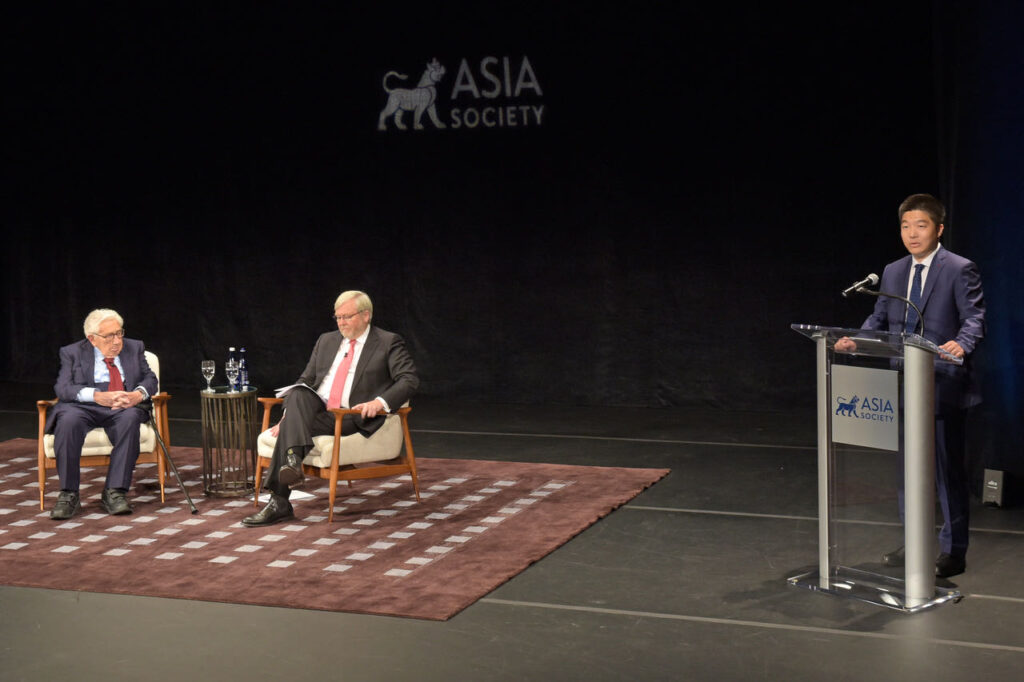
Chinese industrial policy and supply-chain leverage are part of the picture too. In a June 2026 paper with the Asia Society, my colleagues and I called the wider pattern asymmetric convergence: the United States and China are gaining strength at different layers of the biotech value chain without converging on the same model. The United States retains substantial advantages in foundational science, first-in-class discovery, capital markets, and regulatory credibility. China is formidable in clinical trials, manufacturing, and speed to proof of concept, while its firms increasingly contribute original innovation of their own. Europe has real strengths in discovery and manufacturing, but too often fails to turn its science into products at scale—and it risks being squeezed between the two.
The squeeze is also an opening. American restrictions now reach federal procurement and grants, and proposals before Congress would place licensing deals and investments involving Chinese biotech firms under Treasury review. If the channels between Washington and Beijing narrow further, the world will need places where high-standard, transparent collaboration can still happen. Europe is better placed than anyone to provide them—so long as it adds substance: trials conducted under European rules, data that regulators can verify, and manufacturing they can inspect. Done in the open, that could strengthen the transatlantic partnership rather than offer an alternative to it.
De-risking is necessary, but it is not enough. Europe’s wariness has a history: decades of complacency about dependence met a China willing to use trade as leverage, from Lithuania in 2021 to rare earths in 2025. Protection without capability only preserves weakness, and where ambition is missing, suspicion becomes the policy by default. Europe’s problem today is less that it suspects too much than that it attempts too little. It has to build what it needs, protect against the vulnerabilities that are real, compete where interests diverge, and cooperate where interdependence serves both European interests and human welfare. In medicine, agency means being able to turn a discovery—wherever it was made—into a treatment that is safe, effective, and within patients’ reach. Biotechnology is the hard case for such a strategy, because research, security, industrial policy, and patient welfare are all in play at once. Cancer is the clearest case for cooperation, because the human interest is so plainly shared. If Europe and China cannot find a careful way to work together against a disease that kills close to 10 million people a year, it is hard to see what cooperation between them will survive.
Two Meanings of Autonomy
At the Munich Security Conference in February 2026, European Commission President Ursula von der Leyen argued that Europe must become more independent—and that a more independent Europe makes for a stronger transatlantic alliance. On the sidelines, according to China’s foreign ministry, Foreign Minister Wang Yi told his German and French counterparts that China and Europe are “partners rather than rivals,” and told Austria’s foreign minister that China “supports Europe in pursuing a path of strategic autonomy.” Brussels and Beijing sound alike here but mean different things. For Beijing, European strategic autonomy often has a transatlantic dimension: a Europe that defers less to Washington and feels freer to deepen its economic ties with China. As Chinese President Xi Jinping told EU leaders at their summit in July 2025, the relationship “is not targeted at any third party, nor is it subjugated to or controlled by any third party.”
Europeans have come to mean something broader and less comfortable for China. Since 2019, the EU has described China as a partner, an economic competitor, and a systemic rival all at once; since 2023, its watchword has been “de-risking, not decoupling.” Britain’s formula is to cooperate where it can, compete where it needs to, and challenge where it must. In practice, European autonomy now means reducing excessive dependence on anyone. Russia’s war in Ukraine and China’s position on it set a ceiling on trust. The question is whether cooperation can be built below that ceiling: narrow in scope, verifiable at each step, and feasible for either side to leave. The pilot described below tests precisely that.
Neither definition, though, gives Europe a test it can apply. Strategic agency should be measured by Europe’s ability to make consequential choices, not by its distance from Washington or Beijing. Europe can align with the United States on security, challenge China on market access, and license a breakthrough Chinese cancer therapy—without contradiction—provided each decision follows from European interests. October showed what that looks like in practice. In Beijing, between October 8th and 9th, the EU and China agreed on 16 points of consensus, including a “green channel” for rare-earth export licenses; a week later, EU leaders backed continued negotiations while asking the Commission for new tools against trade imbalances. A Chinese leader once likened the EU’s three labels to arriving at a crossing with the red, yellow, and green lights all on at once. But often the lights stand at different crossings; and sometimes a single deal really does combine commercial opportunity, sensitive data, and dependency. Then four questions matter: what is exposed, who controls access, can the exposure be reversed, and is there a substitute? Moving beyond unreasonable suspicion means navigating better, not trusting more.
Europe’s Opportunity
Europe has assets that neither Washington nor Beijing can easily replicate—and that a Chinese developer has reason to want. The European Medicines Agency, Britain’s Medicines and Healthcare products Regulatory Agency, and Swissmedic are among the most respected regulators in the world. Health systems with broad population coverage, the Nordic registries, and resources such as UK Biobank link treatment to long-term outcomes in a way few others can. Europe’s academic oncology networks have as much experience of running multinational trials as any in the world and they can enroll a diversity of patients that a China-only trial cannot.
These assets suggest two key roles. Europe can be a trusted clinical hub, where promising therapies—Chinese-originated cancer drugs among them—are tested to rigorous, transparent, and ethical standards, with their origins in plain view. In addition, it can help write the rules for safe cross-border collaboration on data governance, trial integrity, and biosecurity. The European Health Data Space could eventually provide part of the institutional base. Most secondary-use rules begin only in 2029, however, and third countries cannot apply to join HealthData@EU until 2035, so an earlier pilot would need to rely on existing lawful mechanisms. One practical method is federated analysis, in which data is analyzed where it is held, under approved queries, logged access, output checks, and independent audit.
Europe should not, however, become a back door around legitimate American security concerns. Some investors and industry commentators call the hypothetical rerouting of Chinese-invented molecules through European licensing, trials, or manufacturing—in order to preserve U.S. market access—“Eurowashing.” Ordinary European licensing is legitimate even where Washington would decide differently, but origin, ownership, and the underlying trial data must be transparent. Anything less would cost Europe both Washington’s trust and its own credibility.
Build
Europe is not short of science. Its universities and research institutes remain world class, and over the past decade the EU’s health-biotechnology sector has grown more than twice as fast as its economy. What Europe struggles to do is turn that science into products at scale. Success means more European science reaching the market, and more of the clinical and commercial value of innovation—whatever its origin—staying in Europe.
The European Commission’s own figures make the point. The EU attracts only about 7 percent of global venture capital in health biotechnology. The European Economic Area’s share of global commercial clinical trials fell from 22 percent to 12 percent between 2013 and 2023. Average authorization for a multinational trial took 113 days, against at most 60 in China and the United States. Britain shows that these numbers can move: the median time to set up a commercial interventional clinical trial fell from 169 days for trials submitted between April and September 2024 to 122 days for those submitted a year later.
The Biotech Act that the Commission proposed in December 2025, now before the Parliament and the Council, is a response to those numbers. As proposed, it would shorten authorization timelines for multinational trials from up to 106 days to 75, including validation and ethical review; where regulators request no additional information, initial authorization would fall from 75 days to 47 days. It would also create an EU Health Biotechnology Investment Pilot with the European Investment Bank Group, add 12 months to the supplementary protection certificates for qualifying biotechnology medicines and advanced therapies, and introduce EU-wide biosecurity safeguards.
These are sensible steps, aimed at capability and not only defense. But the authorization clock is only part of the delay: contracts, site activation, and recruitment all take longer. China shows what institutional choices can do. Its standard clinical-trial route uses a 60-working-day implied-approval mechanism; and since September 2025, eligible innovative drugs can use a 30-working-day pathway. Its large hospitals are closely tied into research. Europe can learn from this without importing China’s political model. Europe’s larger gaps lie in late-stage capital and fragmented reimbursement.
The EU already has a single portal and a coordinated assessment for clinical trials, but national authorities and ethics committees still decide separately, and do not decide alike. The next step is to reduce the remaining duplication in national review and site setup. Europe also needs deeper pools of risk capital—through the Savings and Investments Union, and through a late-stage biotech co-investment vehicle alongside the EIB.
Protect
None of this means Europe should be naive. Biotechnology carries real security risks, in sensitive data and in dual-use research, and some of them are growing. Supply is exposed too. A 2021 Commission analysis found that China supplied around 45 percent, by volume, of the active pharmaceutical ingredients that the EU imports. For some antibiotics, the concentration is starker still: Sandoz calls its Kundl plant, in Austria, the hub of Europe’s last major vertically integrated PEN-production network.
Europe must protect itself. The hard part is doing it precisely. A genomic database raises different concerns from an oncology licensing deal, and dependence on a critical antibiotic precursor is a different problem from a joint cancer study. Yet a cancer study can itself involve genomic sequencing, sensitive samples, or remote access to records, so the label on a project settles nothing. What counts is the data and the activities inside it. Reasonable suspicion is part of statecraft. It becomes unreasonable when those distinctions disappear.
In practice, protection should be focused on three areas: sensitive health and genomic data; genuinely dual-use research, and the AI tools that could accelerate it; and the supply of essential medicines. For AI, the line should follow capability: a system that can design or enhance a pathogen belongs under strict controls; one that merely predicts how a tumor will respond to a drug does not. The third area is already the subject of the Critical Medicines Act, on which the EU institutions reached a provisional agreement in May 2026. The supply of selected critical products can be diversified, though not cheaply: that requires qualified suppliers, validated processes, environmental compliance, and committed buyers.
The United States has taken a different approach. Its BIOSECURE Act, enacted in December 2025, phases in restrictions on federal procurement and grants involving “biotechnology companies of concern.” The Biotech Investment National Security Act, introduced in both chambers in 2026 but not passed as of mid-October, would, if enacted, extend outbound-investment review to biotechnology, including licensing deals, joint ventures, and investments. The concerns behind both measures are serious. On common standards—such as the screening of synthetic DNA orders and the reporting of incidents—Europe should work with both the United States and China; intelligence and sensitive enforcement information, by contrast, belong among allies.
But Europe’s funding and reimbursement structures differ from America’s. Since January 2025, new cancer medicines have gone through a joint EU clinical assessment, yet price and reimbursement are still decided country by country, and patients in one Member State can wait well over a year longer than those in another for the same drug. Health systems under that kind of pressure cannot be indifferent to where good, affordable medicines come from. On security, Europe should stay close to its allies; on commercial questions, it should judge by the evidence and by its own interests. A blanket restriction on licensing Chinese molecules would not make Europe more autonomous. It could delay promising therapies and weaken European companies.
Compete
Much of what goes on between European and Chinese biotech is plain competition. Chinese firms compete for licensing partners, investors, trial participants, and talent—and they are winning a growing share of those contests. Europe should resist the temptation to recast every commercial loss as a security problem. When the problem is competitiveness, the answer is to compete, and to compete fairly. The object is European capability and benefit to patients, not a scoreboard of national champions. Chinese assets put pressure on Europe’s young biotech firms even as they fill the pipelines of its large drugmakers and widen the choices open to its patients—and policy has to hold both facts at once.
The competition is also coming to Europe. Chinese drugmakers increasingly seek European approval in their own right. A centralized EU authorization—following EMA review and granted by the European Commission—is valid across all 27 Member States and the wider European Economic Area. At Swiss Biotech Day in Basel in May 2026, 12 Chinese companies attended with the support of Switzerland Global Enterprise, nearly twice the previous year’s number, and at least 15 more came independently. A more unified European market will be easier for them to enter too. That is no cause for alarm, so long as they come in by the same door as everyone else: trials designed to European standards, sites open to inspection, and the same rules on data.
Competing also means insisting on equal treatment where the playing field is tilted. Chinese Minister of Foreign Affairs Wang Yi has invited Europeans to leave the “small attic” of protectionism for the “fitness club” of the Chinese market. Europe should accept the invitation—and ask for equal access to the equipment. Hard bargaining by a public payer is not discrimination; European payers do it too. The measurable asks are published review timelines, predictable approvals for research involving human genetic material, eligibility for public procurement, access to trial sites, and the full enforcement of intellectual property. The EU’s International Procurement Instrument, first used in June 2025 over medical devices, shows that the leverage exists.
Cooperate
Cooperate is the verb that most easily drops out of Europe’s debates about China—and biotechnology is where it is hardest to drop. Health is one of the few fields in which bounded, carefully designed cooperation between Europe and China is still strategically plausible and mutually beneficial. The disease burdens are shared, the capabilities are complementary, and medicine has a human purpose that few other sectors can claim.
Cancer makes the case most starkly. The World Health Organization projects that new cases will exceed 35 million a year by 2050, as populations grow and age and risk factors change. Yet the scientific effort against it remains fragmented. Some repetition is necessary, because regulators need evidence on their own populations and standards of care. Much of it is not: trials are planned separately, recruitment is slow, and a therapy proven in one place waits its turn in the next. A patient who has run out of options feels every month lost that way. The case for cooperation is a practical one—to remove the avoidable friction between a scientific breakthrough and the person who needs it.
The tools exist. Multiregional trials are routine in oncology, including for medicines licensed from China. The FDA, the European Commission, the MHRA, Swissmedic, and China’s National Medical Products Administration are all members of the International Council for Harmonisation, whose E17 guideline sets out the principles for multiregional trials. Regulatory cooperation is moving too: in September 2026, the NMPA and the MHRA signed a letter of intent after talks covering clinical trials, inspections, and pharmacovigilance. The Cure4Cancer International Clinical Trials Collaboration and the Bloomberg New Economy International Cancer Coalition both work toward patient-centered multiregional trials and regulatory convergence. What is missing is a tested governance model for Europe-China work when trust is scarce: who can see which data, who inspects whom, and how far one regulator can rely on another’s checks.
The start could be a single pilot, small enough to audit. The trial is the vehicle; the governance is what is being tested. Take a rare thoracic cancer, or a rare molecular subtype of lung cancer, in which no country has enough patients to finish a trial quickly. A European academic sponsor—for example the Brussels-based European Organisation for Research and Treatment of Cancer—would run a single protocol with hospitals in the EU, Britain, and Switzerland, and with a Chinese partner such as the Chinese Thoracic Oncology Group. The EMA, the MHRA, Swissmedic, the NMPA, and the FDA would all be invited to give scientific advice before the first patient was enrolled, and each would keep its own approval decision. Each side would pay for its own sites, and the goal would be to have the trial open within 12 to 18 months.
The rules are what would make the pilot credible. Identifiable patient-level data and biospecimens would remain local, unless cross-border transfer were specifically justified, consented to, and lawfully approved. Cross-border exchange would default to harmonized methods, agreed analyses, and auditable outputs, while each regulator retained lawful access to source data for verification. Independent inspectors would visit the trial sites on both sides; positive and negative results alike would be published. The governance would have to satisfy European data-protection law, China’s rules on human genetic resources, and each patient’s consent. Any party could leave under agreed terms. And if the model held for one trial, it could become the template for the next.
Europe is well placed to convene such an effort, and each side has a reason to take part. Chinese developers get evidence that regulators outside China will accept. Europe gains trials and skills at home. The United States, invited from the start, would retain visibility into the standards and the evidence while preserving its own independent approval decision. The cooperation would have to be narrow, reciprocal, and transparent to allies, with ethical, biosecurity, and biosafety guardrails built in from the outset.
Cooperation should also reach beyond Europe and China. The WHO expects the countries with the fewest resources to face disproportionately large increases in cancer incidence. Three commitments would make access real: include patients in poorer countries; require the developer to seek registration and offer a fair price in high-burden lower-income markets within a fixed time of first approval; and help build capacity, including manufacturing in Africa, where Europe and China could work side by side. The aim should be healthspan as well as lifespan. For the aging societies of Europe and China alike, the prize is more years lived in good health.
Cooperation must also add to European capability, not stand in for it—and capability can be counted: patients enrolled in European trials, skilled jobs, rights to the technology, manufacturing commitments, and access to follow-on innovation. Chinese greenfield investment in European research and biomanufacturing can bring capital and know-how, but it can also create new dependencies, so the terms on ownership, data, and exit matter as much as the money.
More is required of China too. In July 2026, China’s Minister of Foreign Affairs Wang Yi asked visiting members of the European Parliament to avoid “securitizing exchanges,” and he has half a point: not every exchange is a security matter. But many of Europe’s fears have their source in Beijing’s own over-securitization. The surest way to get less securitization is to give Europe fewer reasons for it. Trust must be earned, and one commitment would do more than any statement: published, predictable timelines for approving research cooperation, applied to foreign partners as to domestic ones, together with reciprocal access for regulators to inspect trial sites and data. That would show that Beijing means a Europe able to make its own choices—and not merely a Europe that chooses China.
What We Learn
Europe’s security, its values, and its economic ties bind it closely to the United States, and nothing here asks it to loosen them. There is a precedent for what it does ask. In 1959, at the height of the Cold War, Soviet scientists led by Mikhail Chumakov tested an oral polio vaccine made from strains developed by the American scientist Albert Sabin, vaccinating millions of children. A WHO-sponsored independent review confirmed the results and the vaccine went on to protect children around the world. That cooperation did not wait for political trust; it rested on shared purpose, scientific exchange, and evidence that others could verify. The test for Europe and China is whether two systems that compete, disagree, and distrust one another can do the same.
Europe does not have to choose between naive engagement and indiscriminate restriction, between unreasonable trust and unreasonable suspicion. It gains agency less by declaring it than by making useful cooperation work under standards it can set and enforce. Europe and China will not settle their larger differences by working together on cancer—and they do not need to. Success would be modest, but consequential: a trial that recruits faster than either side could manage alone, results that EU, British, Swiss, Chinese, and American regulators can all review, and a patient with a rare cancer who receives a treatment sooner than she otherwise would have. She will not ask whether the medicine was Chinese, European, or American. She will ask whether it works—and whether it reached her in time. That is what moving beyond unreasonable suspicion should make possible.