


The 2025 Munich Security Conference became notorious for a speech by the Vice-President of the United States, J. D. Vance, in which he contended that threats from within Europe worried him more than threats posed by any external actor to the region. That statement was received with discomfort by most of the Munich audience, who had been accustomed to reaffirmations of the U.S. commitment to NATO and to celebrations of common North Atlantic values. There were scarce references in the speech to the three deadliest wars raging in Ukraine, Gaza, and Sudan—or, for that matter, to any of the intractable conflicts around the world—while the dangers posed by rising tensions among the major military powers or the challenges associated with climate change were ignored. The word “multipolarity” is absent from the statement.
Less remembered is the Munich Security Report 2025, entitled “Multipolarization.” Yet the geopolitical panorama presented therein offers a more helpful guide to current international dynamics. As such, it deserves renewed consideration as a starting point for our reflection on multipolarity. By recognizing, at the outset, that the notion of multipolarity has become the buzzword of the day, it acknowledges that there are widely differing interpretations of what the concept actually means and entails. Interestingly, it suggests that “while the extent to which the world is already multipolar is debatable, the world’s multipolarization is a fact.” In this regard, it correctly asserts that a larger number of actors today have acquired global influence, and that a process of increased political polarization is taking place both within and between states.
According to the report, today’s international system contains elements of unipolarity, bipolarity, multipolarity, and non-polarity. The implication is that we are at a loss in finding the terminology to describe a transition from a relatively well-defined world logic to a complex new international landscape. At the same time, it points out that this transition is not homogeneously experienced in different capitals around the world. Through a survey of how the phenomenon is perceived by the U.S., China, the European Union, Russia, India, Japan, Brazil, and South Africa, the report concludes that multipolarity also lends itself to polarized views. “Depolarization” is presented as the answer, if we are to avoid a downward spiral into widespread unilateralism, disorder and war.
Multipolarity may be viewed with anxiety or as an opportunity, depending on the eye of the beholder. The Munich report considers Japan the most disturbed by the end of the unipolar moment, as a “quintessentially status quo power.” Brazil, on the other hand, does not conceal its enthusiasm for a potentially “cooperative multipolarity,” based on respect for international law, the universality of human rights and the rejection of the use of force—along with a democratization of international relations through more inclusive global multilateralism. More generally, it may be said that, in the developing world, there is hardly any nostalgia for either bipolarity or unipolarity. The same does not necessarily apply to the more developed world, although there are nuances in both the northern and southern camps.
Another recent report, issued by the Quincy Institute in November 2024 and entitled “Toward a Better Security Order,” expresses the view that “as the world transitions away from unipolarity, a dangerous competition over norms and rules is emerging, which risks splitting the world into competing orders.” To a certain extent, this is already happening, with a majority of nations defending continued adherence to existing universal legal frameworks enshrined in the United Nations Charter, International Humanitarian Law or the Multilateral Trading System, and a unilateralist impulse best exemplified by—though not restricted to—policies adopted by the current U.S. administration. In line with the findings of the Munich report, the Quincy Institute concludes that, although some fear the transition as inherently unstable, others welcome it as an opportunity for a more equitable world order.
There is no consensus among international relations scholars as to whether multipolarity is less or more stable than bipolarity or unipolarity. During the Cold War, Kenneth Waltz presented one set of arguments illustrating the alleged stability of the bipolar world. In an article entitled “Multipolar Systems and International Stability,” Karl Deutsch and David Singer argued in favor of the greater stability of multipolarity. Others, including Amitav Acharya, have dismissed the fears associated with the end of a unipolar U.S. hegemony, often expressed by Western academics. In their co-authored book Good-Bye Hegemony! Power and Influence in the Global System (2014), Simon Reich and Richard Ned Lebow deconstruct the assertion that a world without a hegemon would be more unstable and prone to war.
A brief examination of historical trends will easily lead to the conclusion that no geopolitical distribution of power is inherently stable or unstable. In the current context of “multipolarization,” instability is associated with a disregard for multilateralism that leads to violations of freely entered into international agreements: in other words, “unilateralism.” Eighty years after the adoption of the UN Charter and the establishment of multilateral disciplines governing peace and security, a proliferation of blatantly illegal and unilaterally defined pretexts for military intervention constitutes the true reason for rising geopolitical tensions and increased instability. Although unilateralism has manifested itself before, what is perhaps new today are the unashamed attempts to delegitimize an order that is still widely considered a civilizational achievement for humankind.
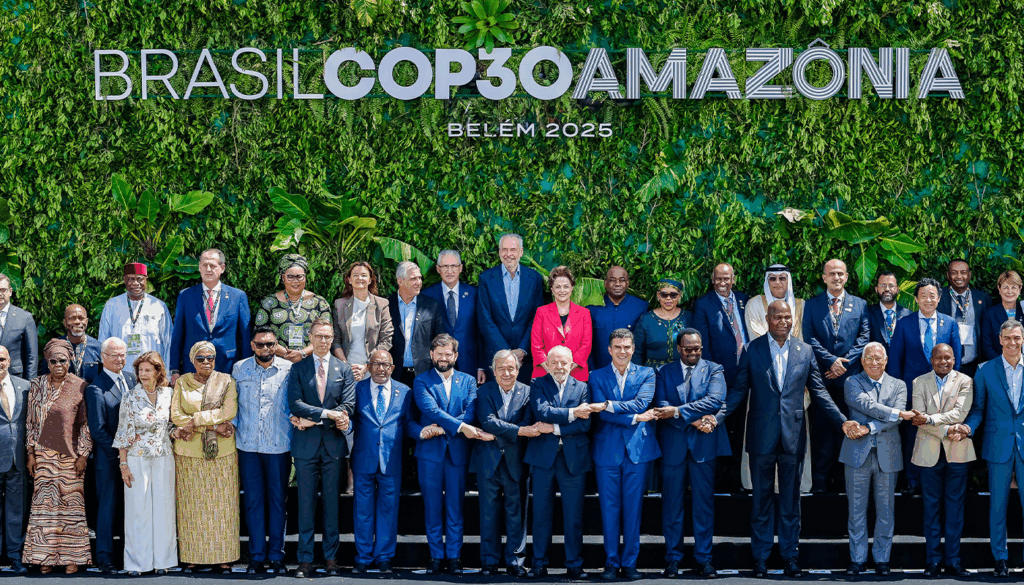
Will multipolarization lead to competing views, in which certain powers disregard prevailing legality with respect to the use of force, international trade, the environment, health and more? Can the unilateralists be isolated? Conversely, is multilateralism condemned to irrelevance in a multipolar world? There are contradictory signs that point in different directions. Brazil has just hosted the annual Conference of the Parties (COP) to the United Nations Framework Convention on Climate Change in the Amazonian city of Belém. COPs continue to attract worldwide participation and attention, and the system they oversee has not collapsed, even if the absence of the main historical emitter of greenhouse gases, the United States, limits the scope for effective coordination to confront global warming. On the face of it, however, multilateralism demonstrates a certain resilience in the environmental realm.
We should not assume that the same applies to the vital areas of peace and security or to trade. Just as we must be wary of tipping points when it comes to the impact of rising temperatures on the sustainability of vital ecosystems, there may be “systemic tipping points” beyond which multilateral frameworks will no longer be able to sustain even a reduced degree of authority or legitimacy. The United Nations Security Council and the World Trade Organization are visibly under threat. Some suggest that, in those cases, multipolarity may give rise to spheres of influence under regional hegemons who will dictate the rules for their vicinity. Others view this as unrealistic in a world of active, and often intense, trans-regional contact through trade and political dialogue.
A recent article by British journalist Janan Ganesh, published by the Financial Times and entitled “The Clash Within Civilizations,” argues that Samuel Huntington failed to anticipate the affinities that are emerging beyond civilizational divides, on the one hand, and the divergences that are creating fault lines within existing groups, on the other. In the West, it is possible to identify a clear division between a unilateralist and a multilateralist inclination, separating Washington from Brussels. Even as Vance expresses concern about the enemy within Europe, his speech may turn out to illustrate the emergence of a deepening divide between Europe and the United States. In this sense, he may have inadvertently deepened a crisis within the global North, thereby accelerating the process of multipolarization with the gradual emergence of two distinct Western poles.
Furthermore, as the U.S, National Security Strategy tries to revive the Monroe doctrine, it fails to recognize that prevailing conditions in the Americas have evolved since the nineteenth century, and that the U.S, is not the main trading partner for many in the region, while diplomatic ties between Latin America and Europe, Africa and Asia have significantly expanded. When James Monroe was President, he could scarcely have imagined a world of annual BRICS summits or free trade agreements between Latin American countries and nations in other continents. What these trans-regional interactions indicate is that globalization and technological advances have multiplied the opportunities for contacts around the globe, rendering the notion of spheres of influence outdated, if not romantic.
Moreover, it is impossible to establish lasting regional influence through aggressive manifestations of disrespect for the territorial integrity and sovereignty of neighboring states. In a multipolar world, such antagonistic postures will indirectly encourage the vicinity of a self-appointed regional hegemon to seek support elsewhere. Threats and illegal interventions do not foster sympathy or generate positive influence. On the contrary, such attitudes are more likely to create spheres of antipathy and resentment. Attempts to create spheres of influence through fear bring to mind some of the worst episodes in world history and tend to be short-lived. It is worth recalling, at the same time, that those past attempts took place before international law and multilateralism took root in the aftermath of World War II.
This does not mean we should minimize the risks of an irreversible erosion of universally applicable international law or functional multilateralism. As President of COP30, Brazil advanced the concept of “mutirão,” which encapsulates the notion of individual and collective responsibility towards the community, inherited from local indigenous traditions. A new horizon of affinities, beyond civilizational divides, is discernible in the support that governments from all parts of the world and different levels of development manifest in favor of the preservation and strengthening of multilateral institutions based on international law. A “mutirão of the responsible” is an answer to ensure that multipolarization does not degenerate into destructive unilateralisms or spheres of fear.
The preservation of international law and multilateralism also enjoys considerable support across the globe at the non-governmental level. It is possible to observe that, even within countries currently ruled by governments that disdain multilateral frameworks for cooperation, there are important dissenting voices. The many who have attended environmental COPs will have noticed the motivation with which civil society, youth, academics, philanthropists and others have embraced environmentalism in the face of the existential dangers posed by man-made degradation. In the spirit of mutirão, it should be possible to channel that energy towards avoiding the “systemic tipping points” that pose a danger as destructive as—or even more so than—climate change to civilization.
Militarily, we may be living in a tripolar world, in which the U.S., China and Russia represent the principal powers. Economically, G20 members—including the European Union as a bloc—wield significant influence and already participate, in that capacity, in a multipolar financial and economic council of sorts. Diplomatic influence, however, is not the exclusive prerogative of military or even of economic powers. In addition to the permanent members of the Security Council and other established protagonists, there are several new entrants among the regional powers of the South that have begun to exercise global influence. Brazil, India and South Africa are cases in point. There are also smaller States that cannot claim the status of a regional power, but wield global diplomatic influence. Norway, Qatar, Switzerland and the Holy See come to mind.
Global influence has become an attribute of a variety of actors within the governmental and non-governmental domains. For those of us who look at multipolarity through a humanist perspective that privileges the promotion of peace and sustainable development, the challenge is to consolidate the rule of law at the international level through multilateral mechanisms that preserve the conquests of the past, reject unscientific denial, and embrace reform. A consensus on the need to reform the UN system has already emerged, as demonstrated by the document produced by the Summit of the Future convened by the UN Secretary-General in 2024. Multipolarity can be a gateway to improved multilateralism and a vehicle for less conflict and more enlightened cooperation.
In itself, however, multipolarity does not guarantee favorable outcomes. Military budgets have risen to unprecedented levels in the post-1945 period. The Doomsday Clock, an initiative created in the 1950s that measures the risk of nuclear war, has never been so close to midnight. Ukraine and Gaza have become sinister examples of avoidable tragedies that disseminate death and destruction in defiance of diplomacy and reason. The more recent militarization of the Caribbean and the abduction of the Venezuelan leader stand out as both illegal and unwise, to quote an editorial published by The New York Times. Elastic interpretations of the right to self-defense and “à la carte” adherence to international law by observers generate widespread disenchantment and cynicism.
Part of the debate about the transition we are living through is taking place through the prism of a race between the U.S. and China for technological primacy and world military pre-eminence. It has become commonplace to cite a so-called “Thucydides trap,” according to which the ambitions of a rising power will inevitably lead to confrontation and war with the status quo leader. In a piece published by The New York Times on November 21st, 2025, Lydia Polgreen reminds readers that members of both the Republican and Democratic parties in the United States share the view that “China aims to usurp the U.S.A.’s rightful place at the top of an American-built world order.” By now, however, there is sufficient evidence to question that assumption.
China’s economic success and technological prowess have indeed translated into increasingly robust military capabilities and diplomatic clout. However, China has not withdrawn from the Paris Agreement, the World Health Organization or the Human Rights Council. Nor has China paralyzed the dispute settlement mechanism at the World Trade Organization by blocking the appointment of judges to the Appellate Body. As Polgreen points out, the United States is retreating from the multilateral bodies it helped to create, including the informal G20. Beyond its longstanding demand that its partners adhere to a One China policy and avoid recognizing the independence of Taiwan, China has been comparatively less unilateralist than other permanent members of the Security Council.
China is asserting its historical claims within the existing system. Beijing does not appear to be seeking to replace the existing international order with something different, as the media sometimes portends. Lydia Polgreen rightly concludes that “China doesn’t want a new world order. America does.” She goes on to suggest that the U.S. faces a choice between building a more equitable multipolar world or seeking “the costly, brittle power that comes from domination.” The second option not only offers remote chances of success but could lead to global war. Emma Ashford’s First Among Equals: U.S. Foreign Policy in a Multipolar World (2026) is equally correct in stating that “China and the U.S. are ahead of the pack, but by far less than their Cold War counterparts.” Ashford’s verdict: “multipolar complexity, not bipolar confrontation, is the future.”
I return to the assertion in the Munich report that there are elements of unipolarity, bipolarity, multipolarity and non-polarity in the contemporary international system. It is becoming apparent that the remaining elements of unipolarity are transient, as divisions in the global North deepen over issues such as Greenland. In other words, a return to predominant unipolarity seems highly unlikely. Neither unipolarity nor non-polarity captures the distinctions among the magnetic poles that visibly operate today in a tripolar military context, a multipolar economic distribution of relevance and a pluripolar dissemination of diplomatic influence—as exemplified in preceding paragraphs. The juxtaposition of such terms does, however, illustrate the complexity of contemporary geopolitics, as suggested by Emma Ashford.
Last year I published a collection of essays, in English, under the title “A Humanist Foreign Policy for a Multipolar World.” Among the fourteen articles contained therein, a text published in the second edition of Horizons (Winter 2015) appears under the title “Brazil and the Shaping of a Cooperative Multipolar Order.” Three other entries were included in my capacity as rapporteur for the group “Leaders for Peace,” created by former French Prime Minister Jean-Pierre Raffarin, of which I have had the honor to be a member since 2018. Several articles in that compendium expand on ideas included in this reflection on the topic of multipolarization. As the term lends itself to more than one interpretation, however, “humanism,” which also figures in the title of the present article, may warrant some clarification.
When President Lula uses the word “humanism,” what does he mean? Social programs and the fight against hunger and poverty have assumed priority during his three mandates, at the domestic and international levels. This emphasis is in line with the United Nations 2030 Agenda for Sustainable Development and its stated objective of “leaving no one behind.” Having left the World Hunger Map, produced by the Food and Agriculture Organization (FAO), Brazil proposed the creation of a Global Alliance against Hunger and Poverty, during its G20 Presidency, that is channeling support for food security in more than ten countries in need. At COP30 a declaration on Hunger, Poverty and Human-Centered Climate Action was adopted.
In his opening speech at COP30, President Lula positioned Brazil clearly on the side of scientific evidence, by acknowledging the challenge posed by the “obscurantism” that rejects both science and multilateralism. By drawing attention to the highest military budgets in seven decades, at almost $3 trillion, he has been encouraging those who are fueling worldwide arms races to redirect their priorities to solving pressing economic, social, and environmental problems. Brazilian diplomacy has been more successful than many in maintaining a distance from selective adherence to international law or to elastic interpretations thereof. Having dealt with an undemocratic assault on its institutions, Brazil under Lula manifests the hallmarks of democratic maturity, as recognized, among others, by The Economist (August 30th issue).
In a nutshell, humanism for the present Brazilian government is a combination of democratic governance, social progress, sustainable development and the promotion of peace. In the history of ideas, humanism owes its emergence to the intellectual effervescence of the Italian Renaissance. Several traits associated with the civilizational rebirth embodied by the original humanists resonate to this day, such as the attachment to evidence-based rationality, as well as a commitment to dialogue and interactive politics. A humanism for the twenty-first century will only achieve global outreach, however, if it draws inspiration and derives wisdom from all cultural and spiritual traditions, East, South, West, and North. A “mutirão of the responsible” would be a good start.
A new humanism may seem like an unrealistic utopia in 2026. And yet it is hard to imagine a majority of the world’s population foregoing efforts to combat hunger, poverty, disease, illiteracy or environmental degradation in order to take up weapons to fight avoidable wars and succumb to irrationality. A humanism for the twenty-first century should not only focus on the least favored segments of society, but also assume the highest level of responsibility towards future generations, in terms of environmental policies and the security agenda. Multilateralism and international law will shield us from “the erosion of all that gives human civilization its moral dignity,” to quote from Franco-Lebanese author Amin Maalouf. If multipolarity is to bring about a more cooperative and equitable world, a new humanism will provide a sound set of principles.


