


History suggests that energy crises are rarely transformative—they provoke emergency measures, then fade. The escalation of tensions in the Middle East, as the United States and Israel launched attacks on Iran, has once again demonstrated that fossil fuel dependence carries significant and recurring risk. Roughly a fifth of the world’s oil supply transits through the Strait of Hormuz, and its effective closure by Iran exposed one of the many structural vulnerabilities of a global energy system still dominated by fossil fuels. This should come as no surprise. Wars affecting petrostates have repeatedly disrupted global markets and caused price volatility. What is different this time is the growing body of evidence that the countries best positioned to weather the storm are those that chose, years earlier, to reduce their exposure to it.
Crude prices spiked, liquefied natural gas cargoes were diverted, and import-dependent economies faced immediate fiscal and inflationary pressures. For many countries in Asia that remain dependent on imported fossil fuels, the effects were particularly acute. The Philippines sources roughly 96 percent of its oil from the Persian Gulf; Vietnam and Thailand import around 87 percent and 74 percent respectively from the same region. This concentration of supply risk translates directly into macroeconomic stress when disruption occurs. Fuel subsidies balloon to contain domestic prices, currencies weaken under the weight of higher import bills, and electricity generation costs rise—particularly in systems where diesel and gas still serve as marginal or peaking power sources.
Urgency of Upgrading Power Grid Infrastructure
Governments across Southeast Asia responded with emergency measures—but these were symptoms of dependence, not solutions to it. In the Philippines, government agencies were mandated to cut fuel and electricity consumption by 10 to 20 percent and to shift to a 4-day working week. Vietnam urged citizens to limit private vehicle use, adopt remote working arrangements, and practice greater energy efficiency, while encouraging businesses to optimize logistics and accelerate the adoption of on-site renewables. Across the region, reduced travel, lower air-conditioning use, and flexible working were promoted as temporary curbs on fuel consumption. Necessary as they were, these measures underscored a deeper vulnerability: the absence of structural alternatives.
Not all countries are equally exposed. The divergence is not accidental. It reflects years of strategic choices made—or deferred—long before the crisis began.
Countries that took renewable energy seriously entered 2026 with a meaningful cushion. Spain has emerged as a particularly instructive case study in strategic resilience. After years of sustained investment in wind and solar, it entered 2026 with some of the cheapest electricity prices in Europe, even as global gas markets tightened in the wake of the Iran conflict. That position was not without its own lessons: a major blackout in April 2025, caused by a sudden loss of solar and wind generation and insufficient backup capacity, prompted Spain to accelerate grid reinforcement—lifting regulatory caps on network investment, raising allowed returns for grid operators, fast-tracking transmission expansion, and prioritizing interconnections and storage. The crisis, in other words, became a catalyst.
Despite initially starting as a response to the staggering electricity prices, a widely reported “solar boom” in Pakistan has fundamentally altered the country’s exposure to fossil fuel shocks. A recent analysis by Alice Harrison for Secure Energy Project, “The hedge that paid off: How Pakistan’s solar boom is shielding it from the Hormuz crisis,” notes that the rapid deployment of rooftop solar has allowed Pakistan to avoid roughly $12 billion in oil and gas imports. This has provided Pakistan with a significant buffer against disruptions to energy supplies passing through the Strait of Hormuz. Meanwhile its neighbor Bangladesh was forced to pay record premiums to secure emergency LNG imports.
Ethiopia offers a third example. It became the first country to ban combustion vehicle imports in 2024, explicitly designing the policy to reduce vulnerability to global energy crises. By early 2026, it had more than 100,000 EVs on its roads, powered by a grid that draws 90 percent of its electricity from hydroelectric sources. Similar to Spain, Ethiopia has gradually opened up its state-dominated grid to private investments.
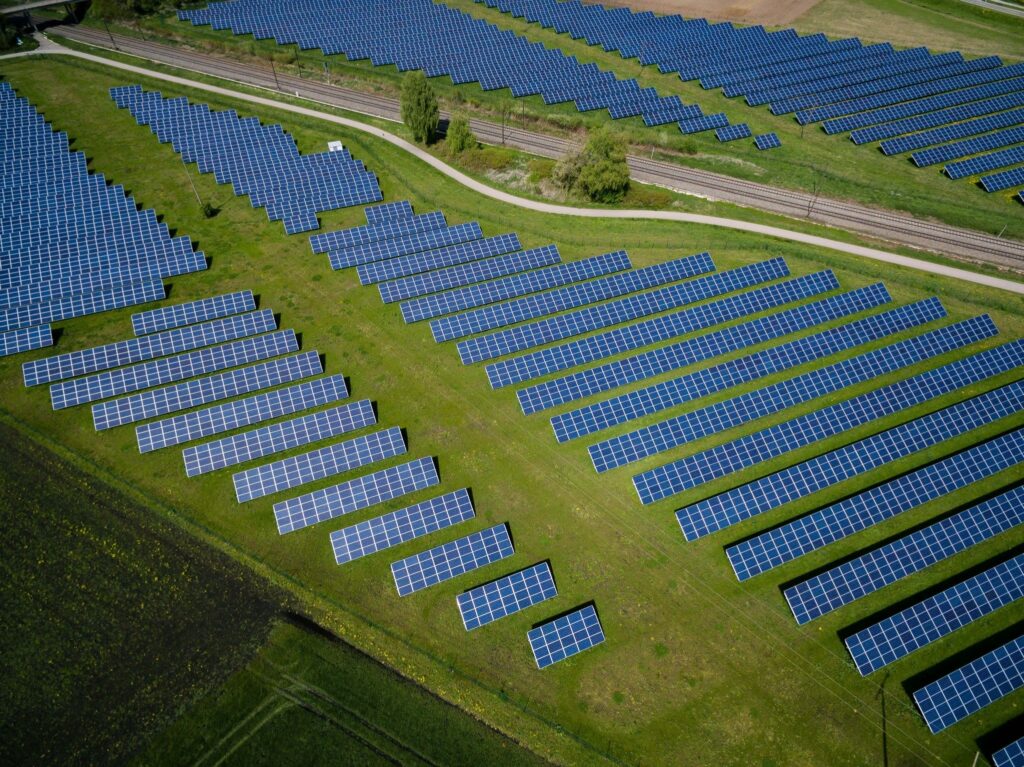
These cases demonstrate that renewables can function as a structural stabilizer. Solar and wind are not commodities that need to be shipped in from elsewhere—they are immune to the chokepoints and geopolitical disruptions that periodically convulse fossil fuel markets. On the supply side, the composition of China’s solar exports is shifting from finished panels toward upstream components such as solar cells and wafers. In the first half of 2025, 40 percent of China’s solar exports consisted of cells and wafers, destined primarily for India, Indonesia, and Turkey—signaling the emergence of more diverse global supply chains and reducing the single-point dependencies that make fossil fuel systems so vulnerable.
There is, in principle, little reason for other countries not to follow suit. The economics of renewable energy have shifted decisively. Utility-scale solar photovoltaics became cheaper than new coal-fired power in most parts of the world around 2020. Likewise, costs have continued to fall since, driven by manufacturing scale, improved materials, and more efficient system design. Over the past decade, solar module costs have dropped by roughly 80 to 90 percent, while battery storage costs have fallen by a similar order of magnitude. Modern solar panels can now convert over 20 percent of sunlight into electricity—roughly double the efficiency of many panels deployed 20 years ago—making deployment viable even in densely populated or land-constrained regions.
And yet, a critical constraint remains. As with previous technological transformations, the bottleneck is not the technology itself, but the infrastructure required to deploy it at scale. The rise of automobiles required highways; the expansion of the internet depended on fiber-optic backbones; and the growth of artificial intelligence is now driving a surge in data center construction. In the same way, the transition to renewable energy hinges not only on generation capacity but on the ability of electricity systems to transmit, distribute, and balance that power reliably. That ability resides in the grid.
Most existing power grids were designed for a fundamentally different paradigm: large, centralized, and dispatchable power plants fueled by coal, gas, or hydropower. In such systems, electricity flows in one direction—from a small number of predictable generators to millions of passive consumers. Grid operators can ramp output up or down to match demand with relative precision. Renewable energy disrupts this model. Solar and wind are inherently variable, generating electricity when conditions allow rather than when demand peaks. They are also geographically dispersed, often located far from urban demand centers. As their share of the energy mix increases, the grid must evolve from a one-way delivery system into a dynamic, multidirectional network capable of managing fluctuations in both supply and demand.
This is where smart grids become essential. Unlike conventional grids, smart grids incorporate digital monitoring, real-time data analytics, and automated control systems. They can balance supply and demand more efficiently, integrate distributed energy resources such as rooftop solar, and respond to disturbances in near real time. Advanced forecasting allows operators to anticipate changes in renewable generation, while grid-scale batteries and demand-response systems help smooth out variability. Upgrading the grid transforms renewable energy from an intermittent resource into a reliable backbone of the power system—simultaneously enhancing energy security, improving reliability, reducing costs, and accelerating decarbonization.
The Global Race to Build Better Power Grids
Countries are now racing to build the grids that can unlock the full potential of renewables. In the United States, the Biden-era Inflation Reduction Act and subsequent federal programs channeled billions of dollars into transmission upgrades and interconnection reform. The European Union, through its “Fit for 55” agenda and REPowerEU plan, prioritized cross-border interconnectors and grid digitalization as strategic infrastructure. India’s “Green Energy Corridor” program is designed to move renewable power from resource-rich states to industrial hubs. China has the moved fastest: its vast network of ultra-high-voltage transmission lines now carries renewable electricity thousands of kilometers from inland solar and wind bases to coastal demand centers.
Southeast Asia has, for over 20 years, discussed the creation of a cross-border electricity network under the ASEAN framework—the ASEAN Power Grid. First formally proposed in the late 1990s and embedded into regional planning in the early 2000s, the initiative aims to connect national grids through a network of bilateral and multilateral interconnections. Progress has been incremental. To date, only a handful of cross-border links—such as those between Laos, Thailand, Malaysia, and Singapore—are operational, and these are often structured as limited bilateral trading arrangements rather than components of a fully integrated market.
Recent developments suggest renewed momentum. The Laos–Thailand–Malaysia–Singapore Power Integration Project (LTMS-PIP) has demonstrated the technical feasibility of multilateral electricity trade, with hydropower from Laos transmitted across multiple jurisdictions to Singapore. Policymakers increasingly frame the ASEAN Power Grid not merely as a cooperation initiative but as a strategic necessity—enabling countries with abundant renewable resources, such as hydropower in Laos, geothermal in Indonesia, and solar in Vietnam, to export electricity to demand centers across the region.
Building a regional grid is as much a legal and institutional challenge as an engineering one. Cross-border electricity trade requires alignment on pricing mechanisms, wheeling charges, grid codes, and dispute resolution. Fundamental questions arise: who owns and operates interconnectors, how are costs and benefits shared, and what happens when domestic political priorities conflict with regional commitments? Most Southeast Asian electricity markets remain vertically integrated and state-dominated, with limited liberalization—complicating third-party access and cross-border competition. Unlike the European Union, where decades of regulatory harmonization underpin a single electricity market, ASEAN must navigate a patchwork of legal systems, varying levels of market maturity, and divergent political priorities.
Grid Structure and Legal Challenges in Indonesia
If the ASEAN Power Grid presents a complex regional challenge, Indonesia’s domestic grid architecture poses an even more intricate one. The archipelagic state, spanning more than 17,000 islands, does not operate a single, unified grid. Instead, it relies on several major island-based systems—principally in Java-Bali, Sumatra, Kalimantan, Sulawesi, and parts of Eastern Indonesia—many of which remain isolated from one another.
This fragmentation reflects geography, but it also carries economic consequences. Each grid operates under different demand profiles, generation mixes, and cost structures. The Java-Bali system, which accounts for the majority of national electricity consumption, benefits from scale and a more diversified generation portfolio. Smaller and more remote systems often rely on higher-cost diesel generation and face greater supply volatility. Without interconnection, surplus power in one system cannot easily be transmitted to another, limiting efficiency and increasing overall system costs.
Expanding and modernizing these grids, whether through inter-island interconnections, smart grid technologies, or enhanced transmission capacity, will require substantial investment and regulatory certainty. Questions around tariff design, cost recovery, risk allocation, and the role of private capital are central to that challenge—and they run directly into the constitutional architecture that has shaped Indonesia’s energy sector since independence.
Article 33 of the Indonesian Constitution mandates that sectors deemed vital to the public interest must be controlled by the state. Over time, this has been interpreted to justify a dominant, near-monopolistic role for the state-owned utility Perusahaan Listrik Negara (PLN) across the electricity value chain: generation, transmission, and distribution. This interpretation has not gone uncontested. However, it denotes deliberate judicial choices, made across 30 years of constitutional litigation that has progressively narrowed the space for reform.
The most consequential was the Constitutional Courts annulment of the 2002 Electricity Law in 2004. The law had sought to introduce competition by unbundling the electricity sector—separating generation, transmission, and distribution, and allowing private participation across multiple segments of the power market. The Court, however, ruled that such liberalization contravened Article 33 of the Constitution, arguing that full competition in the power sector would undermine the state’s obligation to ensure equitable access and control. The decision reasserted the principle that electricity must remain under strong state control, halting early efforts to restructure the sector along more market-oriented lines.
Similar tensions resurfaced with the passage of the 2009 Electricity Law. While more cautious than its predecessor, the law still opened space for independent power producers (IPPs) to participate in electricity generation, and subsequent judicial reviews continued to test its boundaries. In a series of rulings between 2015 and 2016, the Constitutional Court reaffirmed that while private participation in electricity generation is permissible, the state, through PLN, must retain ultimate control over transmission and distribution networks, as well as system operation. The Court’s reasoning consistently emphasized that electricity infrastructure constitutes a “strategic branch of production” and therefore cannot be fully exposed to market forces.
These rulings have created a distinctive institutional structure. Indonesia permits private investment in generation by IPPs, but maintains a tightly integrated, state-controlled grid. In this system, PLN acts as the single buyer of electricity, the sole operator of transmission and distribution networks, and the central planner of system expansion.
Efforts to “unbundle” these functions—common practice in many other jurisdictions—have therefore faced both legal and political resistance. In liberalized markets such as those in parts of Europe or Australia, separating grid ownership from generation has enabled third-party access, competition, and innovation.
Another innovation that remains absent is power wheeling. Indonesia is effectively the only major economy that does not permit it—yet understanding why its absence matters requires first understanding what it is. Power wheeling allows private generators to sell electricity directly to end consumers using existing transmission networks, for a regulated fee. In markets where it is permitted, it has enabled corporate procurement of clean energy, unlocked private investment in renewables, and reduced fiscal pressure on state utilities.
In Indonesia, transmission costs remain bundled into overall electricity tariffs, private generators cannot reach end users directly, and PLN’s role as single buyer remains unchallenged. The debate over power wheeling has resurfaced repeatedly in policy discussions—most recently in the context of omnibus reforms and energy transition legislation—but constitutional constraints have so far foreclosed resolution.
Balancing State Control With Private Investment
PLN’s central role has enabled coordinated expansion and cross-subsidization, particularly for remote regions. But it has also slowed the adoption of grid models better suited to variable, decentralized renewable energy—and it has concentrated an enormous financing burden on a single entity. Relying solely on PLN’s corporate balance sheet to fund grid modernization poses a significant risk to the utility’s financial sustainability. The scale of capital required would expose PLN to dangerous levels of leverage, severely limiting its ability to raise further financing precisely when the energy transition demands it most.
The numbers make the challenge concrete. Indonesia’s Electricity Supply Business Plan (RUPTL) 2025 to 2034 envisages 47,760 circuit kilometers of new transmission lines and substations—a distance roughly equivalent to circling the Earth more than once—requiring approximately $24 billion in investment, or an average of $2.6 billion per year. That is not a figure PLN can finance alone.
The experiences of Spain and Ethiopia are instructive here. Both demonstrate that regulatory flexibility—opening grid infrastructure to private capital while maintaining strategic public direction—can dramatically accelerate the energy transition. Opening Indonesia’s power grid to private investment need not mean relinquishing state control or abandoning constitutional obligations. There are well-established models for maintaining that balance.
Alternative financing structures include leasing, joint ventures, public-private partnerships, investment trusts, and collective investment schemes. Each offers distinct advantages. Leasing reduces capital expenditure and preserves liquidity—useful where PLN needs to conserve its balance sheet. Public-private partnerships attract external capital and spread risk, appropriate where the priority is to draw in private efficiency while maintaining public oversight of renewable integration. Investment trusts unlock capital without adding debt, making them well suited to balance-sheet optimization and capital recycling.
Before any of these models can be implemented, however, two foundational policy enablers must be in place.
The first is a dedicated transmission fee system. Currently, transmission costs are bundled into overall electricity tariffs, making it difficult to isolate the revenue stream associated with specific transmission assets. A dedicated fee would provide investors with predictable, ring-fenced cash inflows tied directly to those assets—the prerequisite for any bankable project finance structure. Without it, transmission investment remains difficult to structure, price, or attract capital toward.
The second enabler addresses the gap that a transmission fee alone cannot close. Fees structured to attract investors—reflecting returns, debt service, and risk premiums—will likely exceed existing regulated tariffs. Fiscal support, whether through viability gap funding, subsidies, or guarantees, allows the government to absorb this difference: enabling investors to achieve required returns while keeping electricity affordable for consumers. Under Finance Minister Regulation PMK 20/2025 on Electricity Subsidy Allocation, such an arrangement is legally feasible, as the current transmission tariff is already covered under that framework.
Together, these two enablers would create a transparent, predictable revenue framework capable of transforming transmission assets into infrastructure investments with the steady, long-term yields that institutional investors seek.
The disruption that began in the Strait of Hormuz in 2026 was not an anomaly. It was a reminder—one in a long series—that fossil fuel dependence is a structural vulnerability, and that geopolitical disruption is not a tail risk but a recurring condition of the global energy system. The countries that fared best were not those with the largest emergency reserves or the most aggressive diplomatic responses. They were the countries that had quietly, systematically reduced their exposure to the problem years before it arrived.
For Indonesia, the path forward is clear in outline if complex in execution. Modernizing its fragmented grid is not merely a technical upgrade—it is the foundational investment that determines whether the country’s renewable energy ambitions can be realized at speed and at scale. Its unique geographical challenges and the constitutional constraints on its energy sector make the case for regulatory flexibility and innovative financing all the more urgent, not less. The capital exists. The models exist. What is required is the policy architecture to deploy them—and the recognition that maintaining state control and attracting private investment are not opposing objectives, but complementary ones. With the right framework in place, Indonesia can build a grid capable of supporting a decarbonized, resilient energy future: one that anticipates the next crisis and is structurally prepared for it.


