

A fragmenting world is pushing every country to pick sides. Tanzania’s argument runs the other way: the answer to disorder is more cooperation and a fairer set of global rules, and for a country like ours that’s an investment strategy as much as a foreign policy.
In 1970, the governments that would carry the Non-Aligned Movement into its most assertive decade met in Dar es Salaam, and Tanzanian Prime Minister Julius Nyerere used the occasion to make a point not all of his guests had come to hear. Political independence without economic content, he told them, leaves a country taking instructions all the same, only from a creditor instead of a colonial governor. Sovereignty had to show up in trade and finance, in who got to set the terms on the capital a country needed. A flag and an anthem were not enough.
Half a century on, that is still the work, and from where I sit it has a precise modern meaning. Economic content, in 2026, is the capacity to attract investment and steer it toward what a country actually needs, on terms it sets for itself. It’s the rate at which a Tanzanian government can borrow to build a hospital, and whether a global manufacturer who picks Tanzania for a plant leaves the value it creates in the country. Mwalimu’s generation won the political argument. The one in front of mine is an investment argument, and it’s contested as much in the rules of the global economy as in any of our own ministries.
My thesis is straightforward. In a fragmenting world, the most valuable thing a country can offer investors is predictability. Incentives and cheap labor matter less than the plain confidence that the place will hold steady. Capital is nervous almost everywhere right now, and nervous capital pays a premium for somewhere it can trust. Tanzania’s contribution to international cooperation, and its own route to prosperity, is to be that steady place: neutral between rival powers, open to all of them, disciplined at home, and reliable enough that an investor can plan a 20-year project here without lying awake over which way we will jump. The reforms we press for in the global system follow from the same logic. They are about pricing risk honestly, so capital flows to where it builds something rather than pooling where it already sits. This is, at bottom, an argument about global governance: about whether the international system can be made open and inclusive enough to work for the countries that were not in the room when it was designed. My answer, and Tanzania’s, is that the disorder everyone feels now is a reason to cooperate more, not to retreat into blocs.
Tanzania has built its foreign policy around exactly that. In May 2025, President Samia Suluhu Hassan launched the 2024 edition of our foreign policy, the first full revision since 2001, and put economic diplomacy at the front of it. The founding principles stayed where Nyerere set them: non-alignment, self-reliance, respect for sovereignty, support for African unity. What changed was the instrument. Every Tanzanian mission abroad now carries a mandate to bring home trade and investment rather than simply file dispatches, and we have begun posting dedicated economic-diplomacy officers to do precisely that.
The President’s own approach has a name at home, the 4 Rs: reconciliation, resilience, reform and rebuilding. Abroad, it’s meant ending a stretch of self-imposed isolation and putting Tanzania back into rooms it had drifted away from. Since 2021 she’s made dozens of state visits and helped draw well over $20 billion of registered investment into the country. That travel earns its keep when a relationship turns into a railway or a factory, which is reason enough for a developing economy to spend its time on diplomacy.
The timing reflects a judgement about the condition’s investors are now pricing. The order assembled in 1945 is under more strain than at any point in my working life. Supply chains everyone had treated as permanent fractured during the pandemic and the conflicts after it. The IMF has tracked global trade growth slowing and a large share of multinational firms reorganizing around political lines rather than around cost. Two economies that together produce more than a third of the world’s output have drawn the rest of us into a contest over technology and critical minerals that none of us chose.
For a country like mine, that contest carries risk and opportunity in the same breath. The risk is plain: a fragmented world raises the price of everything a developing economy must import and shrinks the room it has to borrow. The opportunity is just as concrete. When the largest powers start sorting the world into camps, the places that decline to be sorted become more useful to everyone, not less. Tanzania has declined before, and we mean to keep declining. Our investment last year arrived from China, the Gulf, the United Kingdom, India and our African neighbors at once, and not one of those partners was asked to line up against another. That neutrality is a priced advantage. It lowers the geopolitical risk attached to a project here, and lower risk is the whole game.
The Cost of an Unreformed System
If predictability is the asset we sell, the global financial system is where it gets undervalued. An African government borrowing on international markets routinely pays a premium that has little to do with whether it will repay the debt, because the institutions that price our debt and the agencies that rate it were not built with us in mind and seldom read us accurately. A perception of risk, repeated often enough, hardens into a real cost, and that cost lands on a clinic that goes unbuilt or a road that goes unsurfaced. This is the reform that matters most to an investment minister, because it raises the price of every project before the first spade goes into the ground. The fixes are not mysterious. Give developing countries a fair share of votes in the institutions that lend to them, and change how the multilateral banks price their loans so they crowd private capital in rather than out.
Let climate finance actually reach the countries that need to adapt. There is nothing charitable about any of this. These are corrections to a market failure that leaves sound projects unfunded. It’s the substance of what is now called the reform of global economic governance, and for the first time in years it’s a live agenda. The Bretton Woods institutions were built in 1944 for a world that no longer exists. The G20, where emerging economies now sit at the same table as the powers that wrote the original rules, has become the place where these questions actually get settled, and Tanzania’s interest is in seeing that table widened until the smaller economies are represented when it is. Part of the answer is ours to supply too. The deeper our own capital markets grow, the pension funds and domestic investors who now lead more than half of our registered projects, the less we depend on the verdict of agencies that have never visited us.
The institutions of global decision-making sit on the same fault line. 5 governments hold a permanent veto over the world’s choices on peace and security because of where their armies stood in 1945. Africa, 54 states and more than a billion people, holds none of those seats, even as its minerals supply the energy transition and its soldiers serve under the UN flag from the Congo to Darfur. I make this point as an investment minister rather than only as a patriot, because a system most of the world treats as illegitimate is an unstable one, and instability is the enemy of capital that wants to commit for decades. Tanzania supports reform of the Security Council along the lines the African Union set out in the Ezulwini Consensus: full permanent representation, with the same standing as everyone else at the table.
The moment for this is unusually open. The United Nations has passed its 80th year, and even its firmest supporters concede the machinery is creaking. Reform conversations that stalled for decades are live again. Tanzania’s view is that this is the wrong time for the Global South to splinter into competing bids for individual seats and favors. The strength is in cohesion. An African position held together, joined where it can be to partners across Asia and Latin America who want the same basic fairness, is worth far more than 54 countries each cutting its own quiet deal. This is how the world is shifting. Power is dispersing toward a far wider field of middle and smaller states. Hence, in a more horizontal order, the countries that organize and cooperate, instead of waiting to be courted, are the ones that get to shape the rules. A more representative system is a more stable one, and stability is what lets capital plan. We call ourselves a friend of an expanded BRICS, and we keep faith with the United Nations as the one body where every state holds a seat, because both serve the same end.
Cooperation you can Measure
Reform of distant institutions matters, but most of what cooperation means to an ordinary Tanzanian sits closer to the ground. It’s whether a truck clears the border at Namanga in an hour rather than a week, and whether the nickel beneath Ngara leaves this country as rock or as metal.
Tanzania ratified the African Continental Free Trade Area in September 2021 as the 39th country to deposit its instruments. The agreement joins 54 economies and a combined output above $3 trillion into a single market. For an investor weighing where to build, that is the figure that counts: a plant in Tanzania is no longer a plant for a local market but a foothold in a continental one. And Tanzania holds an unusual hand. We belong to both the East African Community, whose secretariat sits in Arusha, and the Southern African Development Community, and very few countries straddle both. A production base here reaches two regions, which is reason enough to see the Tripartite Free Trade Area, in force since 2024, through to completion.
A free trade area is only as good as its plumbing. Tariffs are the easy part. The harder work is harmonizing standards, so a Tanzanian processor’s goods are accepted in Accra and building the payment systems that let a trader settle in local currency rather than scrambling for dollars. We are investing in that unglamorous machinery, because the continental market only pays off if the rails beneath it are laid properly.
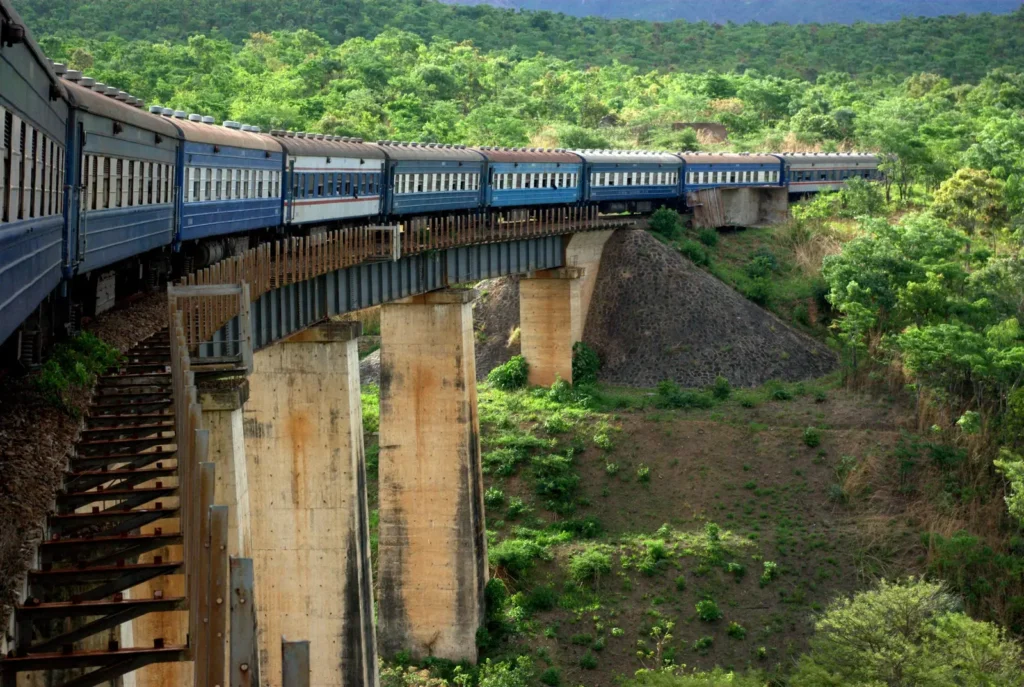
Geography is a form of cooperation Tanzania can offer that no summit can, and it happens to be a business. The new railway running inland from the port of Dar es Salaam and the revived line to Zambia serve more than Tanzanians. Zambia, the Democratic Republic of Congo, Rwanda, Burundi, Uganda and Malawi all reach the sea through us. Every kilometer of track and every hour shaved off a crossing lowers the cost of trade for a neighbor and earns us transit revenue at the same time. For an investor, it means a logistics network with a captive regional customer base built in.
Cooperation also runs through language, which outlasts any government. Tanzania has pushed hard for Kiswahili, spoken by more than a hundred million people across eastern and central Africa, to be recognized as a working language of the African Union and used more widely beyond it. A shared language lowers the cost of doing business across borders as surely as a shared tariff schedule does. When the African Union unveiled a statue of Nyerere at its Addis Ababa headquarters in 2024, it carried a plain reminder: the institutions of African unity were built in part in Dar es Salaam, and Tanzania has never treated them as someone else’s project.
Then there are minerals, where the cooperation question turns concrete and a little uncomfortable. The world wants what lies under Kabanga, one of the largest undeveloped high-grade nickel deposits found anywhere, with copper and cobalt alongside it, the metals that batteries and grid storage now run on. The old bargain would have had Tanzania ship the ore abroad and bank a royalty while the value got added in someone else’s factory. We have held out for more. The plan agreed with the partners developing the deposit puts a refinery at Kahama to turn the metal into battery-grade material on Tanzanian soil, with a final investment decision due this year and the refining stage now being finalized. We are not doing this out of resource nationalism. The energy transitions the wealthier world keeps urging on us will be paid for in part with African minerals, and the only question worth asking is whether Africa processes them or merely hands them over. If cooperation leaves us supplying the rock while others make the metal, it’s the old arrangement wearing newer clothes.
The proof that this approach works is starting to show in the figures. In 2025, Tanzania registered 915 investment projects worth almost $11 billion, the highest number since the national investment center was set up in 1996. More than half were led by Tanzanians, which tells you whose economy this is becoming. The economy grew by 5.9 percent last year and is forecast to reach 6.3 percent this year. From July 1st, we begin implementing Vision 2050, the long plan meant to carry Tanzania to upper-middle-income status within a generation. We did not stumble into those numbers, and we did not post them alone. They came because Tanzania chose, deliberately, to open itself to the world on terms it set for itself.
Climate is where the case for cooperation and the case for self-interest stop being separable, and where a lot of the next decade’s capital will go. Tanzania did almost nothing to cause the warming now reshaping our rainfall and our coastline, yet we carry a heavy share of its consequences. President Hassan has made clean cooking a signature cause, at home through a national strategy and abroad as an advocate for the hundreds of millions of African women who still cook over open fires, at a cost to their health and to the forests around them. That’s climate policy and development policy at once, and it’s an investable one too. What we want from the world is arithmetic that adds up: finance that reaches adaptation, and a transition timetable that does not ask the countries with the least to move fastest.
The Discipline This Demands
I will be plain about what all this asks of us, because a thesis that only lists other people’s failings is not worth the paper that it is printed on. A country cannot demand fairer rules abroad while running an unpredictable system at home, and predictability is the one variable here we fully control. Capital rewards consistency above almost everything: a contract that holds, and a court that settles a dispute on the law rather than on who knows whom. Tanzania has made real ground. We were the most improved African country in the 2025 Chandler Good Government Index, and the investment numbers reflect it. But the work is not done. Coordination between regulators still tries the patience of people who want to build here. Credibility is the currency the whole strategy runs on. It’s earned slowly and spent quickly, and an investment minister who forgets that will not remain one for long.
There is a clock behind all of this. Tanzania is a young country getting younger, and our workforce is entering the labor market faster than the formal economy can absorb it. That is the real reason the arguments about minerals and about the cost of capital cannot be taken one at a time. Every ton of nickel refined here rather than overseas, and every basis point shaved off the rate at which we borrow, eventually becomes a job for someone who would otherwise be unemployed. Global governance can sound like a subject for seminars. Inside a planning ministry, it’s a question about whether a 22-year-old in Mwanza has work next year, and the year after that.
Nyerere kept the name Mwalimu, teacher, for the whole of his life, and he used to say that his generation had accomplished one thing, the political liberation of the continent, and that the goals beyond it belonged to the generations who followed. I read that as an instruction more than a tribute. The institutions he helped Africa build won our independence. They have not yet won us a fair price for our risk or a fair share of the decisions that shape our economies. Tanzania’s part in changing that will not be settled by speeches, though we will keep making the case wherever we are heard.
It will be settled by being the kind of country investors want to commit to and find hard to push around: open, steady, integrated with its neighbors, adding value to what it digs up, and financing more of its own growth each year. It also means insisting the growth be the kind the world now claims to want—inclusive at home and sustainable on a warming planet—because a model that fails either test will not last. A fairer global order is worth arguing for. It’s also worth earning, one credible decision at a time, until the capital that has been hovering at the edge of the room decides the safest place to stand is inside it. That is the work Mwalimu left unfinished, and it’s what this ministry is paid to do.


