

After the American extraction of Nicolás Maduro from Venezuela this January, the bell began tolling for the main recipient of his oil-based generosity: the Castro dictatorship in Cuba. A disastrous economic downturn had already devastated the island’s welfare since the beginning of the second Trump administration, but the end of the Caracas-based oil subsidy made everything far worse. Oil, gasoline, diesel, water, transportation, electric power, basic necessities, jet fuel, and even garbage collection all collapsed. The tightening of the American embargo contributed to this disaster—but so did long-standing Cuban mismanagement of the economy.
Negotiations quickly got underway between Washington and Havana, with the former seeking an outcome similar to the Venezuelan one: a change at the top, drastic economic reforms, meagre political change, and most of the existing power structure left in place. By late June, however, as Trump reinforced the hostile measures against the regime, it appeared that the United States was not finding a Cuban “Delcy Rodríguez”—the new Venezuelan ruler—meaning a figure senior enough to replace the existing leadership, and ambitious or cynical enough to break ranks and side with Washington.
The increasingly dire situation on the island, meanwhile, showed no sign of igniting widespread protests or an uprising against the regime. The existing leadership announced significant economic reforms, including private ownership of almost everything—foreign investment, free agricultural markets, and banking. But President Trump and Cuban-American Secretary of State Marco Rubio remained unconvinced. Some groups in Miami and Washington were inclined to encourage economic change—perestroika, in old Gorbachev terms—without a political opening, or glasnost; many others insisted on regime change as a condition for truly normalizing relations between the two countries. A deadlock began to consolidate.
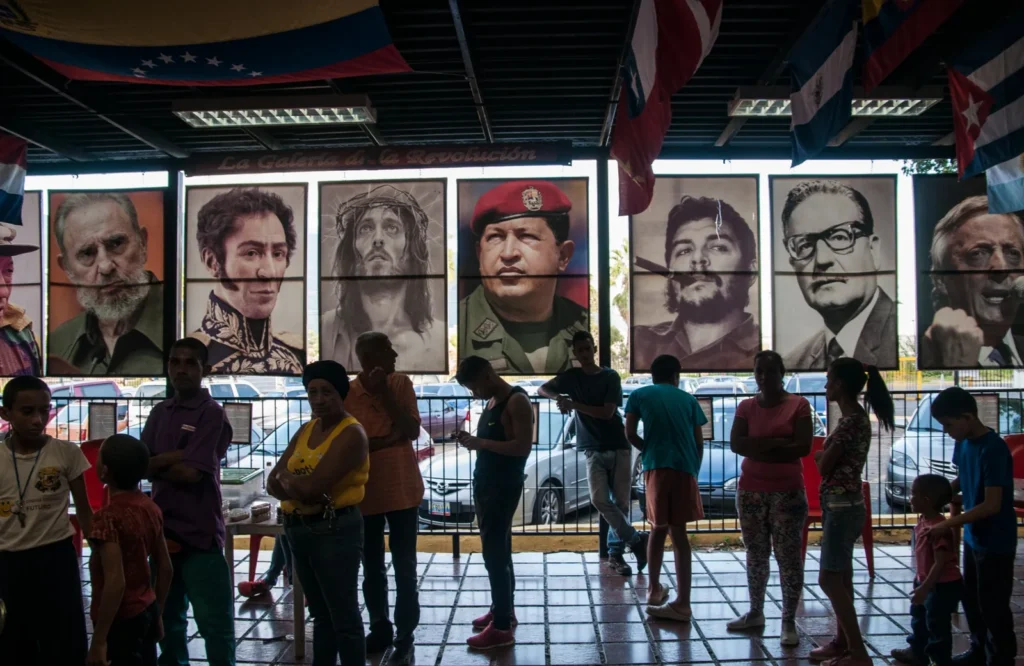
The island received repeated gestures of solidarity during these times of duress. Sympathizers from Europe, Latin America, and the United States embarked on humanitarian trips to Havana; some governments even lent a modest hand. In spite of it all, the Cuban regime’s seduction had survived nearly seven decades of failure and repression. It was still the left’s darling in many parts of the world.
For nearly half a century, this external attraction allowed Cuba and its outsized leader to punch far above their weight in international affairs. Partly out of a cunning strategy for dealing with the United States and partly out of sheer megalomania, Fidel Castro projected his revolution’s impact well beyond the island’s shores—in Latin America, in Africa, and in a different, more defensive fashion, in the United States and Europe. Not to mention the Soviet Union, which made Cuba a centerpiece of its foreign policy for 30 years. Perhaps the only other nation of comparable population to wield similar clout on the world stage has been Israel—with a similarly powerful military and intelligence service.
Now that its attractiveness has faded, and its final days seem closer than ever, a look back on a fascinating though largely futile story is instructive. From the outset, Castro believed that by supporting revolution throughout Latin America he could both distract Washington from adventures like the Bay of Pigs and Operation Mongoose and, at the same time, end Havana’s isolation. Early on, the Kennedy administration had managed to force nearly every nation in the hemisphere—Mexico and Canada were the exceptions—to break off trade, travel, and diplomatic relations with the island. Castro’s response was to sponsor armed struggle, through guerrilla groups, across Latin America—again, with the exception of Mexico. Régis Debray, a young French intellectual, provided the theoretical underpinning for the armed route to revolution in his book Revolution in the Revolution? that was prefaced by Fidel himself. Castro trained young potential combatants from Venezuela, Colombia, Guatemala, Nicaragua, Argentina, the Dominican Republic, Peru, and later Bolivia and Brazil, in camps near Havana—principally one named Punto Cero. Manuel Piñeiro, his “Minister of Revolution” known as Redbeard armed and indoctrinated them, then dispatched them to the jungles and mountains of their respective countries.
With the exception of the Sandinista Front in Nicaragua, which fought its way to power in 1979, all Cuban-sponsored revolutionary attempts failed—and hundreds, perhaps thousands, of young Latin Americans died in a misguided fight, based on a misguided reading of the Cuban Revolution itself that was led by misguided leaders, however heroic they may have been. Father Camilo Torres’s remains were only recently found and consecrated in Colombia, more than 50 years after his death; those purported to be Che Guevara’s were buried in a memorial in Santa Clara, the site of his greatest battle, in 1997, on the 30th anniversary of his death. The Argentine armed group led by Ricardo Masetti was wiped out in 1964.
The roll-call of failure is long, and the pattern unmistakable. The defeat of all of these guerrillas—in Brazil, led by Carlos Marighella; in Venezuela by Douglas Bravo and the Petkoff brothers; in Peru by Luis de la Puente; in Uruguay by Raúl Sendic and his Tupamaros—did not only cost the lives of their participants. Their very existence, and occasionally their threat to the status quo, legitimized the brutal repression carried out by the armed forces of many of these countries. The multiple military coups of the 1960s and 1970s were not all a response to armed struggle, but armed struggle helped justify the death, disappearance, and torture of thousands of students and workers across much of Latin America. Again, only Mexico was spared.
Central America and Angola in the 1970s and 1980s were a different story. In Nicaragua and El Salvador, and to a lesser extent in Guatemala, the Cubans armed and assisted well-established, long-standing mass movements that also had an armed component. They were able to send large quantities of weapons to Nicaragua and El Salvador, dispatch experienced Chilean advisers to Nicaragua, and coordinate their aid through excellent, real-time communications with Havana from all 3 countries. The Sandinistas overthrew the Somoza dictatorship and remained in power for 10 years, their political survival assured in part by thousands of Cuban troops backing their response to the so-called Contras, who were trained and armed in neighboring Honduras by the Reagan administration.
When Daniel Ortega returned to office through elections in 2007, he gradually built a new dictatorship—one still in power today. In El Salvador, the FMLN guerrillas fought the U.S.-backed military to a standstill in 1989 and eventually signed a peace agreement in 1992 that allowed them to win the presidency twice in later years. The Cuban connection was central both to their war and to their years in government—years that ended in popular repudiation. The FMLN, like the right-wing party it had alternated with, was swept aside by the rise of the strongman Nayib Bukele, who may well remain in power for decades.
The Angolan and Ethiopian expeditions of the 1980s ended poorly in the latter case and successfully in the former. Thanks to Operation Carlota in 1975, Cuba funneled thousands of well-trained troops, largely of Afro-Cuban descent, to the former Portuguese colony in support of the MPLA, which was competing for power with the American-backed UNITA, led by Jonas Savimbi, and the Chinese-supported FNLA. At the 1988 battle of Cuito Cuanavale, the Cuban contingent—personally commanded by Fidel Castro from Havana—defeated the South African army and secured Angola’s independence under a Cuban-backed regime. The expedition to the Ogaden in support of the Ethiopian leader Mengistu Haile Mariam in the late 1970s fared far worse, ending with his removal from power in 1991 and his later conviction for human rights violations during the Red Terror. Secretary of State Alexander Haig once complained to the Cuban leader Carlos Rafael Rodríguez that Washington had intercepted Cuban pilots exchanging flight instructions in Spanish aboard Russian MiGs over the Ogaden—one more extreme example of Cuban international projection, thousands of miles from the Caribbean.
By the mid-1990s, with the collapse of the Soviet Union and the cancellation of its massive subsidy to Cuba’s economy, most of these adventures came to an end. Castro lacked both the resources and the opportunity to pursue them. But a new foreign venture soon appeared in the figure of Hugo Chávez, elected president of Venezuela in 1999, and Fidel achieved one of the most remarkable feats in modern international relations: a poor, small, sparsely populated island effectively colonized an oil- and resource-rich nation with more than three times its population. For a quarter of a century, Chávez and Nicolás Maduro, his successor, provided cheap or free oil to Cuba, along with hard-currency subsidies, in exchange for thousands of doctors, sports instructors, and intelligence and security agents. ‘Cubazuela’ was born and thrived.
Castro was once again able to project his ideas of Latin American sovereignty, anti-Americanism, and social welfare purchased at the price of democratic institutions and individual freedoms. Chávez became his partner and enabler—providing subsidized oil to many nations in the region, lobbying against the proposed Free Trade Area of the Americas, and championing the first “pink tide” in Latin America. Left-of-center regimes from Bolivia to El Salvador, and among the island-states of the Caribbean, benefited from Chávez’s largesse, with Castro masterminding the operation until his illness sidelined him in 2006. Thanks to the Venezuelan oil bonanza, and a long-standing presence in Africa through its medical teams, Cuba was able to secure consistently lopsided votes in its favor at the United Nations General Assembly and other UN agencies—with the notable exception of the Human Rights Commission, and later Council, in Geneva.
The Cuban Revolution’s influence beyond its shores was not limited to these characteristics. In many Latin American, African, and European countries, sympathizers and ageing admirers of the regime formed groups, institutes, centers, and countless associations of “friendship” with the island. These also included left-wing political parties closely linked to the Department of the Americas, Piñeiro’s outfit in charge of relations with non-governmental actors abroad. Often named for the independence hero José Martí and frequently invoking the notion of “solidarity” with Cuba, these nuclei of supporters were extraordinarily useful to Castro and his regime. Most of the time they concentrated their energies on cultural events, the commemoration of iconic dates, the welcoming of Cuban dignitaries, and the general promotion of the island’s achievements and interests.
But whenever a local government crossed the dictatorship—with a vote at the UN, by abiding by American sanctions, or by restricting travel or trade with Cuba—these groups would transform themselves into a kind of fifth column. They would organize demonstrations against the authorities, publish critical articles and commentary in the press, and hold forth in universities, cultural institutions, and the media in Castro’s defense and in opposition to local policy. In many ways, though without the resources, they replicated the Soviet model during the Cold War: civil-society groups sympathetic to Moscow, alongside powerful Communist Parties in some countries—Italy, France, Chile, Uruguay—and a host of writers, poets, artists, dancers, and filmmakers always ready to defend the “party line” as determined by the Soviet regime.
The first and second “pink tides” in Latin America—in the early years of this century and again during the current decade—together with Venezuelan funding, allowed the Castros to live on borrowed time and to maintain the regime’s halo abroad well after their revolution had run out of resources and prestige. Cuba became a founding member of CELAC, the Community of Latin American and Caribbean States—its long-cherished dream of an OAS without the United States or Canada. It continued to send thousands of doctors to Africa and Latin America, so much so that the sums paid to the Cuban government by foreign nations became the regime’s principal source of hard currency. The medical teams brought goodwill and local networks in addition to badly needed dollars, and over time they became one of Cuba’s best international calling cards. It was not until the second Trump administration that the United States “persuaded” countries such as Jamaica, Honduras, Guatemala, and Guyana to cancel these missions—though many others, from Mexico to Calabria in Southern Italy, retained them.
This detailed account begs a question. How did a tiny island—a failed experiment, a regime able to survive only thanks to recurrent, massive subsidies from abroad—acquire such influence and projection across large parts of the world, and over so extended a period? There is no single answer, though several are well known, and they build upon one another. The first is aesthetic and almost mythological: the iconic early images of the young, bearded, olive-clad fighters coming down from the Cuban mountains captured imaginations across the world, and the reversals the Cuban regime later endured—including three decades of subservience to Moscow—never quite erased that original allure.
If the first explanation is romantic, the second is ostensibly empirical: the revolution’s claimed accomplishments in social policy, particularly in health and education. Across the region and in other parts of the world, results in these fields over the past half-century have generally been considered insufficient, or downright dismal. Cuba’s apparent successes allowed its admirers to sustain a simple yet conclusive argument: the regime might be repressive and anti-democratic, and dependent on external subvention because of its malfunctioning economy, but despite a decades-long American embargo it had at least achieved what few others did—dramatic improvements in health and education. For socially minded, progressive souls, this alone was, and remains, reason enough to back and admire the regime.
It mattered little that neither claim was entirely accurate. Over the past 60 years, most Latin American societies—the exceptions being Central America, Haiti, and Bolivia—made enormous strides in both education and health. The average length of schooling reached 10 years in many countries, most of it free; near-universal literacy is now a fact in most of them; and between 20 and 25 percent of young men and women obtain some form of higher education. One can argue about the quality of that education, but that is another discussion. The same holds for health: vaccination is practically universal and free, life expectancy has risen dramatically, infant mortality has dropped to strikingly low levels, and some form of health-care protection is available to large numbers—universal in Brazil and near-universal in Chile, for example. Latin America’s performance over the years, in other words, is not what many of Cuba’s admirers believe.
Cuban statistics, on the other hand, are not entirely comparable. They are largely not subject to international evaluation. In education, Havana does not participate in the PISA tests, and the data published by UNESCO is frequently supplied by Cuban authorities rather than drawn from standardized, internationally supervised assessments. The same is true of its health indicators, often based on PAHO or WHO figures collected by the Cuban government itself. That said, such doubts have scant bearing on the enthusiasm of the revolution’s boosters.
But the deepest source of Cuba’s appeal lies elsewhere—and it outlasts both the romance and the statistics. The regime’s initial popularity and persistent esteem—now mainly among the fringe groups described above—spring from another, more fundamental source: a consistently nationalistic posture toward the United States, which its supporters label anti-imperialist. While some may correctly see this as demagogic anti-Americanism, across Latin America, Europe, and Africa, it is seen as a heroic, altruistic form of resistance to the worst evil the world has endured since World War II. The Latin American and European left, the Non-Aligned Movement of decades past (Fidel was its president in the late 1970s), and the so-called Global South today all contain slices of public opinion—and important sectors of the intellectual and political elite—that are ferociously anti-American.
They reject American interventions from Guatemala, Cuba, the Dominican Republic, Chile, Panama, and most recently Venezuela, to the Congo, Vietnam, Iraq, and most recently Iran. They repudiate what they call Americanism, or U.S. cultural influence, from McDonald’s to jeans. Their governments, whether left or right of center, cannot translate these sentiments into foreign or economic policy; the dangers and costs are too high. But they can cheer someone else who dares to do what they will not. This is the heart of the matter. Cuba’s enduring appeal has never rested principally on its model, which has failed, nor on its statistics, which are unverifiable, but on its willingness to defy the United States openly and to pay the exorbitant price of that defiance—a price its admirers have never had to bear themselves. Even today, Mexico, Brazil, and Colombia, all oil exporters, accepted Donald Trump’s ultimatum: stop sending crude to Cuba or face outrageous tariffs. They all caved.
If American civilization has extended across the world, commanding the admiration, envy, and grudging respect of billions, there remain sectors in every society—as far as we can tell, even in countries like China—that strongly dislike what it represents. For them, the Castros and Cuba have been a beacon since 1959 and remain one today. For 67 years, their resistance in the face of American hostility, the embargo included, has been, in the eyes of these sectors, exemplary.
Exactly how and when the Cuban dictatorship will disappear is impossible to predict. Dozens of experts and pundits have lost their shirts betting on the regime’s demise since 1959. Yet the convergence of new factors suggests that Cuba has entered a new and probably terminal phase. Its economic collapse, the end of Venezuelan subsidies, the Trump administration’s willingness and ability to squeeze it further, and the growing discontent and protests of the island’s inhabitants are all factors that were absent before the pandemic. One forecast, however, can be made with confidence: whenever and however the end comes, many around the world will still shed tears—remarkably—for a failed, onerous, and deeply authoritarian experiment.
As the crisis intensified in early 2026, hundreds of sympathizers from Latin America, Europe, and the United States converged on Havana, bearing humanitarian aid and wearing Che Guevara t-shirts. They sang the same songs, shouted the same slogans, and denounced the same culprits as their grandparents had nearly 70 years before. They were fewer in number and in fame, of course, and they were attending what looked more like a wake than a christening. Yet they were still there—bearing witness to the stubborn resilience of a myth that should have vanished long ago.


