


The countries and people of the world stand at the threshold of a new era—one brimming with both peril and possibility. Artificial Intelligence captures the imagination as the defining technological change of our time. But another tectonic shift is underway, one that will determine whether the gains of this era are shared: the future of international cooperation itself.
The multilateral system that has underwritten seven decades of relative peace and expanding human development is straining under pressures it was not built to absorb. The system must change. The question is whether visionary leaders in government, business, and civil society will seize this moment to revitalize the architecture of cooperation.
The crises confronting the multilateral system did and did not arrive one at a time. Climate disruption, armed conflict, food insecurity, mass displacement, widening inequality, and the fragility exposed by global health emergencies are not separate problems with separate solutions. They are, instead, a single compounding system: conflict fuels displacement, displacement deepens poverty, and climate change intensifies all other problems. Furthermore, these crises do not respect borders, and they cannot be solved behind them. No country is fully insulated from this systemic risk, no matter how wealthy or powerful.
The fate of the international system is, in other words, a matter of survival. And yet that system is faltering. Its legitimacy erodes amid rising skepticism about what international cooperation has actually delivered—skepticism that is not entirely unfounded, and that the defenders of multilateralism ignore at their peril.
What this moment demands is not nostalgia for the postwar settlement, but a clear-eyed understanding of why that settlement is worth renewing. No country’s security or prosperity is fully achievable in isolation. To be put into practice, that principle needs more than diplomats representing governments and multilateral institutions. It needs a reinvigorated architecture of engagement—one built not only on the formal scaffolding of states and institutions, but on the connective tissue of trust that only human relationships can generate.
The Creative Tension of Multipolarity and Multilateralism
The multilateral institutions of the twentieth century were conceived for a world that no longer exists. In 1945, much of today’s Global South remained under colonial rule, absent from the tables where international norms were forged. The Cold War imposed a bipolar order that was dangerous but legible—two poles and a set of rules, however imperfect, that both sides broadly understood.
What we have now is more complex. China has re-emerged as a civilizational power with global reach. The Global South is asserting ambitions long deferred by colonialism and Cold War proxy politics. The United States is retreating from the institutional architecture it once championed. And private actors in technology now wield influence over information, infrastructure, and social cohesion that the architects of 1945 could not have imagined and that our current frameworks are ill-equipped to govern.
Multipolarity is not, in itself, the enemy of multilateralism. More voices at the table can produce more legitimate outcomes. But the architecture of international cooperation requires investment, precisely at the moment when the funding base for multilateral institutions is contracting and the demands on them are expanding. That gap is a strategic crisis.
There is a harder truth that must be stated plainly. The defense of multilateralism has too often been conducted as though its virtues were self-evident—as though invoking the founding ideals of 1945 were sufficient to command allegiance in 2026. It is not. Citizens in wealthy democracies who have grown skeptical of international institutions have legitimate questions about what those institutions have delivered. Dismissing that skepticism as populism is self-defeating. Engaging it honestly is the precondition for the system’s survival.
The Strategic Role of Non-State Actors
Into the gap between what governments can deliver and what the moment demands, a different category of actors must step. Foundations, think-tanks, and civil society organizations possess what official diplomacy increasingly lacks: continuity across political cycles, intellectual independence, and the ability to convene dialogue across lines that domestic politics has made impassable. At their best, they are force multipliers for the multilateral system.
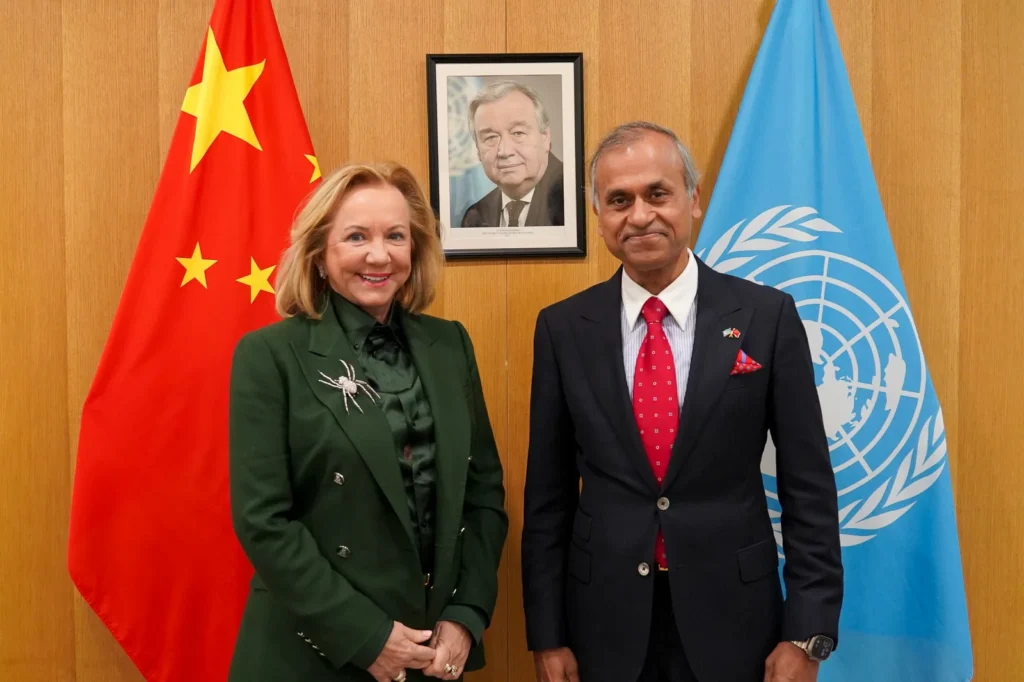
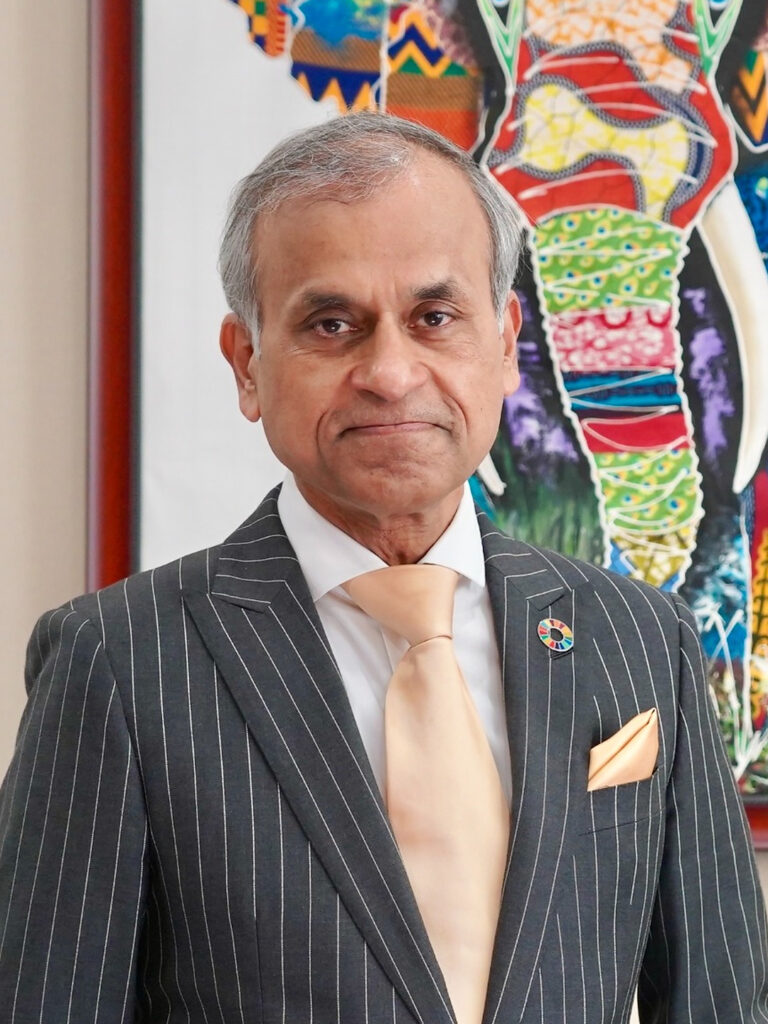
One of the authors, Siddharth Chatterjee, speaks from three decades of experience inside that system. Having served as a UN Resident Coordinator across some of the world’s most fragile and conflict-affected environments—South Sudan, Somalia, Iraq, Kenya, Indonesia—he has witnessed at close range what state failure looks like in human terms, and the painstaking work required to hold fractured societies together. That experience gave him a profound respect for what the multilateral system can accomplish. It also gave him an unflinching view of its limitations, chief among them a structural risk-aversion.
The UN, for all its indispensable strengths, operates within political parameters set by its Member States. A think-tank answers to a different mandate—one that permits the kind of frank, unconventional, and long-term thinking that the current moment urgently requires.
This notion is not without precedent. The multilateral system was always sustained by more than governments. It was built on a substrate of research communities, legal frameworks, advocacy networks, and private capital. When the United States fell behind on its UN dues in the 1990s and the organization lurched into financial crisis, it was Ted Turner—a private citizen—who stepped into the breach, pledging $1 billion and establishing the UN Foundation. Turner’s act was a recognition that the multilateral system is a public good and that public goods require champions willing to fund and defend them when governments will not. The UN Foundation demonstrated that private actors could do more than write cheques: they could convene, advocate, and build political will for the multilateral project in spaces where diplomats could not easily go.
What has changed since Turner’s intervention is not the existence of this non-state ecosystem, but the scale of the demands now placed upon it. And those demands make the model more relevant than at any point in the postwar era.
But the model must be extended and sharpened. Passive philanthropy is insufficient. What this moment requires is active, sustained engagement that helps prepare the ground for eventual political agreement. In practice, this means commissioning joint research between scholars from rival nations before their governments are prepared to do so officially; hosting informal dialogues that allow senior figures to explore politically sensitive ideas without binding their governments; maintaining continuous relationships across geopolitical divides rather than convening episodic summits; producing independent analysis that holds international institutions accountable rather than simply advocating for them; and providing direct support to those institutions through the secondment of experts, co-funding of programs, or provision of technology.
The most effective non-state actors work both directly with multilateral institutions and in parallel to them. They are transparent about their funding and governance, and equitable in how they partner with the communities and institutions they engage.
The Founding of Global Neighbours
Global Neighbours embodies this model. The organization was founded in 2022 by one of the authors, Jovanka Porsche, to combine the intellectual rigor of a think-tank with the operational ambition of a do-tank—an organization that would analyze the crisis of multilateralism and work to repair it. The home base of Vienna puts the organization in one of the great nodes of multilateral infrastructure.
The organization’s CEO, as of 2026, is the other author of this piece, Siddharth Chatterjee. With a board that includes former Austrian Chancellor Christian Kern and former German Vice Chancellor Philipp Rösler—figures who understand both the promise and the limitations of official multilateral engagement—the organization operates as a diplomatic laboratory. Its events in Vienna and Beijing, its research partnerships with institutions across Europe, Asia, and Central Asia, and its network of fellows drawn from government, business, and academia are designed to prepare the ground for official diplomacy. Global Neighbours exists precisely to help fill the gap between what the moment demands and what governments can deliver.
The Diplomacy of the Possible: Tracks, Bridges, and Quiet Rooms
Support for multilateralism must move beyond rhetorical affirmation toward operational innovation. It must demonstrate how cooperation is sustained when the formal machinery stalls. Traditional Track 1 diplomacy—government to government, formal, visible—remains essential. But in an era defined by the collapse of trust between major powers, it is insufficient. Two complementary forms of engagement have become indispensable precisely because they can sustain cooperation when official channels seize up.
Track 2 diplomacy enables informal engagement among scholars, former officials, business leaders, and policy experts operating outside official mandates. These quiet rooms allow exploration of politically sensitive ideas before governments are prepared to endorse or even discuss them publicly. In an era defined by mistrust, such informal engagement preserves the ability to understand adversarial perspectives without requiring political concession.
This is not a peripheral activity. In the authors’ combined experience—spanning decades of official diplomacy, fragile state recovery, and Track 2 engagement across some of the world’s most contested relationships—the official agreements that change the world are almost always preceded by years of informal conversations that did not make the news. Oslo was not born in a ministry. The Shanghai Communiqué was preceded by back-channel exchanges. The quiet room is where political possibility is first imagined.
Track 1.2 diplomacy—sometimes called Track 1.5—bridges official and unofficial engagement by combining government representatives acting in personal capacities with independent experts. This hybrid model is particularly powerful because it allows technical cooperation to continue even when political dialogue has frozen. Collaboration on climate monitoring, pandemic preparedness, digital governance, or financial regulation can sustain the habit and infrastructure of cooperation while political confidence is rebuilt gradually.
In a world where the gap between what governments can agree on and what the moment demands is widening, Track 1.2 is a necessity. It keeps channels open through periods when political will is absent. In doing so, it ensures that when political will does return, the groundwork for agreement has already been laid. This is precisely the space that organizations like Global Neighbours are designed to inhabit. Not as substitutes for official diplomacy, but as its advance guard.
The Beijing–Washington–Brussels Triangle
Nowhere is the need for a non-governmental diplomatic architecture more acute than in the relationship between China, the United States, and Europe—the defining geopolitical triangle of this century. When the world’s two largest economies and most formidable military powers cannot cooperate, the institutions that depend on their participation are effectively paralyzed. The UN Security Council, the World Health Organization, the Paris Agreement—none of these can function at the level the moment demands without meaningful engagement between Washington and Beijing. The same dynamic, less dramatically but no less consequentially, governs the relationship between China and Europe.
One of the two authors, Siddharth Chatterjee, has spent the past five years in Beijing as the UN’s senior representative in China, observing this dynamic at close range—navigating the space between what the multilateral system required and what the political moment between major powers would permit. The other, Jovanka Porsche, has been engaged in China-Europe investment and dialogue since the 1990s, and founded Global Neighbours precisely because she witnessed, with growing alarm, the depth of misunderstanding that makes this triangle so volatile and its management so consequential. The two authors have, variously, seen this relationship from the inside of institutions, from the rooms where agreements are made and where they collapse, and from the informal spaces where the real work of mutual comprehension quietly proceeds. The authors bring many decades of combined experience in business and the multilateral system.
Official diplomacy between great powers moves slowly, and is constrained at every turn by domestic politics, electoral cycles, and the ever-present risk that a frank exchange will become a damaging headline. But a think-tank in Vienna can convene a dialogue between European and Chinese interlocutors without triggering a news cycle. A research partnership can commission joint work between Chinese and European economists on climate financing or digital governance—creating intellectual common ground before it is politically fashionable to stand on it. A quiet dinner between former officials can surface the assumptions and anxieties on each side that formal negotiation never reaches. Such activities are the advance work without which official diplomacy cannot move.
Global Neighbours’ convenings—such as at the Capital Club Beijing or its ongoing Breakfast Club series in Vienna—are one illustration of this practice. So too is the work of the Asia Society Policy Institute, whose Track 1.5 dialogues between American and Chinese actors have maintained a channel that formal diplomacy has repeatedly struggled to keep open. Consider also the work of The Elders, founded in 2007 by Nelson Mandela as a group of “independent global leaders working together for peace, justice, human rights and a sustainable planet.” What these initiatives share is a recognition that the Beijing–Washington–Brussels triangle is too important—and too fragile—to be left entirely to the rhythms of official engagement. The reservoir of mutual understanding that any improvement in great-power relations will ultimately draw upon is not built at summits. It is built, quietly and patiently, in the rooms that do not make the news.
An Action Framework for Foundations and Think-Tanks
Diagnosis, however precise, is not enough. If the argument of this piece is correct—that the multilateral system is worth renewing, and that non-state actors must step into the gap—then the question that follows is not whether to act, but how. What is proposed here is a strategy: four mutually reinforcing actions that, taken together, constitute a serious program for institutional renewal. Each creates conditions that make the others more effective.
The first is diplomatic research and development. Foundations and think-tanks must function as innovation laboratories for global governance—developing reform frameworks that are ready for adoption when political windows open. Governments rarely have the capacity, and almost never the political incentive, to design the institutions they will need in a decade. Multilateral secretariats are too consumed by day-to-day operations to undertake the structural thinking that deeper renewal requires. That work must be done by actors who can plan across longer time horizons and are accountable to evidence rather than electoral cycles.
In practice, this means scenario-modelling governance reforms before they are politically imaginable; drafting treaty frameworks before negotiators are in the room; and building the intellectual case for institutional redesign that diplomats can reach for when the moment arrives. It means working directly with multilateral institutions as rigorous partners in their renewal. The goal is to ensure that when political will finally materializes, the architecture of agreement is already waiting.
The second is the creation of permanent safe harbors for technical cooperation. Episodic summits are valuable but insufficient. What the current moment requires are platforms that maintain continuity across geopolitical divides—standing forums where scientists, economists, and policy experts from rival nations can continue to build shared knowledge even when their governments are not speaking.
The model is historically proven. Scientific exchanges between the United States and the Soviet Union during the Cold War maintained channels of communication that political leaders eventually used to navigate the system back from the brink. The challenge now is to institutionalize such exchanges across a far wider range of technical domains—AI governance, biosecurity, financial regulation, climate adaptation—and to ensure they are structurally connected to the multilateral bodies whose work they can directly inform. The urgency is nowhere clearer than in artificial intelligence. The decisions being made today about the governance of AI will shape geopolitics for decades. Permanent technical forums that bring together researchers, ethicists, and policymakers across geopolitical lines are not a luxury. They are among the most consequential investments that foundations and think-tanks can make now.
The third is investment in intellectual infrastructure in the Global South. The multilateral system cannot be reinvigorated in the interests of all humanity if the analytical capacity to shape that process remains concentrated in a handful of wealthy capitals. A multilateralism that excludes the perspectives of the majority of the world’s population is not, in any meaningful sense, multilateral.
Investment in independent research institutions across developing regions is therefore a precondition for renewal. Institutions like the Africa Policy Research Institute and the Afrobarometer offer proof of concept: rigorous, locally grounded analysis is possible when it is properly resourced. Yet these institutions remain chronically underfunded relative to their counterparts in Washington, Brussels, or London—and are often excluded from the rooms where global governance frameworks are written. China’s large-scale engagement across Africa and Southeast Asia shows that such investment is feasible; the question is whether it can be structured to build authentic intellectual independence rather than dependency.
Global Neighbours has begun modelling this approach through its partnership with the Institute for Strategic and Regional Studies under the President of the Republic of Uzbekistan—a region at the crossroads of the Europe-Asia relationship whose voice has been largely absent from the dominant narratives of global governance.
The fourth is auditing multilateral effectiveness. Public trust in international institutions will not be restored through assertion. It must be earned through demonstrated results and honest measurement. As argued earlier in this piece, the defenders of multilateralism have too often assumed that its virtues speak for themselves. They do not. What is needed is a rigorous, independent evaluation framework: a multilateral scorecard that measures what international institutions are actually delivering against what they promise.
Such a scorecard might assess delivery against stated mandates, funding-to-outcome ratios, responsiveness in crisis, and the inclusiveness of governance structures. For it to carry credibility, it must be developed and administered by actors with no direct stake in the outcome—which is precisely what well-governed foundations and think-tanks are positioned to be. Precedents exist. The OECD’s peer review mechanism subjects Member State policies to independent scrutiny. The Universal Periodic Review at the Human Rights Council demonstrates that even politically sensitive institutional performance can be evaluated through a structured multilateral process. A scorecard for the broader system would build on these models, and it would extend them.
Holding the multilateral system to account is not an act of hostility. It is, on the contrary, one of the most powerful arguments for its reinvigoration. Institutions that can demonstrate their value do not need to appeal to founding ideals. They can point to results.
The Architecture of Survival
The international order stands at an inflection point comparable to the aftermath of World War II, but with one difference. In 1945, the failure of cooperation announced itself in ruins and mass graves; no government could defer it to the next electoral cycle. Today the evidence is abundant, yet our crises are more diffuse and easier to dispute. Making the same choice now requires overcoming a complacency that total war did not permit.
These crises—climate disruption, conflict, displacement, inequality—do not yield to national solutions. They require the collective stewardship the multilateral system was designed to provide. The system strains under demands it was never built to meet, precisely when the political will to renew it is weakest. But weakness of will is a vacuum, and vacuums can be filled—by fear and retreat, or by vision and courage. The choice is ours.
That is the conviction behind this piece, and behind the work of Global Neighbours: fill the vacuum with ideas, relationships, accountability, and sustained engagement—not by circumventing governments, but by preparing the ground they will eventually need to stand on.
The architecture of survival will depend upon layered governance: states providing legitimacy, multilateral institutions offering structure, and civil society supplying the adaptability that neither can generate alone. The most resilient systems have multiple load-bearing elements, and too much weight now rests on too few. The quiet rooms, hybrid bridges, research partnerships, and honest audits described above are all part of that foundation.
The multilateral system is more than worth saving; it is worth rebuilding into something bolder and more representative. That conviction did not die in 1945, and it will not die now. It needs champions: organizations nimble enough to act where governments cannot, principled enough to speak when governments will not, and resourced enough to sustain the work until the moment catches up.
We began this piece with a description of a system faltering under the weight of skepticism it has, in part, earned. We end it with a call—not to nostalgia, not to the defense of imperfect institutions as though they were sacred texts, but to the harder and more necessary work of renewal. The architecture of survival is not inherited. It is built, generation by generation, by people who refuse to accept that the world as it is represents the limit of what it can become. That work is upon us now—all of us, of every age, culture, country, and sector. All hands to the task.


