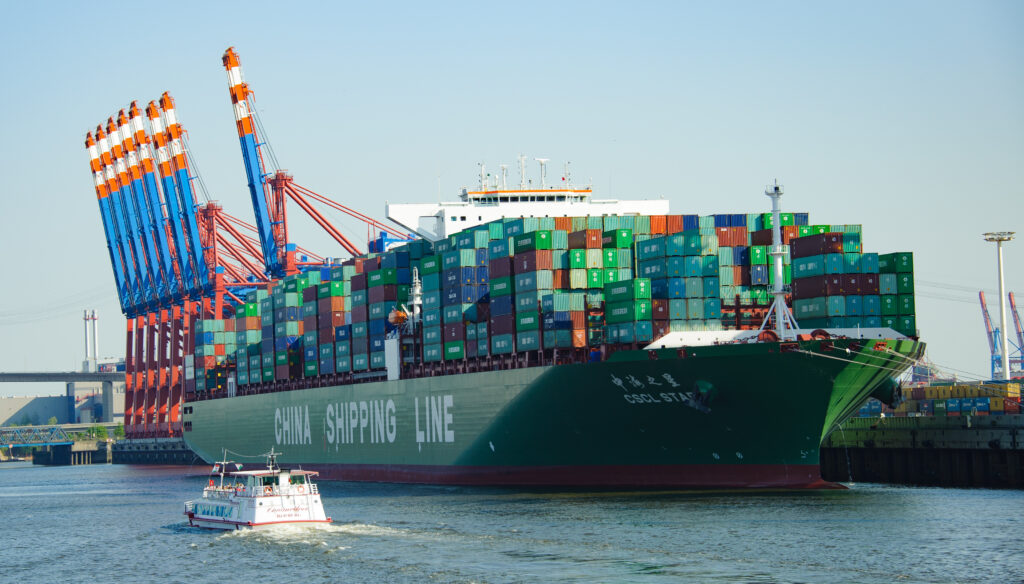

When Ursula von der Leyen delivered her State of the Union address on September 16th, she chose a figure meant to stay with her audience: the European Union’s trade deficit with China, she said, now stands at roughly €1 billion a day. Yet the imbalance is only part of the concern. Europe is also highly dependent on China for many critical raw materials, rare earth elements among them.
This is why de-risking has moved from technical jargon to the center of European strategy. Europe wants to reduce critical dependencies, protect sensitive technologies, and diversify its supply chains. Yet it continues to insist that de-risking is not decoupling. That distinction is easy to state and much harder to implement. If the objective is not to dismantle economic ties with China, what does a less risky relationship actually look like?
Seen from Astana, the debate has a characteristic blind spot. It is usually framed as a question of subtraction: which dependency to reduce, which technology to shield, which production line to relocate. For a country at the center of the Eurasian landmass, an equally important question is what can be added.
Resilience comes from having fewer single points of failure. Sometimes that means reducing exposure. But it can also mean multiplying options: more suppliers, more routes, more production sites, and more ways of moving goods, energy, capital, and data when the preferred channel is disrupted. Kazakhstan, by geography and by choice, is in the business of reducing distance. And the distances that matter today are only partly physical. They are also logistical, regulatory, technological, and, at times, political.
From Efficiency to Redundancy
For three decades, globalization was organized around efficiency. Companies concentrated production where costs were lowest, reduced their inventories, and stretched supply chains across continents. A small number of ports, suppliers, and industrial clusters acquired outsized importance, because using them made commercial sense.
The logic was sound. But it also created vulnerabilities that became visible only when the system was placed under stress. The pandemic froze factories and ports. Disruptions in the Suez Canal and later in the Red Sea showed how quickly freight costs and delivery times could change. Export controls on critical inputs demonstrated how concentrated supply can become a strategic vulnerability.
Governments and companies are now rediscovering a principle engineers have long taken for granted: systems survive shocks when they have redundancy. Redundancy used to sound like waste. Increasingly, it sounds like insurance. This does not mean duplicating every factory, railway, or pipeline. Nor does it imply autarky. The realistic objective is optionality: ensuring that the loss of one supplier, one corridor, or one production center does not paralyze the entire system. In some sensitive sectors, reducing interdependence may be unavoidable. Across much of the rest of the economy, the more practical task is to convert concentrated dependence into diversified interdependence.
That changes the strategic value of geography. A route used to matter mainly because it was shorter or cheaper; now it can also matter because it is different. A supplier is no longer judged by price alone, but also by the alternative it provides. For countries situated between the world’s largest economic centers, this creates an opportunity. It also sets a test: can they expand the number of available connections while keeping them reliable and economically viable?
A Country in the Middle
Kazakhstan has always been defined in part by its geography. It borders both Russia and China, sits at the center of the Eurasian landmass, and has traditionally reached European markets through networks running north and west. Geography, however, is raw material rather than strategy. What matters is what a country builds on it.
Kazakhstan has chosen to remain economically and politically open in several directions at once. Russia remains one of its closest economic partners and an integral part of the established trade, transport, and industrial networks across Eurasia. China has become one of Kazakhstan’s key economic partners, with trade and investment ties expanding steadily in recent years, while Europe remains another major pillar of its external economic relations. For Kazakhstan, these relationships are not mutually exclusive. They form different parts of the same Eurasian economic space.
This is often described as Kazakhstan’s multi-vector foreign policy. The description remains useful, but it explains Kazakhstan’s diplomacy better than its economic logic. A more precise term for Kazakhstan’s diplomacy is strategic openness: building political, physical, and institutional connections in several directions at once, and allowing those relationships to reinforce rather than exclude one another. Strategic openness is not equidistance. It does not seek a midpoint between competing powers. It seeks to remain connected to several of them—and connected well.
The difference matters. A country that thinks of itself merely as a bridge tends to measure success by what passes over it: tons, containers, and transit fees. A country that treats connectivity as a strategic asset asks a different question: what economic activity exists because those connections do? The first is a toll road. The second is a node.
A Wider Eurasian Geography
This matters particularly for the development of new transport corridors. Kazakhstan does not view additional routes as substitutes for existing ones. The logic is cumulative rather than competitive: the more efficient connections there are across Eurasia, the more opportunities there are for trade, investment, and economic cooperation.
The established northern routes will remain important. At the same time, Trans-Caspian connections, links southward through Central Asia, and expanding connections with China add further layers to the network. Each serves different markets, cargoes, and commercial needs.
This approach reflects Kazakhstan’s broader foreign policy. The objective is not to redraw Eurasia around new dividing lines, but to increase the density of connections within it.
That has implications for Europe-China relations as well. If de-risking is understood purely as rerouting trade away from one country or another, it can easily become another name for fragmentation. If it is understood instead as creating additional channels that complement existing networks, it can strengthen resilience without forcing countries into binary choices. For Kazakhstan, connectivity works best when it is inclusive.
A Corridor is Not Yet a Strategy
The most visible expression of this approach is the Trans-Caspian International Transport Route, or Middle Corridor, which links China and Central Asia with the South Caucasus and Europe across the Caspian Sea. Its strategic appeal is easy to understand. The danger lies in describing it as a replacement for the existing Asia-Europe routes. It is not.
No single trade corridor should be expected to carry the burden of Eurasian trade. The strength of a network lies precisely in the coexistence of several routes. The Middle Corridor’s value, therefore, lies in the option it adds. This is why the World Bank’s assessment of the corridor matters. It argues that investment and improvements in efficiency could significantly increase trade flows and reduce travel times. Equally important, the Bank stresses that the corridor’s value is not confined to China-Europe transit: it can stimulate trade and economic activity among the countries and markets located along it.
Physical investment is already following. The World Bank and the Asian Infrastructure Investment Bank are jointly supporting the development of a new railway connection in Kazakhstan. The financing structure is interesting in its own right: a Washington-based institution and a Beijing-headquartered one supporting the same piece of Eurasian infrastructure. That is managed interdependence at the scale of a single project.
Yet railways are the relatively straightforward part. The corridor crosses several borders and repeatedly changes transport modes. A train can travel a thousand kilometers efficiently and lose much of that advantage waiting at a border. A new port adds little resilience if the documents accepted there are not recognized at the next one.
The hard infrastructure is therefore accompanied by a less visible challenge: customs procedures, interoperable digital documents, predictable tariffs, data exchange, and coordinated scheduling. This work is slow and politically unglamorous. It is also where much of the corridor’s future value will be created.
Redundancy, moreover, has a cost. The most resilient route will not always be the cheapest, and businesses will use alternatives at scale only when the value of greater reliability and flexibility justifies the additional expense. The task is not to replace efficiency with resilience, but to bring the two into better balance.
From Transit to Production
There is another reason not to judge the Middle Corridor by container numbers alone. Transit is only one form of connectivity. The larger opportunity is to turn transport corridors into economic corridors: places where goods are processed, assembled, financed, certified, or partly manufactured. That requires logistics hubs, but also industry, energy, professional services, digital infrastructure, and skilled workers.
Europe’s economic-security agenda makes this particularly visible in critical raw materials. Kazakhstan has substantial mineral resources relevant to Europe’s industrial and energy transition. During President of Kazakhstan Kassym-Jomart Tokayev’s visit to Brussels in June 2026, the EU and Kazakhstan identified critical raw materials, energy, transport, digitalization, and emerging technologies among the areas for deeper cooperation. Importantly, the discussion increasingly concerns value chains rather than raw-material supply alone.
That shift is significant. A resilient economic partnership should not be limited to moving resources from producer to consumer. Greater value can be created through processing, technology, certification, skills, and manufacturing in Kazakhstan itself. This would support European supply-chain diversification while contributing directly to Kazakhstan’s industrial development.
China’s economic presence in Kazakhstan is likewise evolving beyond trade and transit toward production. Industrial cooperation is becoming a larger part of the bilateral relationship, and these links create local capabilities, supplier networks, and longer-term commercial relationships.
The lesson applies in both directions. If Europe sees Kazakhstan mainly as a supplier of commodities, it will capture only part of the opportunity. If China sees Kazakhstan primarily as a transport corridor, it will do the same. Kazakhstan’s greater potential lies in becoming a place where different economic networks overlap and create additional value.
Connectivity and Domestic Transformation
This is also why connectivity matters to Kazakhstan beyond foreign policy. The country’s objective is not simply to handle larger volumes of international trade. Connectivity should contribute to a broader transformation of the domestic economy.
Transport infrastructure can attract logistics and manufacturing. Energy projects can support new industrial clusters. Digital infrastructure can make cross-border commerce more efficient. Cooperation in critical raw materials can create demand for processing, engineering, and research capabilities. New air and rail links can connect Kazakh businesses more directly with external markets.
Seen in this way, Kazakhstan’s connectivity strategy works outward and inward at the same time. Reliable links across Eurasia expand access to markets, investment, and technology, while those same connections can support new industries, skills, and sources of growth at home. The two reinforce one another: a more diversified and sophisticated domestic economy makes Kazakhstan a more valuable partner, while wider international connectivity gives Kazakh companies access to the resources and opportunities that transformation requires. Connectivity, therefore, should not be understood simply as infrastructure. It is an economic development strategy.
The Currency of Trust
Not every connection is equally valuable. For a supply chain to rely on a country, companies must believe that contracts will be honored, that border procedures will function predictably, and that the rules will remain stable enough to justify long-term investment. Trust in this sense is less rhetorical than administrative. It is a train arriving when the timetable says it will. It is a customs authority accepting an electronic document already accepted at the previous border. It is a tariff that stays predictable long enough for a company to build a business around it.
This is also where connectivity becomes a form of power. International influence is usually measured through military capability, economic size, technological leadership, or demographic weight. Those measures remain fundamental. But an era of more complex globalization is adding another source of relevance: the ability to keep different parts of the international system connected even when relations among the major powers become more difficult.
States that perform this function can be thought of as connectivity powers. The term describes a function, not a rank. Three tests matter. First, does a country create additional options for others? Second, can its institutions support reliable interaction among partners with different political and economic systems? Third, does connectivity create domestic value—firms, skills, services, and production—rather than serving merely as a conduit for goods produced elsewhere?
Kazakhstan is increasingly working on all three. Its transport network is expanding in several directions. Its institutions are becoming more integrated into international commercial and financial systems. Furthermore, its policy agenda is moving beyond transit toward production, processing, and services. However, the point is not to portray Kazakhstan as an indispensable bridge between East and West. It is to identify a more practical role: a country that adds connections to the Eurasian system and makes those connections economically productive.
Managed Interdependence
Europe-China relations are unlikely to return to the assumptions of 20 years ago. Economic security has become a permanent part of European policy. China will continue to pursue technological and industrial self-reliance in the sectors it considers strategic. Trade disputes will recur and investment and supply chains will face greater scrutiny.
At the same time, complete economic separation is not a plausible description of where the relationship is heading. European and Chinese companies will continue to buy, sell, invest, and compete. In some sectors, dependence will be deliberately reduced; in others, commercial logic will preserve deep ties.
The emerging model, therefore, is likely to be one of managed interdependence. Managing it will require dialogue and rules between Europe and China themselves. But it will also require a wider network of countries and routes that gives economic relationships room to adjust when circumstances change.
This is why the geography between Europe and China is acquiring new significance. Central Asia was long treated in European debates as remote from the main centers of the global economy. Its importance now derives from the opposite quality: its proximity to several major economic systems at once.
For Kazakhstan, the objective is to translate that geography into economic value: stronger infrastructure, more diversified production, better institutions, and deeper integration with international markets. For Europe, Central Asia offers opportunities not only in transport and commodities, but also in industrial cooperation, energy, technology, and investment. For China, a more prosperous and connected Central Asia expands the opportunities for trade, production, and economic interaction across the Eurasian continent. Russia, too, remains an important part of this wider Eurasian connectivity. The development of additional routes need not come at the expense of established economic ties; a denser network can create more opportunities for all the economies involved.
These interests are not identical, and they do not need to be. Connectivity will not eliminate strategic competition. It can, however, ensure that competition does not become the only organizing principle of international economic relations.
Reducing Distance
The debate over de-risking usually begins with subtraction: which dependency to reduce, which technology to protect, which supply chain to relocate. Those questions are necessary. But they address only half of the task.
The other half is constructive. Which additional suppliers can be developed? Which routes can make trade more resilient? Where can new production capacity be built? Which institutions can make those alternatives reliable enough to be used in normal commercial life, rather than only in a crisis?
Asked this way, the geography of de-risking becomes wider than the term suggests. The opposite of dependence is not always independence. Often, it is optionality. Kazakhstan cannot determine the future of relations between Europe and China; no country of its size could. It can, however, demonstrate something relevant to that future. Economic resilience does not have to be built by pushing major economies further apart. Sometimes it is built by giving them more ways to remain connected. The countries that matter in the emerging system may include not only those with the power to make others choose, but also those that make such choices less necessary.