Ranko Vranić is a Research Fellow at the Center for International Relations and Sustainable Development (CIRSD) and an Assistant Editor of Horizons.
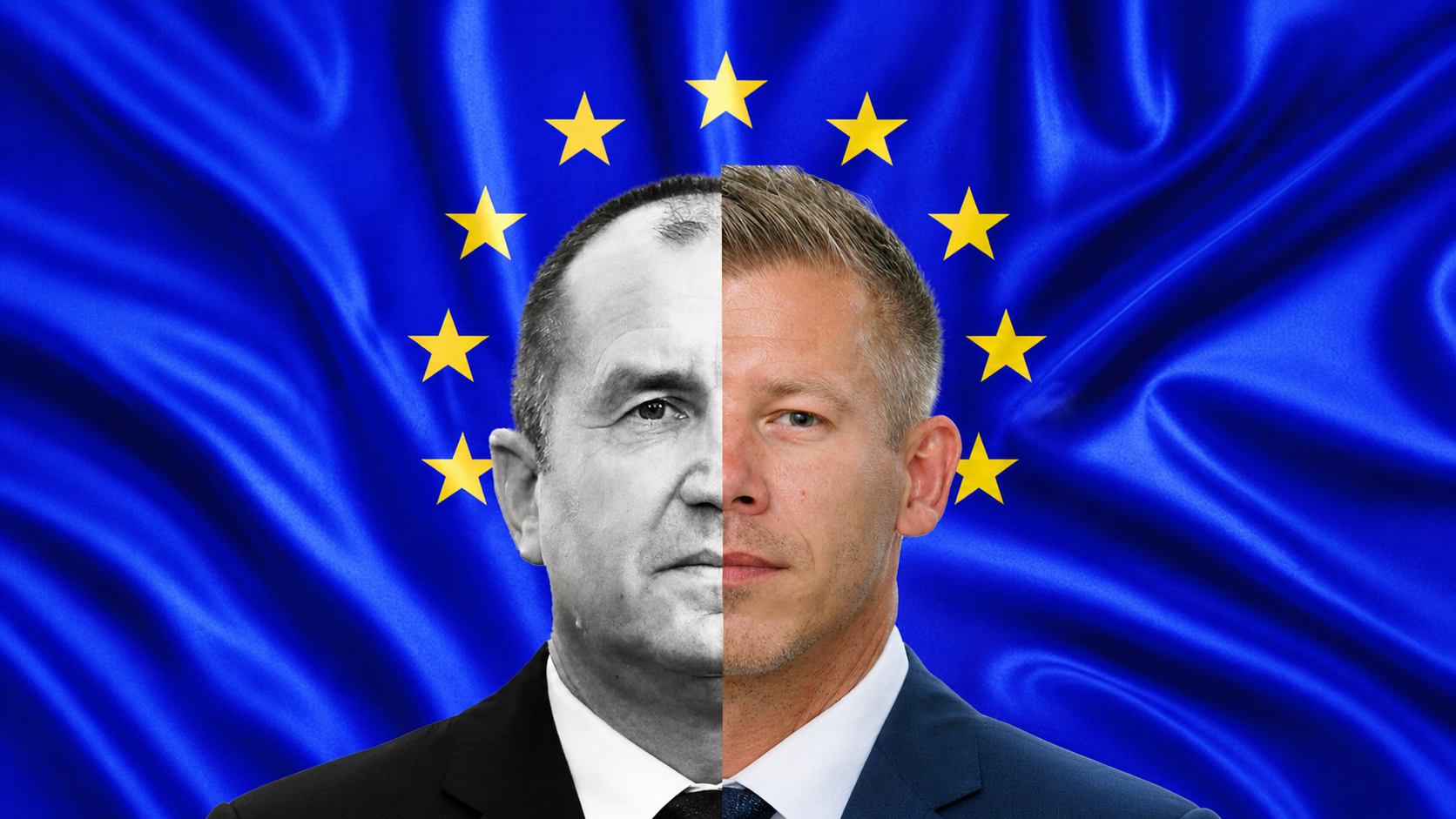
In the span of just one week in April 2026, two Member States of the European Union held parliamentary elections that ended long political eras and brought new leaders to power on remarkably similar mandates. On April 12th, Hungarians handed Péter Magyar and his Tisza party a landslide victory, ending 16 years of Viktor Orbán’s rule. Seven days later, Bulgarians delivered the country’s first outright parliamentary majority since 1997 to former president Rumen Radev, ending five years of paralysis that had produced eight elections. Both men ran on anti-corruption platforms. Both promised to dismantle entrenched oligarchic systems. Both rode unprecedented voter turnout into office.
Yet anyone watching Brussels’ reaction would have thought they were witnessing two entirely different events. One election was greeted as a continental rebirth, complete with rapturous statements from heads of government and Commission presidents quoting the spirit of 1956. The other was met with a public cordiality that barely concealed private alarm—leaks about “panic” in EU corridors, op-eds in influential think tanks asking whether Bulgaria had become “the new thorn in the EU’s side,” and a quiet but unmistakable narrative that this election had been somehow less democratic, less worthy of celebration, less “European.”
This tale of two responses tells us a great deal about how the EU sees itself and how it sees its Eastern Member States. It also reveals a habit of mind that, if left unchecked, may end up creating exactly the kinds of problems Brussels claims it is trying to prevent.
The Welcome in Budapest
When Magyar’s victory became clear on the night of April 12th, the European reaction was extraordinary. European Commission President Ursula von der Leyen took to social media with a message that read like a homecoming announcement: a country had reclaimed its European path, the Union was stronger, Hungary had chosen Europe, and Europe—she emphasized—had always chosen Hungary. Within hours, she was comparing the result to the 1956 anti-Soviet uprising and the 1989 break with communism, framing Magyar’s win as the third great moment of Hungarian liberation in modern memory.
She was hardly alone. French President Emmanuel Macron made a personal phone call to congratulate Magyar and welcomed what he called the Hungarian people’s renewed commitment to the values of the EU. German Chancellor Friedrich Merz, British Prime Minister Keir Starmer, Finland’s Petteri Orpo, Norway’s Jonas Gahr Støre, and a long list of others issued statements in the immediate aftermath. Polish Prime Minister Donald Tusk, never one for understatement, wrote on X: “Hungary, Poland, Europe. Back together! Glorious victory, dear friends!”—adding “Russians, go home!” in Hungarian, an unmistakable jab at Moscow. Even Italy’s Giorgia Meloni, who had been one of Orbán’s loudest defenders within the European People’s Party orbit, posted a congratulatory note to Magyar within hours.
The tone was not merely warm. It was triumphal. Magyar was not just being welcomed; he was being absorbed into a continental narrative of democratic renewal in which Hungary was finally, after a long and unfortunate detour, returning to where it belonged. The framing was uniform across capitals: this was Europe’s victory as much as Magyar’s.
The Cooler Reception in Sofia
A week later, when Radev’s Progressive Bulgaria party stunned pollsters by winning almost 45 percent of the vote and an outright majority, the response from Brussels and the major European capitals was measured at best and chilly at worst. There were polite congratulations—protocol demands them—but there was no comparison to the Bulgarian protests of 1989, no proclamation that “Europe is Bulgarian today,” no rush of phone calls from Paris and Berlin.
Instead, within days, the analytical apparatus of European policy circles went to work producing a different story. Politico Europe published a piece naming Radev as one of five potential “successors to Orbán” in disrupting EU unity. The European Council on Foreign Relations described him as a possible “new thorn” in the Union’s side. Euractiv reported what officials in Brussels would only say off the record: there was real concern, even alarm, about what Radev’s victory meant for the supply of Bulgarian-made ammunition to Ukraine. The European Policy Centre framed the contest as a test of how far the EU could “contain pro-Russia drift.”
Notice the language. Contain. Drift. Thorn. These are the verbs and metaphors of damage limitation, not democratic celebration. Where Magyar’s election was a homecoming, Radev’s was framed as something to be managed.
There were, of course, congratulatory messages. The Kremlin sent one too—a fact that European media noted prominently and Brussels noted privately. The optics of being congratulated in the same breath by Vladimir Putin’s spokesperson and Brussels institutions did Radev no favors and gave editorial writers the framing they needed. But the asymmetry of treatment between the two leaders went deeper than what individual politicians said. It was a question of register, of generosity, of whether a democratic outcome was treated as a fact to be welcomed or a problem to be solved.
The Real and Imagined Differences
To be fair to Brussels, the two leaders are not identical. Magyar campaigned on an explicitly pro-European platform. Radev, while supporting Bulgaria’s continued EU Membership, has called for “practical relations with Russia,” opposed military support for Ukraine, criticized last month’s Bulgaria-Ukraine defense pact, and questioned the rapid pace of Bulgaria’s eurozone accession. His party’s representatives have given equivocal answers when asked whether Crimea is Ukrainian or whether Vladimir Putin is an aggressor. These positions are real, they matter, and they justify scrutiny.
What complicates this picture, however, is that Magyar’s own positions on several of the most sensitive questions are not as far from Radev’s as the contrasting receptions would suggest. In his first international press conference after the election, Magyar told reporters that Hungary would diversify its energy mix but that diversification did not mean abandoning cheap Russian oil. He has set a target of 2035 to end Hungarian dependence on Russian energy—eight years after the EU’s own 2027 deadline—and has insisted in an interview with the Financial Times that ending dependence does not mean ceasing to buy from Moscow. On Ukraine, while Magyar has pledged not to block EU loans to Kyiv, he has indicated he will maintain the opt-out from the joint EU loan that Orbán negotiated in December 2025. On migration, he has promised to keep Orbán’s Southern border fence and to hold a strict line, explicitly rejecting any EU pact or allocation mechanism. On the Russia-built Paks II nuclear project, he has said only that financing will be reassessed—stopping well short of committing to end cooperation with Rosatom.
These are not trivial continuities with the previous government’s foreign policy. They are, in several cases, the same kinds of positions that have earned Radev the label of a potential “thorn” in the EU’s side. The crucial difference between the two men is largely one of register and rhetoric: Magyar packages his pragmatism in pro-European language, while Radev couches his in talk of practical relations with Russia. The substance is closer than the framing suggests. If continued purchases of Russian energy and a hawkish line on migration are disqualifying, they are disqualifying in Budapest as much as in Sofia. If they are not, then the disparate treatment becomes harder to defend on policy grounds and easier to read as something else—a function of identity, framing, and political tribe rather than of substance.
But scrutiny is not the same as cold-shouldering. And it is worth noting how much of the contrast between the two men is being read backwards from their foreign policy orientations rather than forwards from the substance of what they were elected to do.
Both men ran on anti-corruption. Both face entrenched political machines: in Magyar’s case, the Orbán-built clientelist state; in Radev’s, the GERB-MRF system associated with former Prime Minister Boyko Borissov and the Magnitsky-sanctioned power broker Delyan Peevski. Both have promised judicial reform, the dismantling of oligarchic networks, and a return of state institutions to genuine public control. On these issues—issues the EU itself has spent years pressing both countries to address—they are saying essentially the same thing.
It is also worth remembering that the most thorough European policy analyses, including the European Council on Foreign Relations’ careful work on Radev, conclude that he is more likely to behave like Slovakia’s Robert Fico than like Orbán: someone who will grumble in Brussels meetings but will not actually use Bulgaria’s veto to block major EU decisions on Ukraine or sanctions. Radev himself has said publicly that he will not block EU aid to Kyiv. Bulgarian public opinion remains overwhelmingly pro-European, with an Alpha Research March 2026 survey showing more than 56 percent of Bulgarians choosing Europe as their preferred strategic partner versus less than a fifth opting for Russia. Radev is not, in other words, an Orbán-in-waiting. He is a leader who has been elected on a domestic mandate by voters who themselves remain firmly attached to the European project.
Why the Double Standard Matters
So why does any of this matter? After all, Brussels’ freedom to send warmer or cooler signals is part of normal politics. Heads of government may say what they like about elections in fellow Member States.
The answer is that asymmetric treatment of democratic outcomes carries real costs, and three deserve particular attention.
The first is the self-fulfilling prophecy problem. If Brussels treats Radev as a budding Orbán from day one—leaking concerns to friendly papers, framing his every move as a potential drift toward Moscow, withholding the warmth shown so freely to Magyar—it gives Radev every political incentive to behave like the figure he is being accused of becoming. He has a domestic audience to play to. He won partly by tapping into a sense, real or constructed, that ordinary Bulgarians were being lectured by distant elites. The more Brussels confirms that perception, the more useful it becomes to him politically. The European Policy Centre has already warned that complete isolation of Sofia would let Radev cast himself simply as a defender of Bulgarian interests against an overweening EU. That is exactly the populist arc the bloc spent two decades watching Orbán perfect.
The second is the legitimacy problem. The EU’s authority rests fundamentally on the consent of democratic publics in its Member States. When Brussels openly celebrates one election as a victory for Europe and treats another as a problem requiring containment—even though both reflect the freely expressed will of voters in functioning democracies—it implicitly suggests that some democratic outcomes are more legitimate than others. This is corrosive. The voters of Bulgaria delivered a clearer mandate than Bulgarian politics has produced in three decades. They did so on an anti-corruption platform that Brussels itself has been demanding for years. Treating that mandate as somehow suspect, while exalting a different mandate from a different country, sends a message that Bulgarian democracy matters less than Hungarian democracy. That message lands. It is heard. And it metastasizes.
The third is the hierarchy problem. The asymmetry between the two reactions echoes a long-standing complaint among the EU’s Eastern and Southern Member States: that the bloc’s older and wealthier Member States treat newer ones as junior partners whose democratic choices need supervision. Hungary is central and strategically prominent. Bulgaria is peripheral and poorer. The disparity in treatment of their elections—the lavish embrace of one, the frosty management of the other—risks confirming a perception that has done enormous damage to European cohesion: that there are first-class and second-class Member States, and that democratic mandates from the second-class group can be quietly downgraded when they produce inconvenient leaders.
What Engagement Should Look Like
None of this means the EU should pretend that Radev’s positions on Russia, Ukraine, or the eurozone are unproblematic. Brussels has every right and every reason to push back firmly when actions threaten European unity, particularly on Ukraine, where Bulgaria’s role as a major ammunition supplier is genuinely consequential. The Commission has tools—rule-of-law conditionality, multiannual financial framework leverage, and judicial reform support—that allow it to apply real pressure where it matters.
But pressure on policy is not the same as a chill on personality. The EU could have welcomed Radev’s election with the same generosity it extended to Magyar—congratulating Bulgarian voters on ending a corrosive period of instability, recognizing the anti-corruption mandate as one Brussels itself has pressed for, expressing confidence in Bulgaria’s continued European trajectory. At the same time, still making clear, through normal diplomatic channels, that Sofia’s positions on Ukraine and Russia would be subject to the same scrutiny as anyone else’s. Generosity at the front door is not weakness. It is the strategic patience that lets you be firm at the back door without confirming the populist story your adversaries want to tell.
Brussels did not do that. It rolled out the red carpet for Magyar and the cautious memo for Radev, and in doing so it gave the next generation of would-be Orbán’s a ready-made narrative: that the EU loves democracy when democracy votes the way Brussels prefers, and grumbles when it does not. That narrative is wrong. But the EU’s response to these two elections has made it easier, not harder, to tell.
A union of 27 democracies cannot afford that. Hungary’s voters chose change. Bulgaria’s voters chose change. Both deserved to be told, in the same warm tones, that their continent was glad to have them.