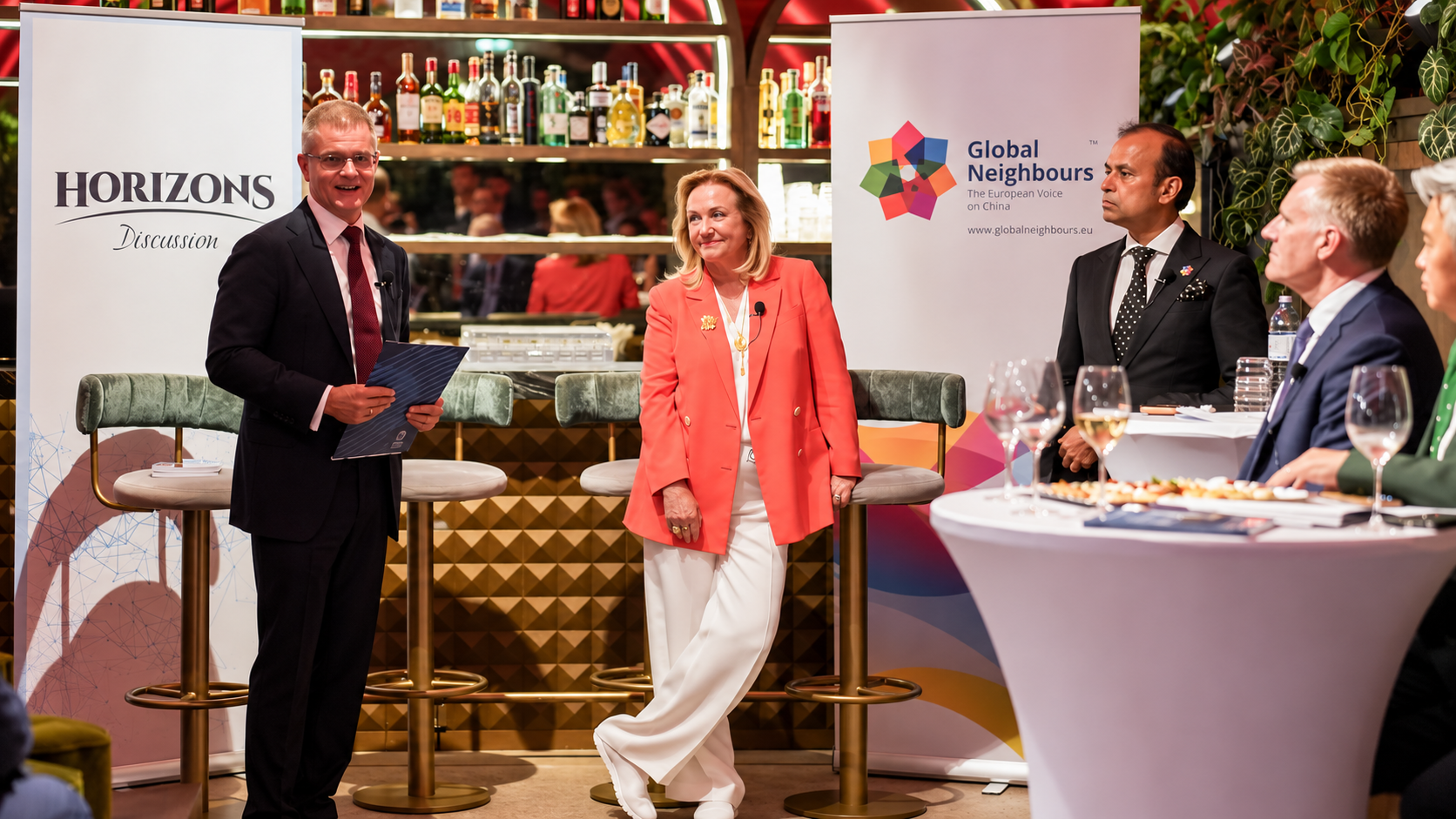
The Center for International Relations and Sustainable Development (CIRSD), in cooperation with Global Neighbours, hosted a high-level discussion in Vienna marking the launch of the Summer 2026 issue of Horizons.
The event brought together representatives of the diplomatic corps, international organizations, Austrian public institutions, business and finance, academia, think tanks, and the legal community.
The discussion was opened and moderated by Vuk Jeremić, President of CIRSD and Editor-in-Chief of Horizons. He was joined by Jovanka Porsche, Founder and Chairwoman of Global Neighbours; Siddharth Chatterjee, Chief Executive Officer of Global Neighbours and former United Nations Resident Coordinator in China; and Igor Lukšić, Prime Minister of Montenegro from 2010 to 2012 and former Visiting Fellow at Global Neighbours.
The title, The Unbearable Lightness of Global Governance, is taken from Milan Kundera’s celebrated novel, which sets the weightlessness of a life without consequence against the gravity of one bound by obligation and meaning. This paradox applies to global governance today: the institutions built to carry the weight of the world have grown lighter and less able to bear it. Eight decades after its founding, the United Nations retains unmatched universal legitimacy, yet faces a widening gap between what it is expected to deliver and the results it can achieve—at a time when only 18 percent of the Sustainable Development Goals are on track and armed conflicts stand at their highest level since 1945.
The conversation took as its starting point The Architecture of Survival: Why the World Cannot Wait for Governments Alone, an essay contributed to the issue by panelists Porsche and Chatterjee. They argue that the renewal of the multilateral system will not be accomplished by governments alone and that independent institutions must prepare the ground on which official diplomacy will eventually stand.
The discussion addressed the future of multilateral institutions and the Sustainable Development Goals, the role and accountability of private actors, relations between Europe and China, and the prospects for international cooperation in an increasingly fragmented world. It concluded with reflections on the institutional innovations needed to keep such cooperation viable over the coming decade.