Nikola Perišić is a PhD candidate at the Faculty of Political Sciences, University of Belgrade, and a Research Associate at the Institute for Political Studies. His research interests include electoral processes and systems, political communication, media and political discourse, with a particular focus on rhetorical, stylistic, and discursive approaches to the study of political communication.
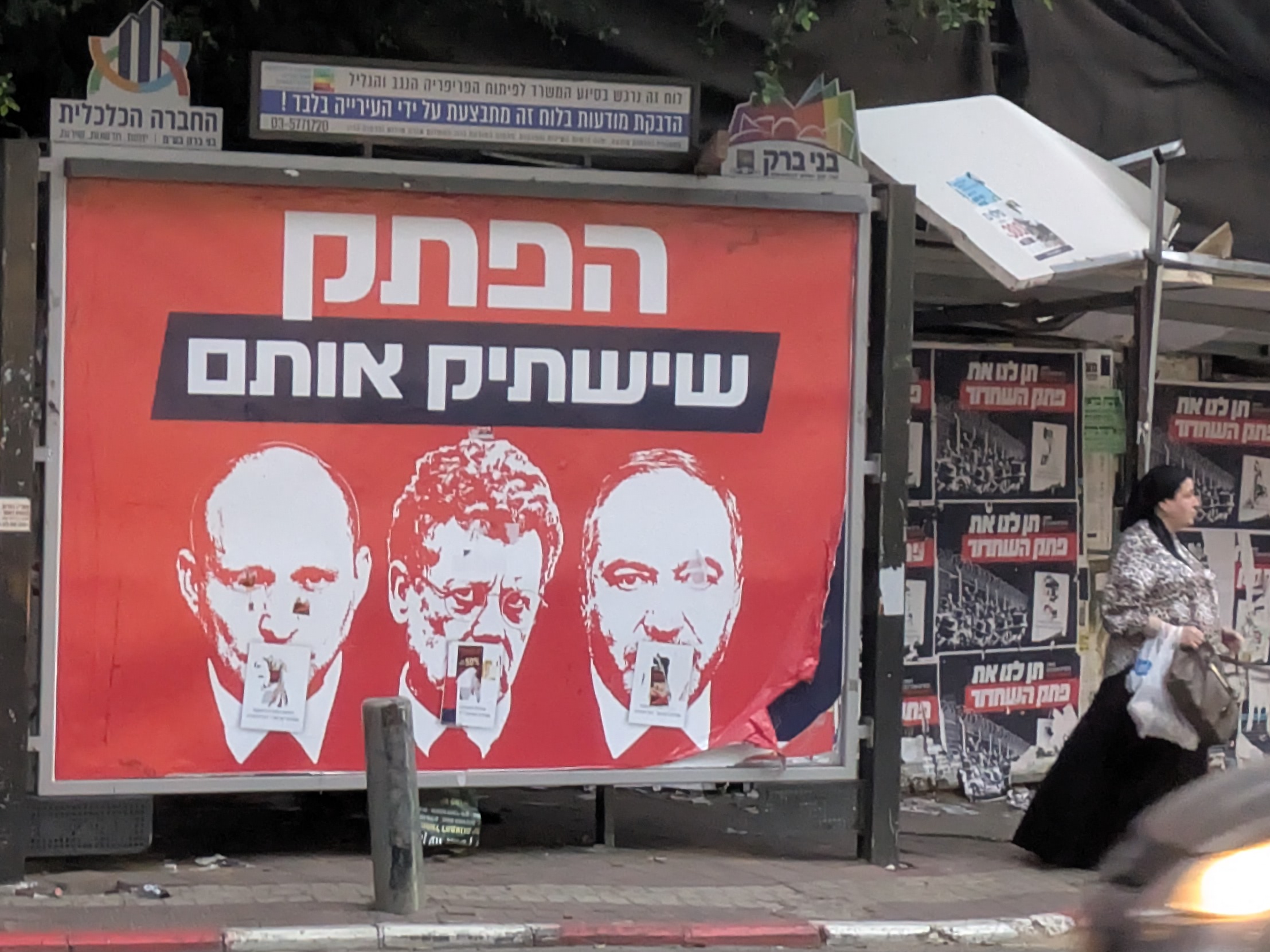
The first parliamentary elections in Israel since the outbreak of the security crisis in October 2023 were held amid deep political and social divisions, diminished public confidence in state institutions, and growing scrutiny of the political leadership’s responsibility for the security challenges the country had faced over the previous three years. Pre-election opinion polls pointed to uncertainty over whether incumbent Prime Minister Benjamin Netanyahu would be able to remain in power. Dissatisfaction with Netanyahu’s policies had been evident even before October 2023. His political position had been undermined by lengthy court proceedings on corruption charges and by mass protests against the judicial reform his government initiated in early 2023. Over time, these protests developed into a broader movement expressing dissatisfaction with government policy, further deepening the ideological and social divisions between Netanyahu’s supporters and his opponents.
The Hamas terrorist attacks of October 2023, in which approximately 1,200 people were killed and more than 250 were taken hostage and abducted to the Gaza Strip, marked a turning point in Israel’s political and security landscape. Immediately after the attacks, Israeli society experienced a strong national mobilization that temporarily pushed domestic political disputes into the background in favor of national unity. The formation of an emergency national unity government, which included the opposition politician Benny Gantz, was one of the most visible signs of an attempt to set political differences aside. This unity, however, did not translate into renewed confidence in Netanyahu. On the contrary, questions about political and institutional responsibility for the failures of the security and intelligence apparatus that had made an attack of such magnitude possible became increasingly prominent.
Netanyahu faced precisely this kind of criticism throughout the election campaign. Unlike in previous electoral cycles, in which economic issues, relations between religious and secular groups, and institutional reform played a significant role, security policy became one of the main dividing lines between the government and the opposition. Netanyahu and his Likud party built their campaign around military and security achievements, presenting the incumbent prime minister as an experienced statesman capable of confronting regional threats and protecting Israel’s national interests. The opposition parties, on the other hand, sought to focus the campaign on political accountability, restoring public confidence in institutions, and overcoming deep social divisions. Gadi Eisenkot, a former Chief of General Staff of the Israel Defense Forces, played a particularly important role in this effort. He sought to establish a political alternative based on his security credentials, institutional accountability, and the need for a change in political leadership. His position was distinctive because it allowed him to challenge Netanyahu without questioning the importance of a strong national defense, enabling the opposition to appeal to more moderate voters on the center-right of the political spectrum.
Because Israel uses a proportional representation system, with the entire country forming a single electoral constituency, the need for coalition negotiations to form a new government was entirely predictable. Another characteristic of the Israeli electoral system is its relatively low threshold of 3.25 percent, which encourages political pluralism but also contributes to the fragmentation of the party system and makes a stable parliamentary majority harder to form.
The results confirmed the deep political polarization of Israeli society, while also demonstrating that Netanyahu, despite numerous political and security challenges, continues to enjoy considerable electoral support. His Likud party won 27 seats, retaining its position as the largest single party in the Knesset. Together with the parties closely aligned with Likud, Netanyahu’s political bloc can count on 53 seats, eight short of the 61 required for a parliamentary majority. The opposition camp, led by Gadi Eisenkot and his Yashar party, secured 48 seats, while Arab parties won a total of 19, giving them potentially decisive influence over post-election negotiations and the formation of a government. The Joint List, comprising Hadash, Ta’al, and Balad, won 11 seats, while Ra’am, led by Mansour Abbas, secured eight.
Ra’am (the United Arab List) was the only Arab party to contest the elections independently. It advocates a pragmatic approach and a willingness to cooperate with Jewish parties in order to improve the position of the Arab community. The party was founded in 1996, against the backdrop of divisions within the Islamic Movement over participation in parliamentary elections. Historically, Ra’am has been associated with the Southern Branch of the Islamic Movement in Israel, which opted for institutional engagement and political participation. In its early electoral cycles, Ra’am competed in alliances with other Arab political organizations. In the 1996 elections, it ran on a joint list with the Arab Democratic Party, and it later cooperated with Ta’al, led by Ahmad Tibi. From 2015 onward, Ra’am was part of the Joint List, a political alliance that brought together the main Arab parties in Israel with the aim of increasing the parliamentary representation of Arab citizens and overcoming the constraints imposed by the electoral threshold.
A turning point in the party’s development came in 2021, when, under Mansour Abbas’s leadership, it left the Joint List and contested the parliamentary elections independently. The decision marked a shift in political strategy. Rather than relying exclusively on opposition politics and the joint representation of Arab political interests, Ra’am began to emphasize direct participation in negotiations over government formation. In the March 2021 elections, the party won four seats, securing a significant bargaining position within an increasingly fragmented party system.
The most significant moment in Ra’am’s history came in June 2021, when it became the first independent Arab party in several decades to formally join a governing coalition in Israel. It supported the government of Naftali Bennett and Yair Lapid, which brought together parties from across the ideological spectrum, from right to left. The move set a significant precedent in Israeli politics, demonstrating that an Arab party could influence the formation of a government without having to converge ideologically with all of its coalition partners. Through its participation in government, Ra’am sought, among other things, to secure increased investment in Arab municipalities, improve infrastructure and education, and promote measures to combat crime and violence in Arab communities.
In the November 2022 elections, the party won five seats, but it moved into opposition following the formation of the new government. In the period that followed, it continued to pursue its pragmatic approach, prioritizing the socioeconomic position of Arab citizens of Israel and the possibility of cooperation with a range of political actors. This strategy does not mean, however, that the party has abandoned the question of Palestinian national status. Rather, it seeks to connect broader national issues with the concrete needs of the Arab population within Israel.
The second Arab political grouping in the elections consisted of Hadash, Ta’al, and Balad. Hadash, or the Democratic Front for Peace and Equality, is a left-wing political organization. It does not define itself exclusively as a party representing the Arab minority, but rather as a broader political front bringing together Arab and Jewish activists, socialists, communists, and advocates of peace and civil equality. Its establishment in 1977 was linked to efforts to unite various left-wing movements around social justice, workers’ rights, democratization, and opposition to Israeli occupation policies. The Israeli Communist Party played an important role in its formation, alongside activists involved in struggles against discrimination and land confiscation.
On the Israeli-Palestinian conflict, Hadash has traditionally advocated ending the occupation of the territories captured in 1967 and establishing an independent Palestinian state, alongside a peaceful resolution of the conflict and a just settlement of the Palestinian refugee question. This places the party among the longest-standing advocates of the two-state solution within Israel’s political system. Its position also involves criticism of Israeli government policies toward Palestinians and support for the institutional equality of Arab citizens of Israel.
Organizationally and electorally, Hadash has repeatedly contested elections on joint lists with other Arab parties. Its participation in the formation of the Joint List in 2015, alongside Ra’am, Ta’al, and Balad, was particularly significant. The alliance consolidated a substantial part of the Arab electorate and increased its parliamentary representation. Ideological differences among its constituent parties, however, eventually led to its fragmentation and to the emergence of different forms of electoral cooperation. Within this context, Hadash retained its distinctive left-wing and secular profile, emphasizing social justice, civil liberties, and a political resolution of the Palestinian question.
The second component of this grouping is Ta’al, or the Arab Movement for Renewal, founded in 1996 by Ahmad Tibi, a physician by training and one of the most prominent representatives of Arab citizens of Israel in the Knesset. Unlike Hadash, whose ideological foundations are distinctly left-wing and socialist, Ta’al focuses primarily on representing the political, civil, and national rights of the Arab community, with particular emphasis on equality and institutional representation.
One of the party’s principal objectives is to reduce the social and economic disparities between the Arab population and the Jewish majority. This includes advocating equal access to education, health care, employment, and public resources, as well as increased investment in Arab local authorities. Ta’al places particular emphasis on the political representation of Arab citizens and on combating discrimination, seeking, through its parliamentary activity, to influence the legislation and public policies that directly shape their position.
On the Israeli-Palestinian conflict, Ta’al supports a peaceful resolution based on the establishment of an independent Palestinian state and a just settlement of the Palestinian refugee question. Its political program links recognition of Palestinian national rights with the demand for full civil equality for Arabs in Israel. The party is secular and advocates political engagement through institutional channels. Its approach rests not on religious ideology but on civil rights, national equality, and parliamentary representation.
Electorally, Ta’al has generally contested elections in alliance with other Arab parties rather than independently. It has cooperated with Balad, Hadash, and Ra’am, and has been part of the Joint List since 2015. In more recent electoral cycles, it has most often run in alliance with Hadash. This cooperation has helped consolidate electoral support and overcome the electoral threshold, although it has not implied complete ideological unity among the partners. Ta’al has therefore retained a relatively distinct political identity, focused on civil equality, the rights of the Arab minority, and a political resolution of the Palestinian question.
The third party within this bloc is Balad, formally known as the National Democratic Assembly. Balad places the Palestinian national identity of Arab citizens of Israel, their collective rights, and the transformation of the constitutional and political character of the Israeli state at the center of its political identity. The party’s central idea is to transform Israel from a state that defines its national identity primarily through its Jewish character into a “state of all its citizens.” This concept implies that political and civil rights should rest on the equality of all citizens, regardless of national or religious affiliation. At the same time, Balad argues that formal civil equality is insufficient unless the distinct national status of the Arab, or Palestinian, community in Israel is also recognized. For this reason, the party advocates recognizing Arabs in Israel as a national minority with collective, cultural, and political rights.
Balad supports the establishment of an independent Palestinian state with East Jerusalem as its capital, Israel’s withdrawal from the occupied territories, and a resolution of the Palestinian refugee question, including support for the right of return. The party opposes linking citizenship and national identity to the Jewish character of the state, and advocates the separation of religion and state. Its ideological position therefore combines Arab nationalism, secularism, and demands for far-reaching changes to the institutional framework of the Israeli political system.
Sami Abu Shehadeh has led the party, while Azmi Bishara, one of its founders, remains among its most historically significant figures. Balad’s political activities have repeatedly provoked strong reactions from parts of the Jewish political establishment, particularly because of its position on Israel’s national character and the Palestinian question. The party has also faced attempts to disqualify it from elections, some of which were overturned by the Israeli Supreme Court.
Electorally, Balad has participated in various alliances with other Arab parties, including the Joint List established in 2015. Ideological differences within the alliance, however, particularly over participation in government and cooperation with Jewish parties, limited its long-term cohesion. In the 2022 elections, Balad ran independently but failed to cross the 3.25 percent threshold, demonstrating that a clear ideological profile does not necessarily guarantee enough electoral support for independent parliamentary representation.
Israel’s parliamentary elections have once again demonstrated that winning an election does not necessarily mean securing power. Although Netanyahu retained considerable support among the electorate, his political future now depends on complex coalition negotiations and the balance of power in the Knesset. Under these circumstances, Arab parties, which for decades remained on the margins of government formation in Israel, have the opportunity to become one of the key factors in political decision-making.
Their numerical strength, however, does not necessarily translate into a direct ability to influence the formation of a government, as deep ideological and national divisions continue to pose a serious obstacle to political cooperation. This is precisely where the theater of the absurd in Israeli politics becomes apparent: Netanyahu, who has built his long political career around national security and firm opposition to Palestinian political demands, could now lose power as a result of the parliamentary influence of parties that advocate the political and national rights of Arab citizens of Israel.
This raises a paradoxical question in the aftermath of the elections: will the political fate of one of Israel’s longest-serving prime ministers ultimately be determined by the very political actors who have most consistently challenged his policies? The answer will shape not only Netanyahu’s political future but possibly also the political position of Arab citizens of Israel. After all, in politics, the greatest power sometimes belongs not to those who win the most votes, but to those without whose votes no one can govern.